Advice on buying your first boat

Sheree Marris

For the 30+ years I’ve spent on the water, it has always been as a guest on someone else’s boat. The idea of owning my own had been bobbing around in my mind like a buoy without an anchor, but what stopped me was the assumption that boats were for people with deep pockets and a big garage.

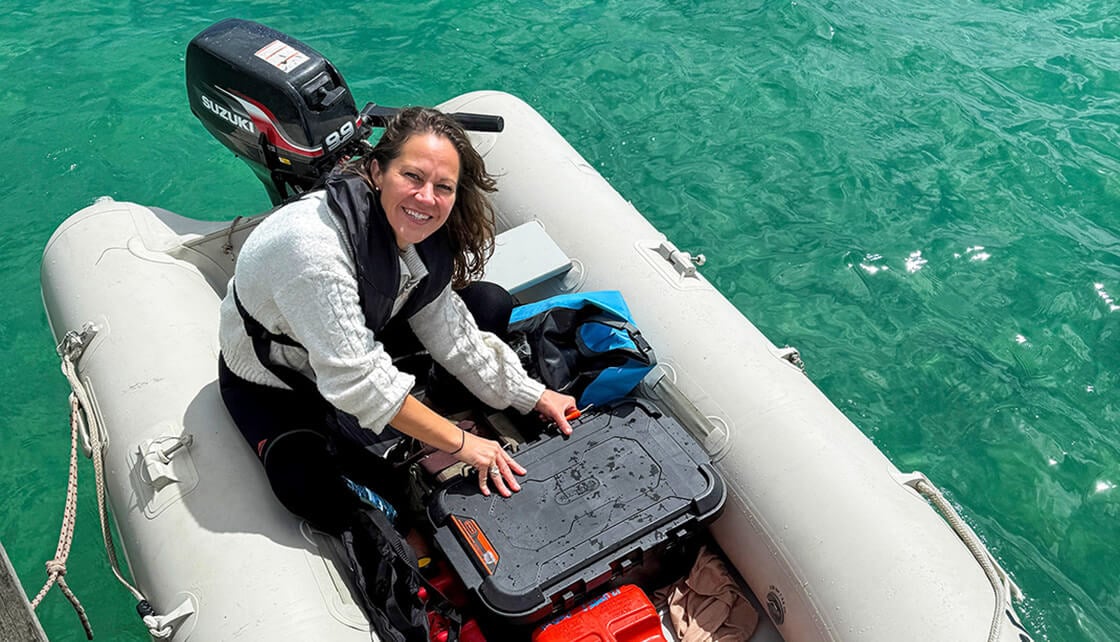
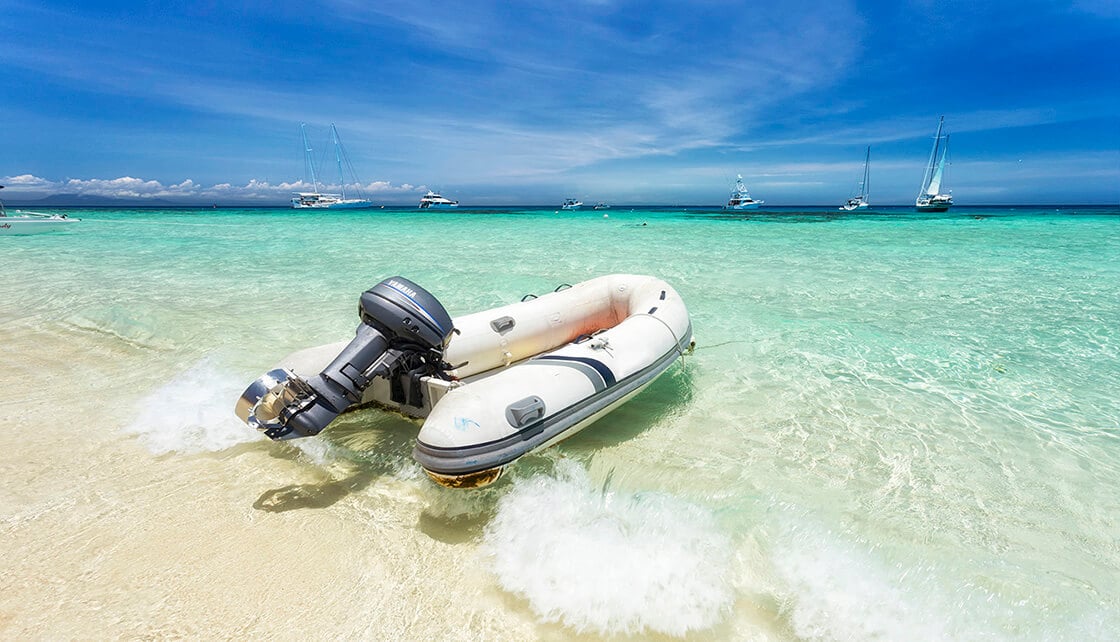
Turns out I was wrong, because all I wanted was something I could launch solo and handle on my own, and which was sturdy enough to flop in and out of when diving. I also liked the idea of being able to travel and take the boat with me.  

Enter the humble inflatable dinghy – lightweight, easy to manoeuvre and surprisingly tough. I picked up a second-hand Quicksilver with a 9.5hp motor for just $1500. The motor had been tested and serviced (shoutout to Lake Wellington Yacht Club), so it was about as reliable as you can get for the price.
Unlike cars, there’s no roadworthy certificate for boats, so you need to know what to look out for. Advising me was Wayne, a friend with more boating wisdom than a marine library. He helped me spot what mattered – seams, valves, engine reliability etc – and made sure I didn’t end up with a glorified pool toy

Nothing prepares you for the feeling of bringing your first boat home. Excitement? Through the roof. Terror? Also yes. But with Wayne by my side, we ran through the very thorough checklist he’d prepared for me so I didn’t take off prematurely in a flurry of excitement.

We ran through inflation pressure, the order for bladder inflation (sides first and then the bow) and the order for laying the wooden floorboards. Safety gear? Check. Ropes? Check. 

The beauty of a small dinghy is that you don’t need a ramp. We carried it down to the shore like inflatable royalty, put the engine on, double checked all the safety gear … and we were off!

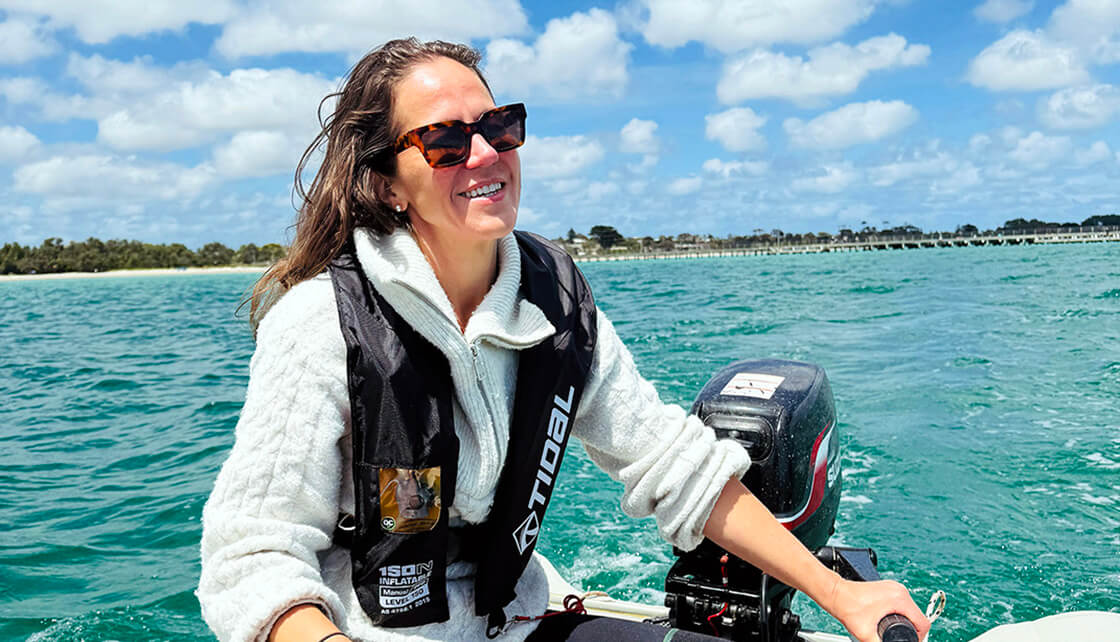
The first launch with Wayne was textbook. The rig had plenty of grunt, was easy to drive and everything ran smoothly. Then came my first solo launch. Well, almost solo, as I had my friend Jules along for support and muscle. We were soon on our way out to the scallop grounds not far from shore.

Then we then hit a snag … the engine wouldn’t start. Admittedly, we had trouble getting it going initially, but I figured it was just a matter of getting used to the motor. Eventually I gave up and swam in with the boat in tow.

Just as the shame reached peak levels, Wayne appeared with coffee and calm confidence. With one pull, vroooom, the engine fired to life. Apparently, you don’t just yank the cord like a lawnmower on steroids; you pull slowly until you feel resistance, then give it a swift yank. Another lesson learned.

Take two for scalloping and … surprise! A hole in the hull. I still don’t know how it happened, but cue another call to Wayne and another day heading home without scallops.

Despite the setbacks, this was one of the best decisions I’ve made and I’ve learned more in a few solo outings than in decades of tagging along. I’ve now got a towball and have scored a second-hand trailer, so I keep my hull inflated and ready to roll.

This journey has proven to me that boat ownership doesn’t have to be expensive or overwhelming. Sometimes it’s humbling, but it’s always worth it.

  • Know your ‘why’: are you after solo freedom, fishing trips or family adventures? Your purpose will steer your purchase.
  • Set a realistic budget: and then pad it for registration, safety gear and surprise fixes, to name a few.
  • Choose a boat that suits your lifestyle and ability: and your strength, too. Can you lift it, launch it and manage it alone? 
  • Ask for help: if you don’t know your transom from your tiller, bring someone who does.
  • Start small: your first boat doesn’t need all the bells and depth sounders. Get something manageable, build your confidence and skill, and upgrade later if you need to.
  • Check the motor: is it included? This sounds like a silly question, but often the motors aren’t included in the sale. And be sure that it’s reliable and that you can start it without rupturing a shoulder.
  • Inspect the hull and trailer: look for cracks, corrosion, dodgy repairs and signs of neglect. Check if the trailer is registered and roadworthy. 
  • Understand the safety gear requirements: these vary by state, boat size and water type, so do your research. Or be like me and nearly faint when you realise how much gear you need for just a ‘little boat’. See Club Marine’s Safety Equipment Checklist.
  • Test the setup: run a dry test before hitting the water and then stay close to shore on your first run.
Give us a call on 1300 00 CLUB (2582)

Any advice here does not take into account your individual objectives, financial situation or needs. Terms, conditions, limits and exclusions apply. Before making a decision about Club Marine boat insurance, consider the Product Disclosure Statement (PDS)/Policy Document and Supplementary PDS (if applicable). Where applicable, the PDS/Policy Document, Supplementary PDS and Target Market Determination (TMD) for Club Marine boat insurance are available on this website. We do not provide any form of advice if you call us to enquire about or purchase a product.

Club Marine Limited (ABN 12 007 588 347), AFSL 236916 issues Club Marine boat insurance and handles and settles claims as agent for the insurer Allianz Australia Insurance Limited (ABN 15 000 122 850) AFSL 234708 (Allianz). Club Marine Limited is a related body corporate of Allianz. Copyright © 2026 Allianz Australia Limited.