
Ever wondered how to take a standard boat and turn it into a high-performance fishing machine? In this video, we break down the ultimate setup for your tinnie, covering everything from essential electronics to advanced power systems.
How to turn your tinnie into a fishing machine
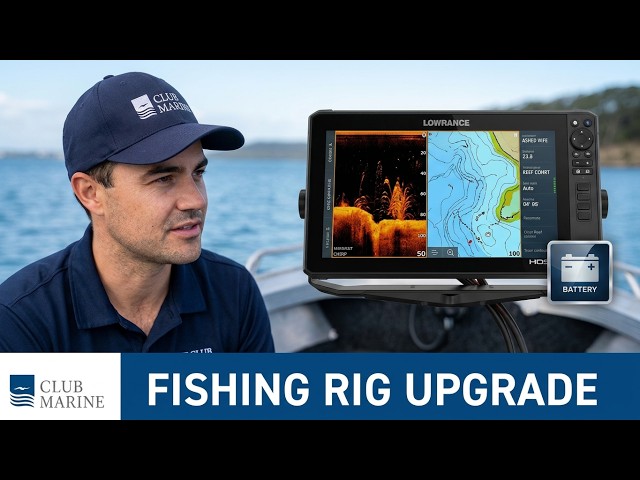
There’s a boat, then there’s a fishing boat, and then there’s a tinnie that has been transformed into a genuine fishing machine.
In this video, I want to talk about what it takes to turn a boat into a proper fishing vessel. What accessories do you need to install? What sort of power system should you run? Which electronics are essential? And, perhaps most importantly, how should everything be laid out? Let's get into it.
If you want a serious fishing machine, you need a sonar unit. Whether you call it a chartplotter, multi-function display (MFD), sounder or GPS unit, it is one of the most important pieces of equipment on a fishing boat.
Modern units provide an astonishing amount of information. They combine GPS mapping with detailed chart systems, showing your location, reef structures, underwater features and other navigational information that helps you identify productive fishing areas. They also offer sonar capabilities, sending signals to the bottom and back through a transducer to reveal fish, bait schools and predators in the area.
Today's technology goes even further, with live sonar systems such as ActiveTarget providing real-time views of what's happening beneath the surface. If you're serious about fishing, a quality sonar unit is no longer optional.
However, it's not just about the technology itself. Mounting and accessibility are just as important. You need to be able to view the screen easily whether you're searching for fish or actively casting. It's also worth investing in a reliable mounting system and a battery setup capable of powering your electronics for extended periods rather than just a few hours.
The best fishing setups often feature two sonar units. While this may seem excessive, each unit serves a different purpose.
A unit mounted at the helm helps you navigate, locate fish and reach your chosen fishing spot. A second unit mounted near the bow allows you to monitor fish and structure directly beneath you while casting. This becomes particularly valuable when targeting species such as barramundi or when using live sonar technology, where real-time information can make a significant difference.
A casting deck is another key feature of a well-equipped fishing boat. The raised platform provides a better vantage point, allows for longer and more accurate casts, and creates additional dry storage space beneath the deck.
Most dedicated fishing boats include casting decks from the factory, but they can also be added later. Beyond the major upgrades, it's often the smaller additions that make everyday fishing easier. A bait board across the transom creates a convenient workspace for rigging and cleaning fish. A livewell or aerated bucket helps keep bait alive, while LED lighting and a sound system can make long days on the water more enjoyable.
Because this boat belongs to you, it can be customised to suit your style of fishing.
Simple additions can make a huge difference. Rod holders positioned near the casting deck keep equipment within easy reach. Phone mounts allow you to securely display navigation or weather information while underway. Extra rod storage ensures you can carry all the gear you need without cluttering the deck.
Because this boat started as a blank canvas, it could be customised exactly as required, and that's where the fun begins.
One of my favourite upgrades is SeaDek flooring. It's something I'll continue fitting to future boats because it increases usable standing space, reduces the noise typically associated with aluminium tinnies, and significantly improves the overall appearance of the boat.
In my opinion, one of the most important factors in transforming a good boat into a great fishing boat is the power system.
On this particular tinnie, I wanted a setup that was reliable, efficient and capable of powering all of my electronics without compromise.
Beneath the hatch is a 12-volt, 300-amp lithium battery dedicated to the boat's electronics. It powers both HDS units, the ActiveTarget module and the navigation lights. This serves as the house battery system. With 300 amp-hours available, it can run the onboard electronics for days without requiring a recharge.
The second battery is a 24-volt, 100-amp lithium battery dedicated solely to the trolling motor. Since the motor operates on 24 volts, it requires its own separate power source. I often use the trolling motor continuously for eight or nine hours a day, so having a dedicated battery system ensures consistent performance throughout a fishing session.
The final battery is the cranking battery. This is a single 12-volt deep-cycle battery whose only responsibility is starting the outboard engine.
In the past, I made the mistake of running multiple accessories from the cranking battery, effectively turning it into another house battery. On more than one occasion, I ended up with a flat battery and a boat that wouldn't start. It was a lesson learned the hard way.
Now, I keep the systems completely separate: a house battery for electronics, a dedicated lithium battery for the trolling motor, and an independent cranking battery for the outboard. This approach provides reliability and peace of mind every time I'm on the water.
Once you've got your fishing system dialled in, the results can be extremely rewarding.
During a recent session at Boondooma Dam, the electronics showed fish holding in around 10 metres of water before the bottom rose to eight metres. I cast a lure out and allowed it to sink, working it with a series of lifts and drops. The breeze had started to strengthen, which was welcome after a hot day, and I suspected the change in conditions might trigger some feeding activity.
As I hopped the lure back, I could feel the vibrations through the rod. The lure would rise and fall through the water column as I waited for a bass to become interested, believing it was a wounded baitfish.
Then the strike came.
I initially missed what felt like a very solid bite and thought I had lost my chance. Moments later, however, another fish committed, and it turned out to be much larger than expected.
This was exactly the scenario you hope for when targeting schooling bass. You locate the fish, work your lure through the school, and patiently wait for that distinctive thump on the line that Australian bass are known for.
When the fish finally came to the boat, it was clear it was a quality specimen. It was heavy, thick through the shoulders and in excellent condition. The strengthening breeze may have been the trigger that switched the fish on, demonstrating how small changes in weather can have a dramatic impact on fish behaviour.
A quick measurement confirmed the fish at 46 cm to the tips, an outstanding Australian bass and a catch I was very pleased with before releasing it back into the water.
RELATED VIDEOS



Any advice here does not take into account your individual objectives, financial situation or needs. Terms, conditions, limits and exclusions apply. Before making a decision about Club Marine boat insurance, consider the Product Disclosure Statement (PDS)/Policy Document and Supplementary PDS (if applicable). Where applicable, the PDS/Policy Document, Supplementary PDS and Target Market Determination (TMD) for Club Marine boat insurance are available on this website. We do not provide any form of advice if you call us to enquire about or purchase a product.
Club Marine Limited (ABN 12 007 588 347), AFSL 236916 issues Club Marine boat insurance and handles and settles claims as agent for the insurer Allianz Australia Insurance Limited (ABN 15 000 122 850) AFSL 234708 (Allianz). Club Marine Limited is a related body corporate of Allianz. Copyright © 2026 Allianz Australia Limited.