
- Marine Theft Vulnerability: Boats are highly valuable and portable, making them prime targets for theft, especially in densely populated areas like Sydney, Melbourne, and Brisbane/Gold Coast. Common targets include trailerable vessels, ski boats, jet skis, and portable items like electronics and fishing gear.
- Prevention Strategies: To help deter theft, secure boats and trailers with locks, chains, and immobilizers, remove valuables when not in use, and utilize alarms and tracking devices. For marina-stored boats, ensure active security measures and vigilance against both shore and waterborne threats.
- Record Keeping and Awareness: Maintain detailed records of boat and equipment serial numbers and purchase receipts, report thefts quickly to police, and use social media to raise awareness of the theft. Be cautious of purchasing stolen goods, checking identification numbers and paperwork thoroughly, and utilising resources like the Personal Property Securities Register (PPSR) to verify ownership.
Tips to help prevent boat and watercraft theft
By Mark Rothfield
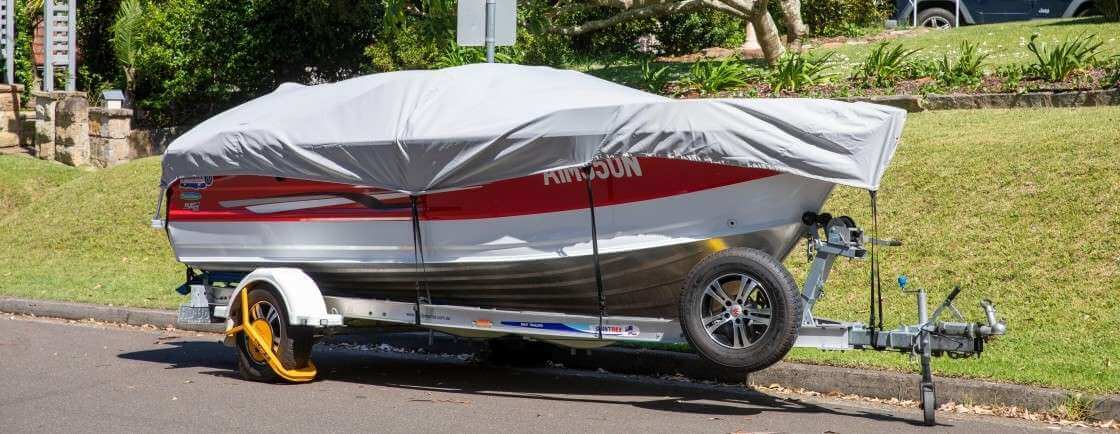
The free-range mobility of boats is a major attraction for owners, but also for thieves. Fortunately, there are some tips to help deter or prevent theft.
Quick overview
In the 40+ years I’ve owned boats, I’ve twice been the victim of marine theft. Both times involved a portable yet padlocked auxiliary outboard that succumbed to a bandit’s brazen bolt cutters in the dark of night.
One was aboard a moored yacht, where thieves tied up alongside in full view of waterfront houses, forcefully opened the companionway hatch and helped themselves. The other was on a trailer sailer parked right outside my house, ready for an early morning getaway.
You’re left feeling infiltrated and infuriated, especially if you really care for your gear. Unfortunately, though, boat theft is as old as boats themselves because they’re highly valuable and highly portable. If your vessel is trailerable, if it has electronics, fishing gear or anything else that’s compact and movable, then beware – it has a target on it for thieves.
You can say the same for skiboats and gear, jetskis, and boats on swing moorings or even in secured marinas. All too often, CCTV footage shows just how quickly someone can wheel a trailer down a driveway, hook up and go, or climb aboard and break in.
Common areas for boat theft
You might imagine that most thefts occur in idle backwaters, yet the rates are actually higher in areas of dense population, the national leaders being Sydney, Melbourne and Brisbane/Gold Coast. When you think about it, the smorgasbord of boats includes many that are stored on the street or front yard because garage or carport storage is unavailable. Easier pickings, then, for both organised gangs and opportunistic amateurs.
Only a small percentage of stolen boats and equipment are recovered. It may be within days if you’re lucky, others can be drawn out for years or disappear forever. Sometimes a boat dealer or repairer will cotton on to the fact that something’s amiss, or boats are found randomly in the street, denuded of valuable parts.
Tips to help prevent boat theft
There are a significant number of theft incidences where the vessel is in the open air and not securely locked, so it pays to make your boat harder to steal. When thieves are looking for an easy score, prevention is key.
It’s important to safeguard your possessions when unattended. If your boat doesn’t have a lockable compartment, chandleries carry a host of exterior clasps and locks that you could install.
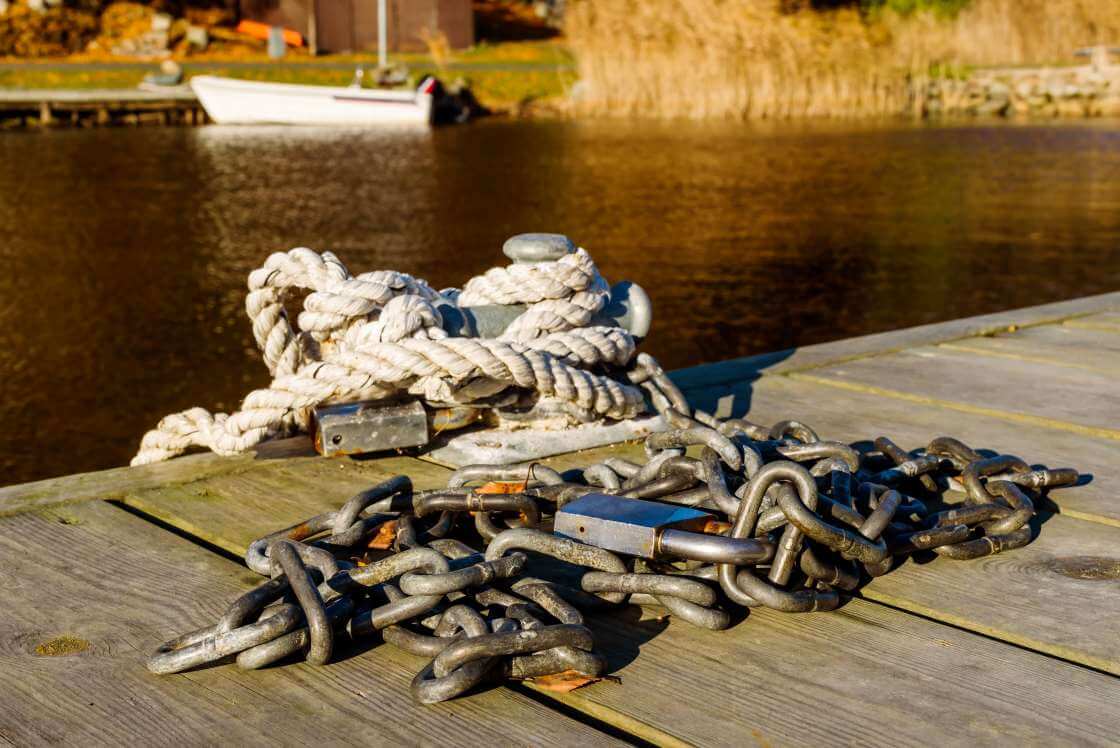
There are various fasteners for windows and hatches, too, and don’t forget the auxiliary outboard – a chain and lock provide some degree of deterrent (I also now bolt mine to the bracket). This is important if you have to make an insurance claim, as assessors will look for visible evidence of forced access.
As for moored boats, always lock the cabin and compartments, even if you’re only away for a short time. A fishfinder or a fishing rod can be pilfered from an open runabout while you’re walking to get the tow car or paying for fuel at the servo.
Prevention also means removing temptation, so take any mobile electronics, sports gear, tools, ski and diving equipment or valuables off the boat when it isn’t being used. Never, ever leave keys in the ignition – you’re practically asking someone to take it.
Boat covers may shield against prying eyes but they do also allow thieves to operate under a semblance of stealth.
Tips to help secure a boat trailer
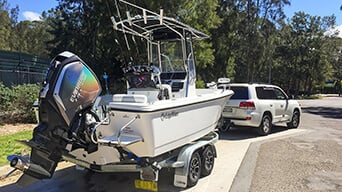
When it comes to trailers, hitch locks don’t necessarily stop boats from being stolen, they just stop them from being towed conventionally. Thieves can still roll the trailer away by hand, along with the boat.
Never make it easy for crooks to access the trailer tongue and, if possible, use a combination of sturdy chains and locks to secure your rig to a robust, fixed object such as a post or railing.
The next line of defence is a wheel-locking immobiliser device that can be combined with a chain and fixed object, or even consider removing a wheel and using blocks.
Better still, store your boat or PWC in a locked garage or locked yard and activate any security measures you have, such as motion sensor lights, alarms or surveillance cameras.
If you have a removable trailer light bar, store it separately from the boat. Thieves often work at night and risk attracting police attention if they’re caught driving without the required lighting.
Tips to help secure a boat at a marina
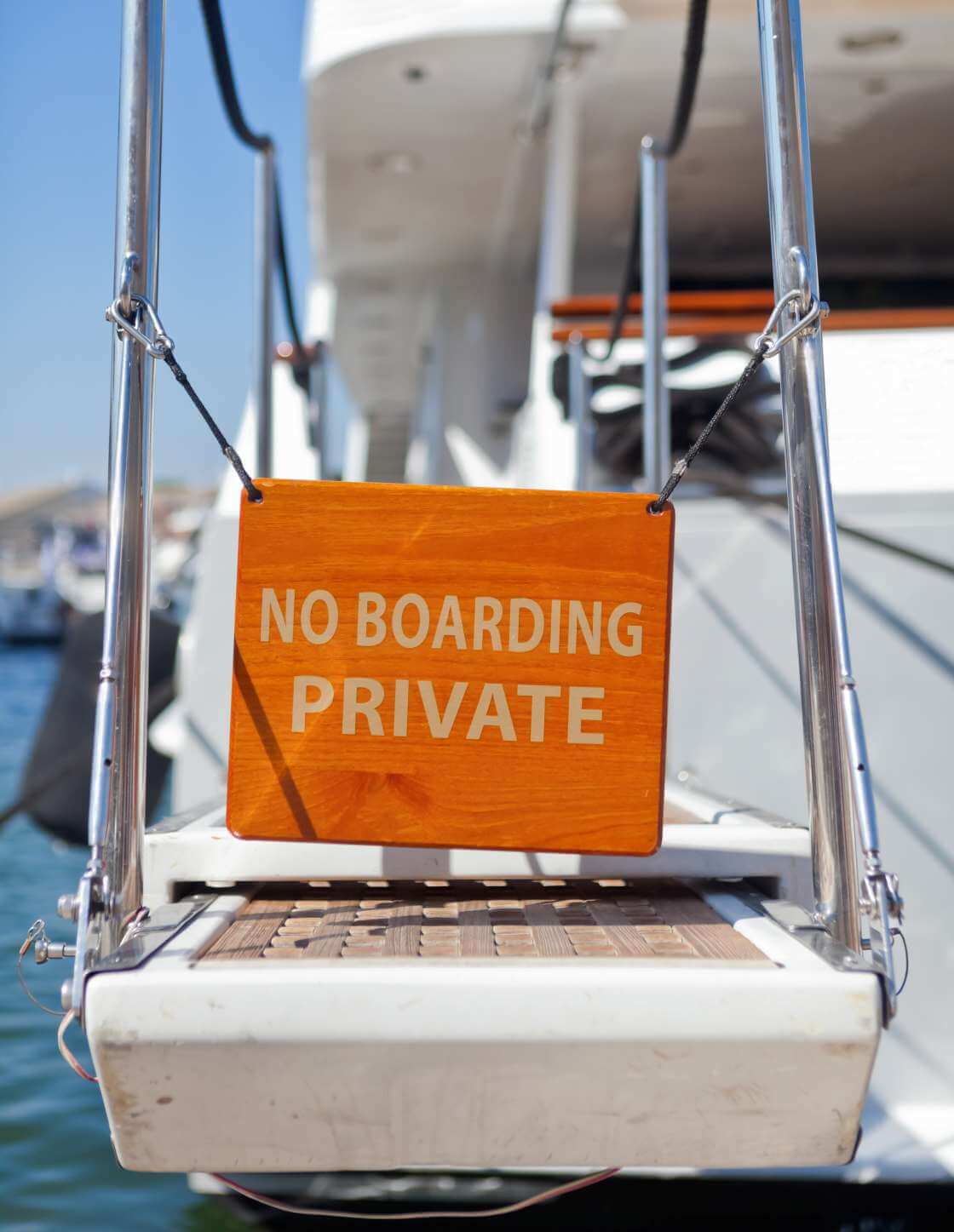
Statistically, boats are less likely to be stolen from a marina than a mooring, however there’s no room for complacency. When it comes to choosing a marina, look at its active and passive security arrangements, lighting, and whether there are permanently or semi-permanently lived-in boats nearby.
If you’re leaving your boat for long periods, arrange for someone to keep watch. Don’t leave the keys in a clever hidey-hole, since crooks know where to look as well. Dinghies are another hot item, so be sure to lock yours up.
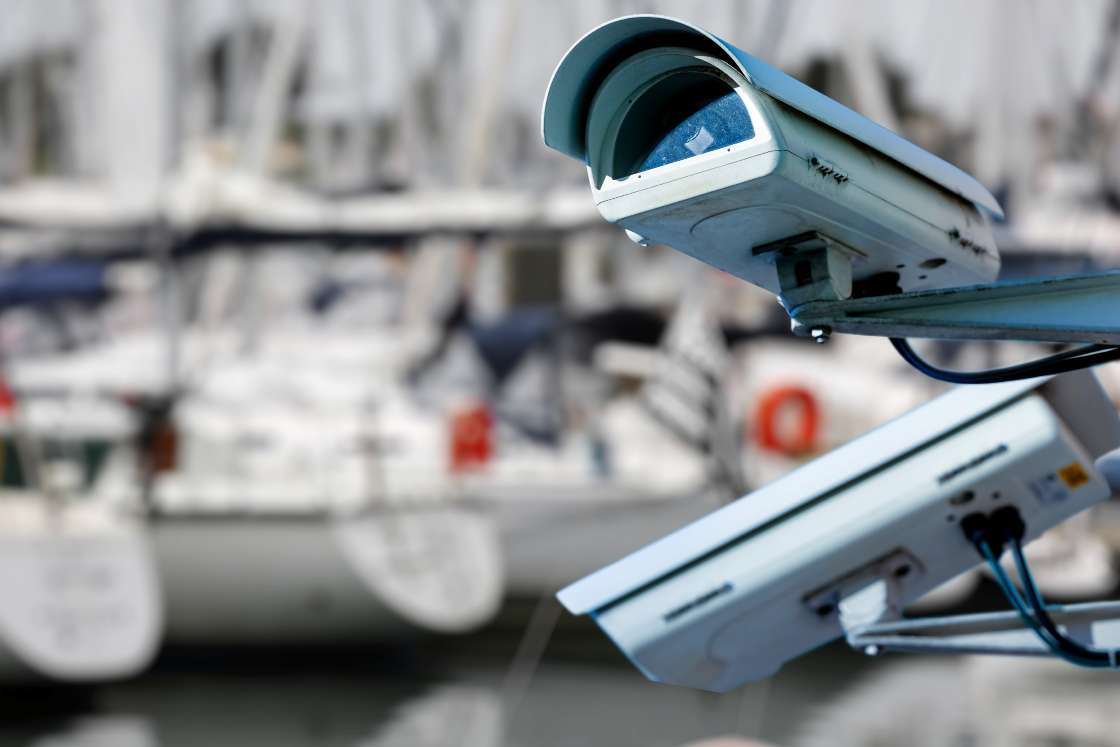
A motion-activated, solar-powered security light is often all it takes to deter a would-be prowler, and video surveillance is an upmarket consideration.
Not all thieves approach from shore. Be wary of waterborne visitors and report any suspicious behaviour.
Boat alarms and tracking devices
Don’t just be alert, be alarmed. There are lots of different systems, but it pays to ensure the alarm you buy is suitable for use in the marine environment.
Warning stickers or lights often dissuade thieves in the first place – failing that, sensors and motion detectors will trigger an alarm if they’re tripped. Some systems will send you an SMS alert when that happens.
GPS trackers are becoming popular, although professional crooks will often search for a device that might be on the boat. Consider fitting two trackers, with one being better concealed.
Modern monitoring technology keeps you connected with your vessel at all times via a smartphone, setting a geofence for the craft and issuing GPS alerts if the perimeter is exceeded.
A handy bonus is that these devices also track onboard systems such as battery status, bilge pump activity, shore power, engine performance, temperature, and more.
Club Marine members get 10% off solar and battery GPS tracking units at WHG Telematics.
Keep records of your boat and equipment
To increase the chances of getting your possessions back and possibly catching the culprits, record the serial and identification numbers and mark items with your name.
Photos, invoices and receipts help you prove ownership – they’re also evidence for your insurer as to what precautions you took to keep your vessel safe. Obviously, don’t store your rego papers and receipts on the boat. When you discover the theft, let the police and your insurer know immediately. Same with the marina or storage facility management. Even if you don’t intend to claim, at least it’s on the record if recovered.
And as soon as you can, post a photo of the missing item on social media, looking for community pages, fishing groups, boat owners’ groups and so on to share and remain vigilant. The more people who recognise a suspect item when offered for sale, the more likely police will be tipped off.
Rebirthing of stolen boats typically involves an attempt to change the physical identity and sometimes the serial numbers, both HIN and VIN. While there are checks and balances in place between the states, boats still fall through the cracks. Sadly, when an unsuspecting buyer attempts to re-register the craft, they’ll most likely lose the boat and their money.
To help reduce the chance of that happening, you can do a $2 search on the Personal Property Securities Register (PPSR) to check if the watercraft you’re buying has a security interest registered against it. PPSR is a federal online noticeboard run by the Australian Financial Security Authority.
MarineVAULT is another asset register and is part of a free community portal to combat theft in Australia. Thieves may be smart these days, but you can be smarter. It can happen to anyone at any time, so the more challenging you make it for thieves, the greater the odds of your boat, accessories and other items staying where they belong.
Be aware of stolen property for sale
The dark side of boat theft is the black market for marine hardware, which funds and fosters the illegal activities. Either unscrupulously or unwittingly, people are purchasing stolen property online or ‘off the back of a truck’ – the adage ‘if it looks too good to be true, it is’ certainly rings true.
Electronics and engines are among the hottest ticket items – if possible, check the serial numbers as part of your due diligence. If in doubt, contact the police or Crimestoppers (1800 333 000).
When inspecting a craft, be wary of an identification number that has been altered or obscured in any way. Obtain as much paperwork as possible from the seller and if there’s more than one registered owner, talk to the other party. Watch out for boats that recently arrived from interstate.
Finally, if you’re a buyer, be aware of scams where sellers offer items that don’t exist, other than in photo form. It’s not theft, per se, but the end result is the same – you’ll be left out of pocket and deeply disappointed.

RELATED ARTICLES





*Terms and conditions apply
Any discounts offered are applied to our standard rates. Promotional or other discounts may apply from time to time. Minimum premiums may apply. Any discounts/entitlements only apply to the extent any minimum premium is not reached. Where discounts are applied, your premium is subject to rounding. If you are eligible for more than one, we also apply each of them in a predetermined order to the premium (excluding taxes and government charges) as reduced by any prior applied discounts/entitlements.
Any advice here does not take into account your individual objectives, financial situation or needs. Terms, conditions, limits and exclusions apply. Before making a decision about Club Marine boat insurance, consider the Product Disclosure Statement (PDS)/Policy Document and Supplementary PDS (if applicable). Where applicable, the PDS/Policy Document, Supplementary PDS and Target Market Determination (TMD) for Club Marine boat insurance are available on this website. We do not provide any form of advice if you call us to enquire about or purchase a product.
Club Marine Limited (ABN 12 007 588 347), AFSL 236916 issues Club Marine boat insurance and handles and settles claims as agent for the insurer Allianz Australia Insurance Limited (ABN 15 000 122 850) AFSL 234708 (Allianz). Club Marine Limited is a related body corporate of Allianz. Copyright © 2026 Allianz Australia Limited.