How to tow your boat safely

Dominic Wiseman

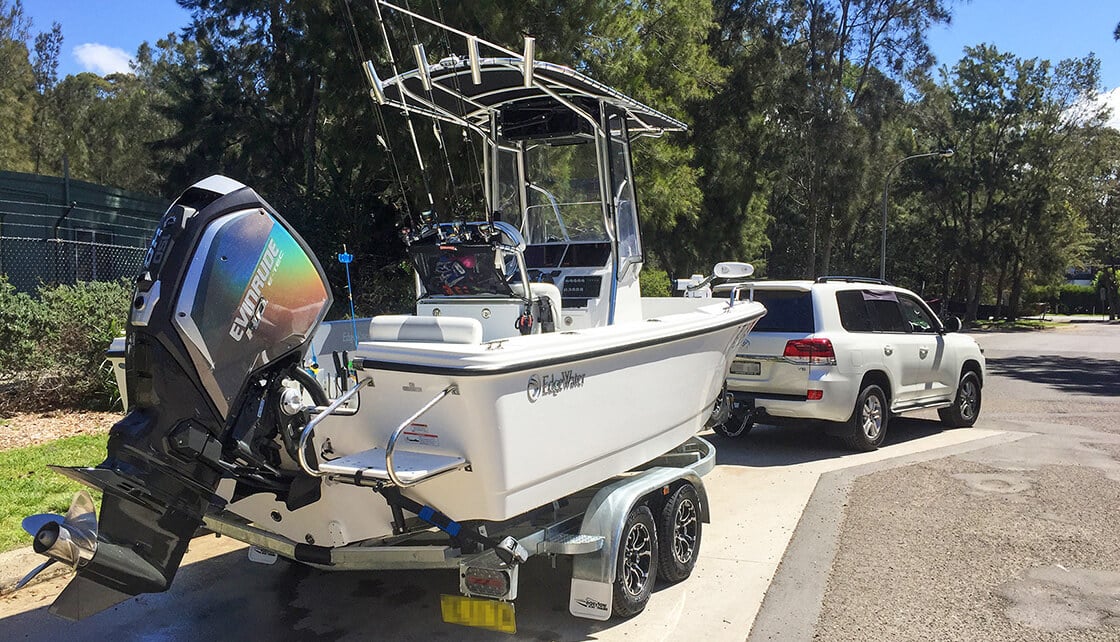
There’s nothing more Aussie than knocking off early on a Friday and pointing the car and trailer towards saltwater, but towing several tonnes of boat down the highway is a task not to be taken a lightly. 

This article looks at the three trailer-brake classes, the laws each state or territory throw at us, realistic stopping distances, and the art of load balance so you can arrive with bragging rights instead of roadside regrets. 

If you’re towing a smaller boat on a trailer that weighs under 750kg GTM (Gross Trailer Mass), you’re most likely using an unbraked trailer. These are legal at that weight and are ideal for lightweight setups like dinghies or small tinnies. 

But just because the law says you don’t need brakes, doesn’t mean you won’t feel the impact – your vehicle’s stopping distance can double when you’re relying on its brakes alone to pull up the extra weight.

Mechanical override trailers, which cover the range between 750 and 2000kg GTM, are where things get a bit more technical. These trailers use a system that’s activated by the trailer pushing against the tow vehicle when you brake. It’s a simple, cost-effective setup for boats in the 4 to 6m range. 

Once your trailer tips past 2000kg GTM, the rules tighten up. You’ll need electric or electric-hydraulic brakes on all wheels, and you’ll also be required to fit a breakaway system that engages the brakes if the trailer becomes detached. 

You can adjust the brake gain from the driver’s seat, dial in the perfect response, and dramatically reduce stopping distances compared to the other types of trailers.

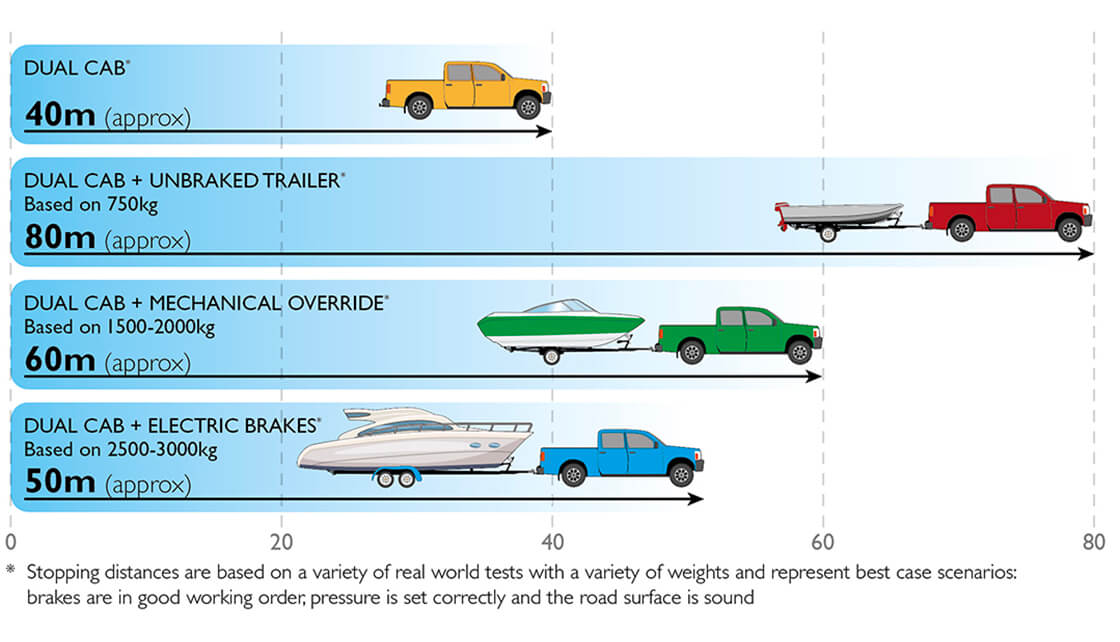
Towing a trailer changes the dynamic of how your vehicle responds, particularly when it comes to stopping. A standard popular dual-cab ute travelling at 100km/h on a dry highway might take an average of 40m to stop under normal conditions. Add a trailer into the mix, and things get interesting fast.

With an unbraked trailer weighing around 700kg, stopping distances can nearly double, ballooning out to roughly 80m. Mechanical override trailers, on average, bring that closer to 60m but that’s still a long stretch of bitumen to pull up on if a kangaroo jumps out or traffic suddenly slows. 

If you’re using electric brakes with a well-set-up system and a decent brake controller, you can expect stopping distances hovering around 50m. These are estimates, of course.

Australia’s national vehicle standards lay the groundwork for trailer towing, but each state and territory adds its own local twist. 

In NSW, for example, you’re expected to stick to the general trailer rules around weight and brakes. 

Queensland places a strong emphasis on ensuring your trailer is roadworthy and not exceeding your vehicle’s maximum towing capacity. 

Victoria adopts the national rules almost to the letter. Where it gets interesting is in the detail – if you’re registering a new trailer, you’ll need to provide certification under the RAV (Road Vehicle Standards) scheme. South Australia, on the other hand, has similar brake thresholds to other states but reminds P-plate drivers that they’re capped at 100km/h, regardless of whether they’re towing or not.

In WA, any vehicle towing a trailer is subject to a hard 100km/h limit. They also have a rule requiring at least 60m of separation between vehicles towing trailers on open roads.

Tasmania, the Northern Territory, and the ACT follow the national guidelines closely, but be sure to check registration requirements. Tassie, for instance, requires your trailer to be signed off as VSB1 compliant at the time of initial rego.

Keep all of this in mind if you’re planning to tow your boat across state borders, too.

Ideally, your boat’s centre of gravity should sit just forward of the trailer’s axle, ensuring that around 8 to 15 per cent of the total loaded trailer weight is applied as downward force on the tow ball. 

If you’re too light on the hitch, the trailer can sway at speed. Too much weight on the tow ball and you risk lightening the steering on your vehicle, which reduces control and compromises braking.

Heavier items such as batteries, full fuel tanks and iceboxes should sit low and centrally over the axle. Up front, the bow should be cinched down tight with both a winch strap and a secondary safety chain or turnbuckle to ensure it doesn’t jump the roller. At the back, transom straps or a single strap over the boat’s midsection helps prevent vertical bounce.

Single-axle trailers are lighter, easier to manoeuvre (especially when pushing them by hand), and cheaper to maintain thanks to fewer tyres, bearings, and brakes. They’re perfect for rigs under two tonnes and are often paired with boats under 6m.

But when you start hauling more than that, dual axle trailers become the safer option. They’re inherently more stable and offer a more forgiving ride over rough roads. They also help spread the load, reducing wear and tear on both the trailer and the boat.

One of the simplest yet most overlooked things you can do before towing is to check your tyre pressure. Most marine-grade trailer tyres run around 50psi, and it’s best to check them cold before every trip. Don’t forget the spare, either. 

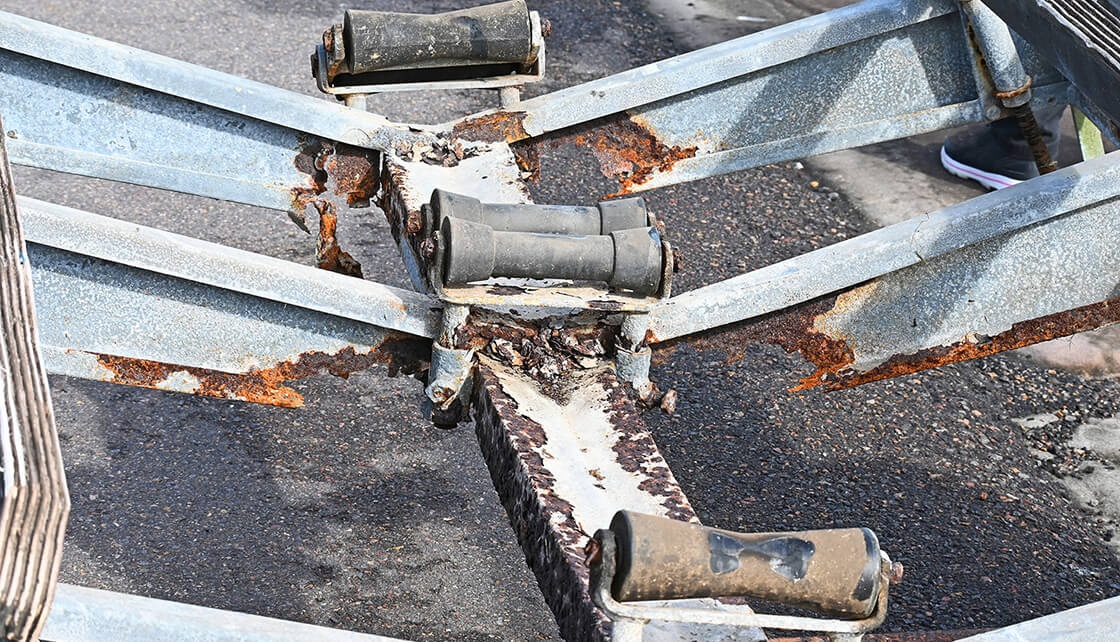
Your bearings should be greased at least once a year or after particularly sandy trips, and your wheel nuts should be checked before every major haul. 

Electric brake systems on trailers over two tonnes also rely on a dedicated battery, which should be checked periodically to ensure it can hold the brakes for at least 15 minutes in the event of a breakaway.

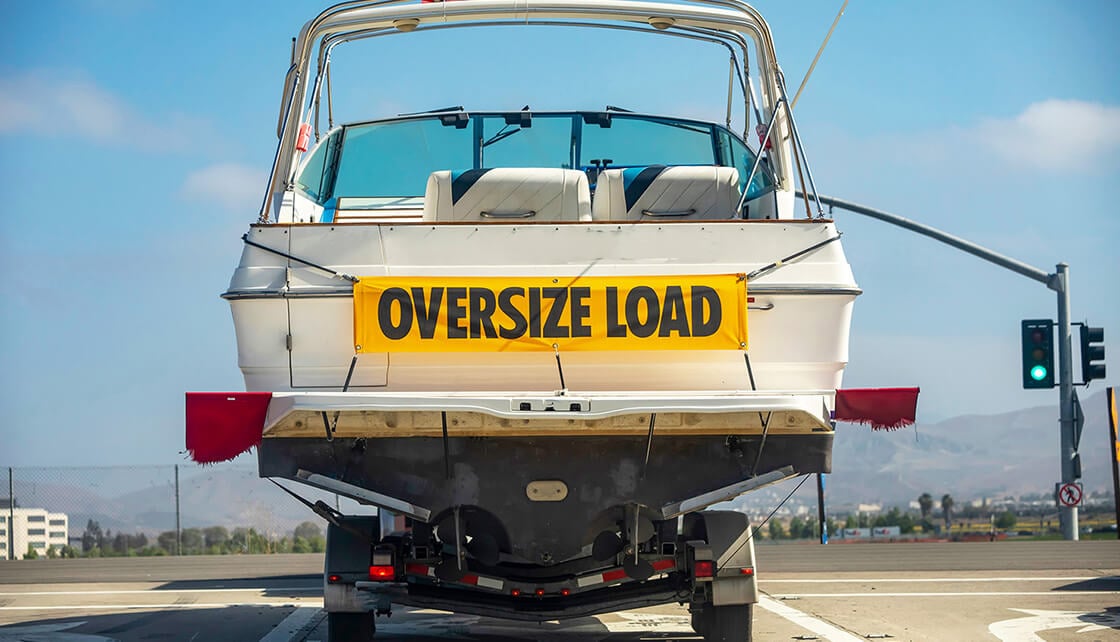
In Australia, the maximum allowable width for a trailer and load without special permits is 2.5m, and the total length including vehicle and trailer must not exceed 19m. If your rig exceeds this, you’ll need to comply with oversize load conditions, which vary by state but share common requirements.

For oversize tows (usually up to 3.5m wide), you’ll often need to display ‘Oversize’ signage, use amber rotating beacons on the tow vehicle, and only travel during daylight hours. In some states, like NSW and Queensland, pilot vehicles become mandatory once the width exceeds 3.1m. You also need to avoid built-up areas during peak traffic hours and stick to designated oversize routes if available.

Another catch? Insurance. Many policies don’t automatically cover oversize trailers unless specifically declared. If you’re hauling a boat that’s even brushing up against that 2.5m legal width, it’s worth confirming coverage before you hit the road.

Stick to the rules, keep your wits about you, and you’ll be the one backing down the ramp with confidence – not starring in a roadside rescue video.

Give us a call on 1300 00 CLUB (2582)

Any advice here does not take into account your individual objectives, financial situation or needs. Terms, conditions, limits and exclusions apply. Before making a decision about Club Marine boat insurance, consider the Product Disclosure Statement (PDS)/Policy Document and Supplementary PDS (if applicable). Where applicable, the PDS/Policy Document, Supplementary PDS and Target Market Determination (TMD) for Club Marine boat insurance are available on this website. We do not provide any form of advice if you call us to enquire about or purchase a product.

Club Marine Limited (ABN 12 007 588 347), AFSL 236916 issues Club Marine boat insurance and handles and settles claims as agent for the insurer Allianz Australia Insurance Limited (ABN 15 000 122 850) AFSL 234708 (Allianz). Club Marine Limited is a related body corporate of Allianz. Copyright © 2026 Allianz Australia Limited.