Circle hooks for fishing

Al McGlashan

The first time I saw a circle hook I laughed it off, thinking they couldn’t possibly catch anything. Decades later, it’s the only hook to use when fishing with natural bait, no matter what species you’re pursuing.

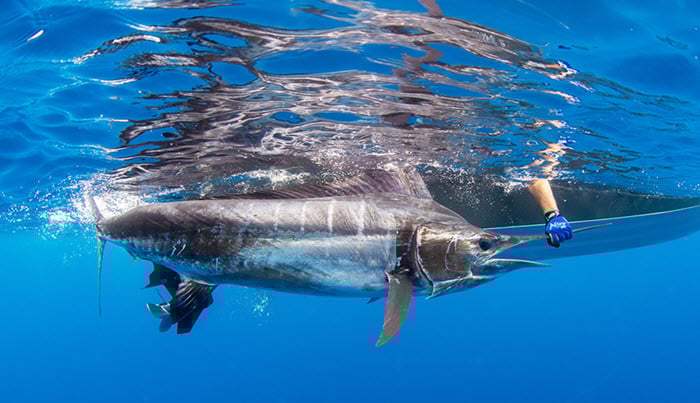
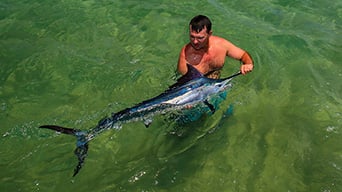
Initially, I used circle hooks for marlin, and it took some time to get my head around not striking after a lifetime of needing to strike with J hooks – but once that circle hook locks in around the jaw hinge, it proves near impossible to pull free.
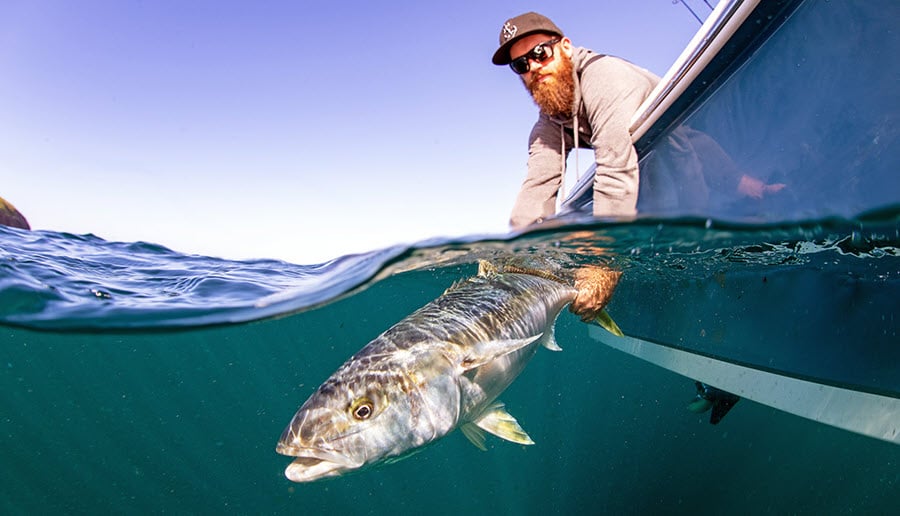
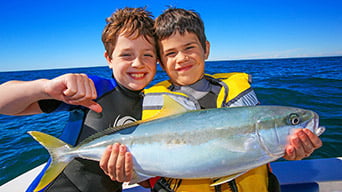
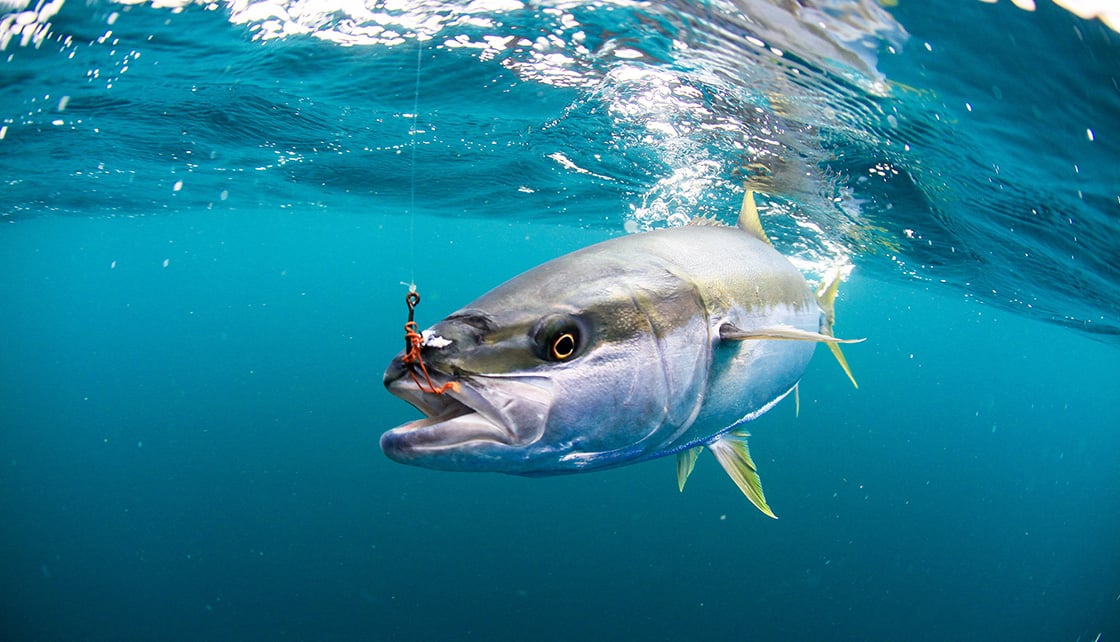
The success with circle hooks quickly spread across all my fishing. Kingfish were right up there as they’re notorious for pulling hooks because they go so hard, but once those circles found their mark, they locked in no matter how hard they pulled.

At the same time, we’d just begun to realise that kingfish stocks were in trouble. It became imperative to release the big fish, making circles all the more vital. The more confident we got, the more species we caught on them, all the way down to snapper and King George whiting.

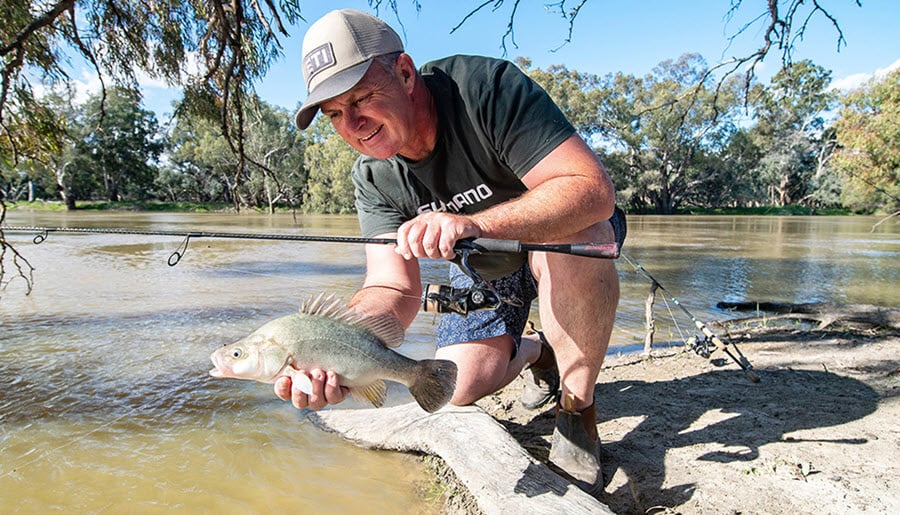
Flathead are the same for anglers chasing them with bait. Even in the freshwater scene, anglers chasing cod and yellows are these days employing circles.


A circle hook has the point curled in so that it points back at the shank and is perfectly inline. If the hook’s point is angled out, it grabs as it moves up the gullet and often catches in the gills, a weak anchor point that also harms the fish.

Circle hooks’ sizing can be confusing – a 10/0 circle hook is roughly the same size as a standard 6/0 livebait hook. I use circle hooks a lot smaller than I would with J hooks. For whiting, a tiny size 4 is perfect; for kings it’s a 7/0; for big striped marlin a 9/0 and for swordfish we jump up to a 14/0.

Circle hooks are designed to hook the fish without any assistance from the angler. Resisting the temptation to strike is the key to success.

Circle hooks work on the principle that the fish swallows the natural bait, be it dead or alive, and then swims off. If you’re using artificials where the fish strike and then immediately spit it out when realise it’s not food, a J hook or treble is still necessary.

The concept is really simple: water pressure increases on the line, drawing the hook up around the jaw hinge. A J hook will have found its mark earlier, catching on anything and digging in deep down in the gut.

A sinker can put on unwanted pressure and bounce the hook out. The best approach is to manage the line and compensate for the additional weight only giving the fish a bit of line.

The most common question is how long do you free spool for? To be honest, every situation is different, as is every rig you’re employing and species you’re chasing. The best advice is to thumb the spool gently and if you feel weight, then increase the pressure. If you push the drag up and get nothing, then instantly drop it back down and see if you get a second chance. 

If you bury the hook in the bait so the hook point is hidden, you’re going to greatly impede the hook-up process.

The same goes if you bridle it really tight to the head of the bait – it’ll restrict the hook’s ability to roll over and lock in on the jaw hinge, so ensure the hook point is exposed.

For deep-water delights like blue eye and ling, there’s not a single angler who would use anything but a circle hook. Sharks are also made for circle hooks – in some cases, you can even get away with mono leaders.

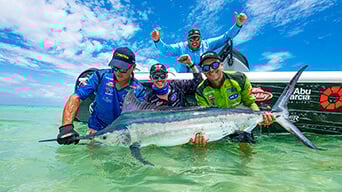
Another one is billfish. Around the world, anglers have adopted circle hooks for natural bait to the point that it’s now law in many countries. Sadly, Australia has no regulations, but nearly all billfish tournaments only allow circle hooks for natural bait.

No matter whether you’re deep dropping over the shelf, chasing snapper or livebaiting for billfish, there is only one option that’s better for you and better for the fish, and that’s circle hooks.

THE FULL ARTICLE ON CIRCLE HOOKS RAN IN THE APRIL-MAY 2024 (VOLUME 39.2) ISSUE OF CLUB MARINE MAGAZINE.

SUBSCRIBE TO CLUB MARINE MAGAZINE.

Give us a call on 1300 00 CLUB (2582)

Any discounts offered are applied to our standard rates. Promotional or other discounts may apply from time to time. Minimum premiums may apply. Any discounts/entitlements only apply to the extent any minimum premium is not reached. Where discounts are applied, your premium is subject to rounding. If you are eligible for more than one, we also apply each of them in a predetermined order to the premium (excluding taxes and government charges) as reduced by any prior applied discounts/entitlements.

Any advice here does not take into account your individual objectives, financial situation or needs. Terms, conditions, limits and exclusions apply. Before making a decision about Club Marine boat insurance, consider the Product Disclosure Statement (PDS)/Policy Document and Supplementary PDS (if applicable). Where applicable, the PDS/Policy Document, Supplementary PDS and Target Market Determination (TMD) for Club Marine boat insurance are available on this website. We do not provide any form of advice if you call us to enquire about or purchase a product.

Club Marine Limited (ABN 12 007 588 347), AFSL 236916 issues Club Marine boat insurance and handles and settles claims as agent for the insurer Allianz Australia Insurance Limited (ABN 15 000 122 850) AFSL 234708 (Allianz). Club Marine Limited is a related body corporate of Allianz. Copyright © 2026 Allianz Australia Limited.