
Sailing at night preparation and safety

Crosbie Lorimer| Photography: Dallas Kilponen and Supplied
Even novices can conquer the waves at night with proper preparation and some basic tips.

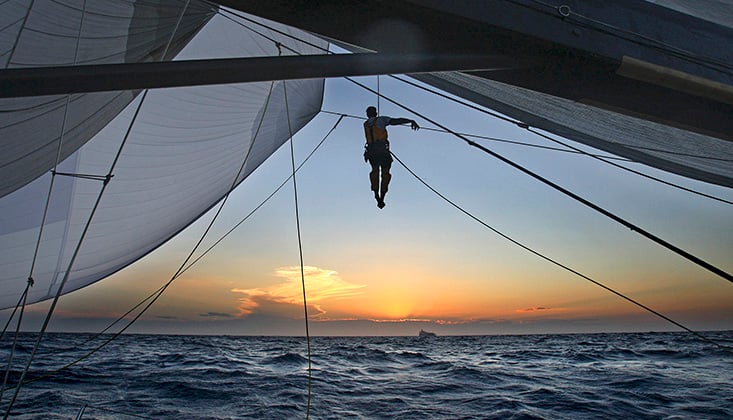
The magic of being at sea after dark is something special – seeing a sky crowded with stars, moonlight shining across the waves, a lighthouse beam over the horizon, and dolphins outlined by the glow of phosphorescence.

There are however some particular challenges of sailing at night, so what should someone contemplating their first overnight sail know beforehand?
For those with little experience, beginning with an overnight cruise, joining a sailing course or even searching out a reputable delivery crew could all provide a less stressful first experience. You also need to be well-rested in the days before you sail to ensure you’re alert and able to enjoy the time.

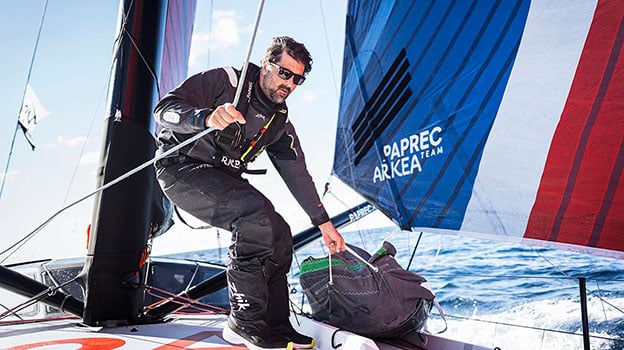
The key to staying comfortable and dry is layering. For external protection it’s worth buying the best offshore sailing jacket and bib/trousers you can reasonably afford. For the inner layers, sailing or camping stores offer vests, leggings and thermals that wick sweat away from the body.

If you can afford them, also invest in a pair of good seaboots. For the head, a beanie keeps you surprisingly warm.

A list of essential safety equipment for racing or cruising would include a PFD (Personal Flotation Device) with a strobe light and whistle, plus tether line, all of which should be worn at night, whatever the conditions. A wearable EPIRB (Emergency Position Indicating Radio Beacon) is another must-have and can be hired if required.

Other important equipment include a sharp knife or multi-tool knife kit, a small torch, water bottle, a lightweight sleeping bag or sea rug, and a compact bag or backpack (waterproof).

If your skipper hasn’t shown you where the emergency equipment is stored (flares, first-aid kit etc) or described MOB drills, then ask for that briefing before you set sail.

Heading up on deck can be a dangerous moment, so make sure you clip your harness tether to a strong point in the cockpit before leaving the companionway. Likewise, never venture onto the foredeck at night or in rougher conditions without being clipped on.

The old adage ‘one hand for the boat and one for yourself’ is always well to remember.

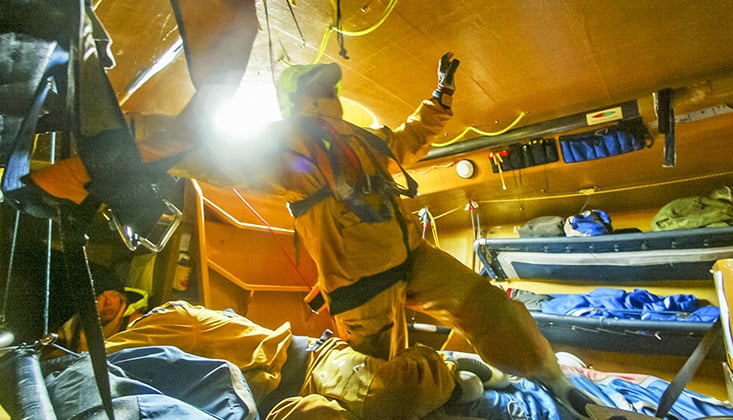
A common watch rotation is four hours on and four hours off, as this is considered the minimum period required to achieve full REM sleep. You will usually be roused 15 minutes ahead of your watch.

Your responsibilities will vary but could include port and starboard lookouts, trimming sails, changing sails, steering, logbook entries, and preparing drinks and snacks. Watch leaders are generally responsible for briefing their own watch and that of the oncoming watch.

Night vision is very swiftly lost if a torch is shone in anyone’s eyes, which is especially problematic for the helmsperson and lookouts. On some yachts, sail changes and other activities are carried out under red light mode only.

Many first-timers stay on deck too long and end up getting exhausted, so it’s important to get into the watch rhythm. Down below, take a moment to change into dry clothes and get your gear organised. If you can’t sleep, don’t fret; getting rest is still important.
The dread of having to use the head at sea can change toilet habits dramatically when offshore. There’s no option for number twos except to use the head, but needing a wee is a regular inevitability. In rough weather, the use of a specimen bottle belowdecks (adapters are available for women) is easier and safer than using the heads.

There are numerous preventative treatments for seasickness, but whichever you choose, it’s wise to test it well in advance to ensure you have no adverse reactions.

Staying hydrated is critical to recovery from seasickness, especially if vomiting persists, so taking regular small sips of water – or better still hydrolytes – is essential. Eating is usually the last thing you feel like when struck with seasickness but that, too, is important.

There’s a lot to take in for the first-time overnight sailor. But spending time sailing at sea is an experience not to be missed.

Give us a call on 1300 00 CLUB (2582)

Any advice here does not take into account your individual objectives, financial situation or needs. Terms, conditions, limits and exclusions apply. Before making a decision about Club Marine boat insurance, consider the Product Disclosure Statement (PDS)/Policy Document and Supplementary PDS (if applicable). Where applicable, the PDS/Policy Document, Supplementary PDS and Target Market Determination (TMD) for Club Marine boat insurance are available on this website. We do not provide any form of advice if you call us to enquire about or purchase a product.

Club Marine Limited (ABN 12 007 588 347), AFSL 236916 issues Club Marine boat insurance and handles and settles claims as agent for the insurer Allianz Australia Insurance Limited (ABN 15 000 122 850) AFSL 234708 (Allianz). Club Marine Limited is a related body corporate of Allianz. Copyright © 2026 Allianz Australia Limited.