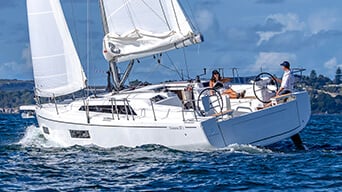
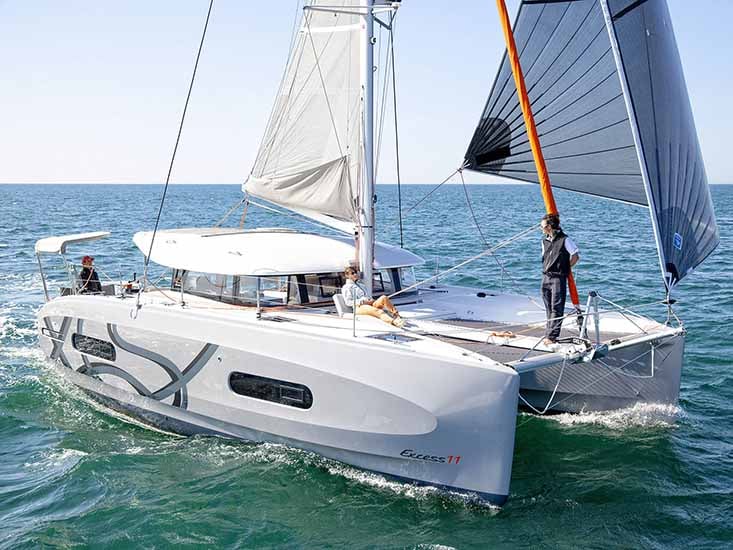
Beneteau Excess 11 boat test

Kevin Green | Photography: Nicolas Claris and Kevin Green
One of the smallest production cruising cats is big on value.

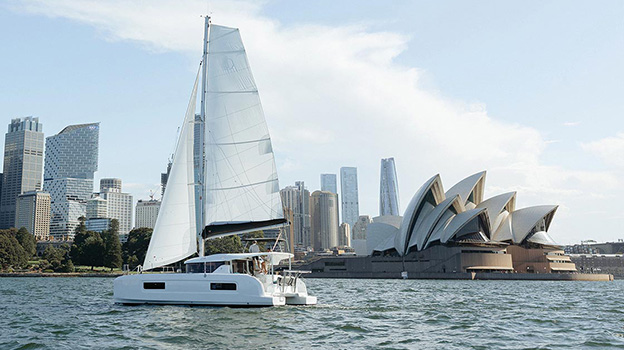
The Excess 11 was launched in 2020 as part of a new range of cruising catamarans by Beneteau that currently has four models spanning 37 to 50 feet (11 to 15m). And unlike earlier models that borrowed hull parts from Lagoon, the Excess 11 uses fully original tooling and is a more weight-conscious series.

The design benefits greatly from Lagoon/Beneteau’s 35 years of multihull expertise, combined with the credentials of design house VPLP, interior experts Nauta Design and automobile design guru Patrick le Quément.
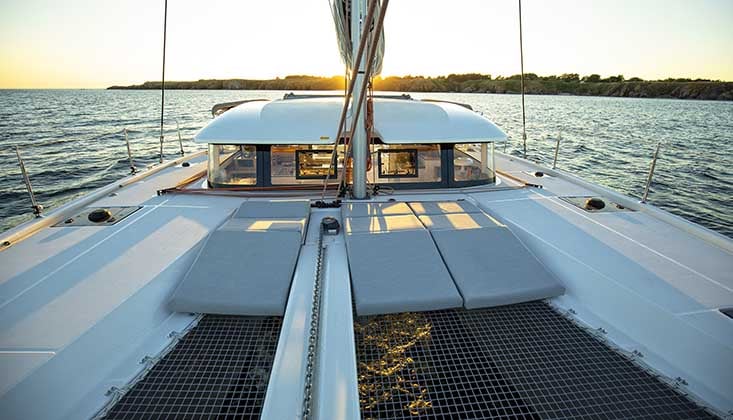
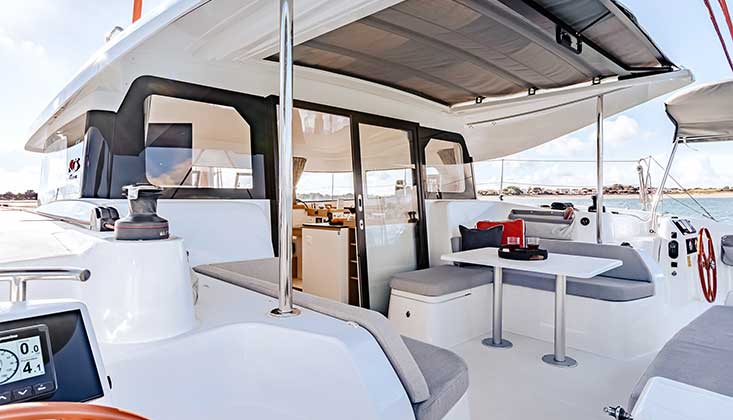
The concept of creating a more open and lively catamaran, yet without the fear of having an overpowered monster on your hands, is laudable. What’s different with Excess is the tweaking of Lagoon’s old philosophy of ‘building from the inside out’ into a more rounded concept.

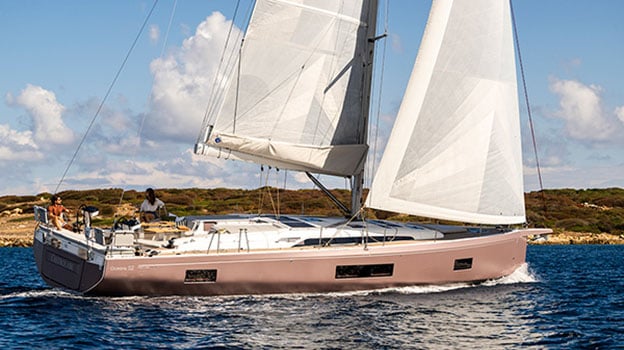
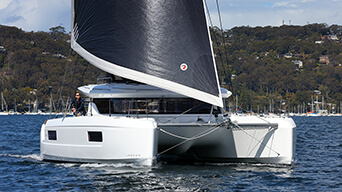
The grey-painted Excess 11 clearly showed this departure, thanks to shapely hulls and the al fresco deck layout. However, the blunt cabin top clearly demarcates the boat as a Lagoon cousin and, of course, gives all the lovely interior space to the saloon. Even as one of the smallest mass-production cats available, it can have four cabins or a three-cabin owner version.

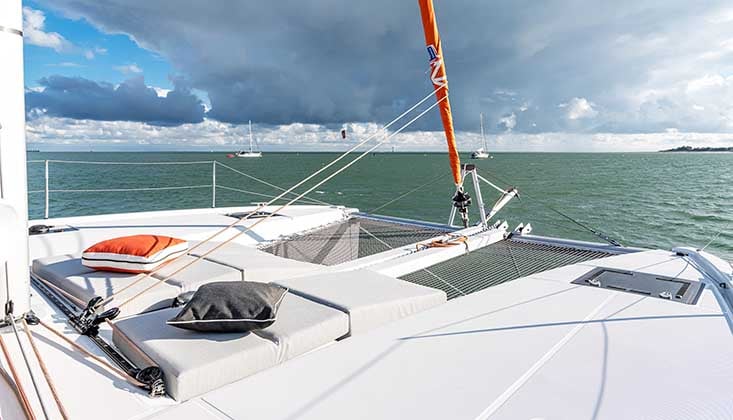
Maximising topside space is the primary design feature of the entire Excess range because of the outboard helms and flat decks. The twin helms give clear views forward and untinted windows allow vision across the boat as well, especially at night.

Helm seating is a pair of rather basic canvas chairs that flip. Response from the twin rudders felt good when I turned the Carbonautica composite wheel as the proximity to the rudders requires only short Dyneema linkages.

Running rigging all comes back to the helms and a bank of jammers with a Harken winch on each side. So, short-handed sailing can be easily done and mainsheet control is good via a simple twin block layout on the transom.

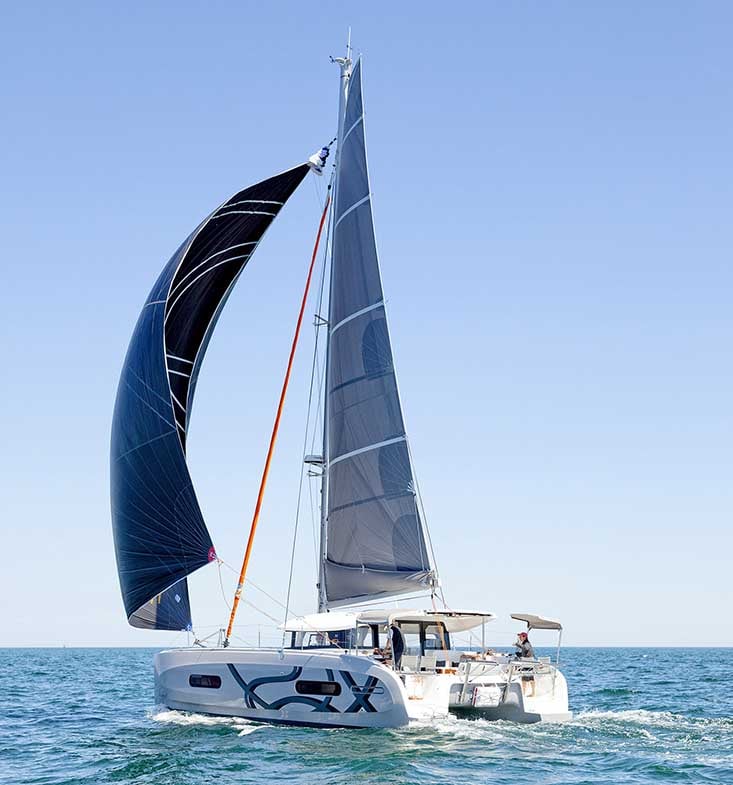
Our review boat had the optional bowsprit fitted for a Code 0, a wise choice for those don’t enjoy the chug of diesels in low-wind scenarios. A simple sail plan is ideal for catamaran newbies, so the standard rig is a self-tacking jib balanced with the slab-reefed mainsail. Its boom is near the coachroof because of the deck-stepped mast (rather than on the cabin) which affords a lower centre of effort and easy handling. The alloy mast is also further aft than earlier Lagoons.

Our test boat sported the upgraded rig which is ideal for tropical Australia, although potentially a bit powerful for novice cat sailors. This upgrade – the Pulse Line performance package – has a 1m taller mast and accompanying sail area, including a square-topped mainsail.

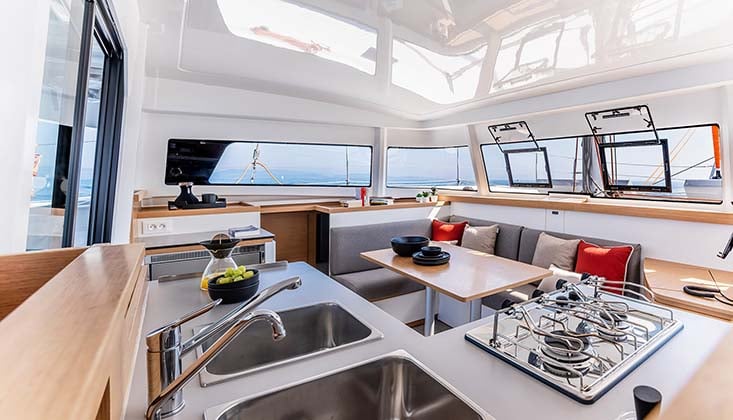
The Excess 11 has vast space in the saloon. The well-equipped galley offers twin sinks, a two-burner hob/oven and sizeable fridge, plus oodles of cabinet space which all go to make the Excess 11 much more than a mere weekender.

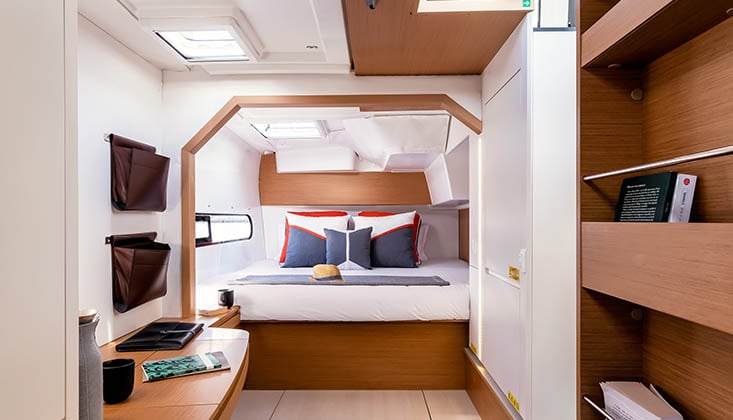
Our Australian review boat came with the three-cabin owner’s layout that uses the entire port hull, along with two doubles to starboard. The four-cabin version has a bathroom in each hull, located between the cabins. Stepping down into the hulls is an airy and light-filled experience.

The owner’s suite has an athwartships bed aft, vanity desk nearby and a very large bathroom in the bow. Over in the port hull, the two double cabins have similar volume, including useful wardrobe space and a large bathroom.

Key features of the 11’s hull are vertical bows to optimise the waterline, twin mini keels, rudders behind saildrives and flared hulls to maximise volume.

Under power the Excess 11 effortlessly speeds along at six knots (11km/h).

Approaching the river mouth, strong southerly gusts bent the river gumtrees so we agreed to leave the performance mainsail double reefed before hoisting. Up it went without dramas, guided by the lazy jacks.

Hard upwind the Raymarine gauge showed 6.5 knots at 50 degrees true wind, which corresponded with the polar chart. The Pulse package gives roughly 10 per cent more sail area and equivalent gain in speed. It was too windy to hoist a spinnaker but the run under basic sailplan was fast (9 knots) and drama-free.

Price correct as of 28 July 2023

  • Priced from: $860,000
 
  • LOA: 11.33m
  • Beam: 6.59m
  • Draft: 1.15m
  • Displacement: 9000kg
  • Fuel capacity: 440lt
  • Water capacity: 300lt
  • Engines: 2 x 29hp Yanmar saildrives
  • Berths: 6-12
Give us a call on 1300 00 CLUB (2582)

Any advice here does not take into account your individual objectives, financial situation or needs. Terms, conditions, limits and exclusions apply. Before making a decision about Club Marine boat insurance, consider the Product Disclosure Statement (PDS)/Policy Document and Supplementary PDS (if applicable). Where applicable, the PDS/Policy Document, Supplementary PDS and Target Market Determination (TMD) for Club Marine boat insurance are available on this website. We do not provide any form of advice if you call us to enquire about or purchase a product.

Club Marine Limited (ABN 12 007 588 347), AFSL 236916 issues Club Marine boat insurance and handles and settles claims as agent for the insurer Allianz Australia Insurance Limited (ABN 15 000 122 850) AFSL 234708 (Allianz). Club Marine Limited is a related body corporate of Allianz. Copyright © 2026 Allianz Australia Limited.