Picking the perfect PWC

Mark Rothfield

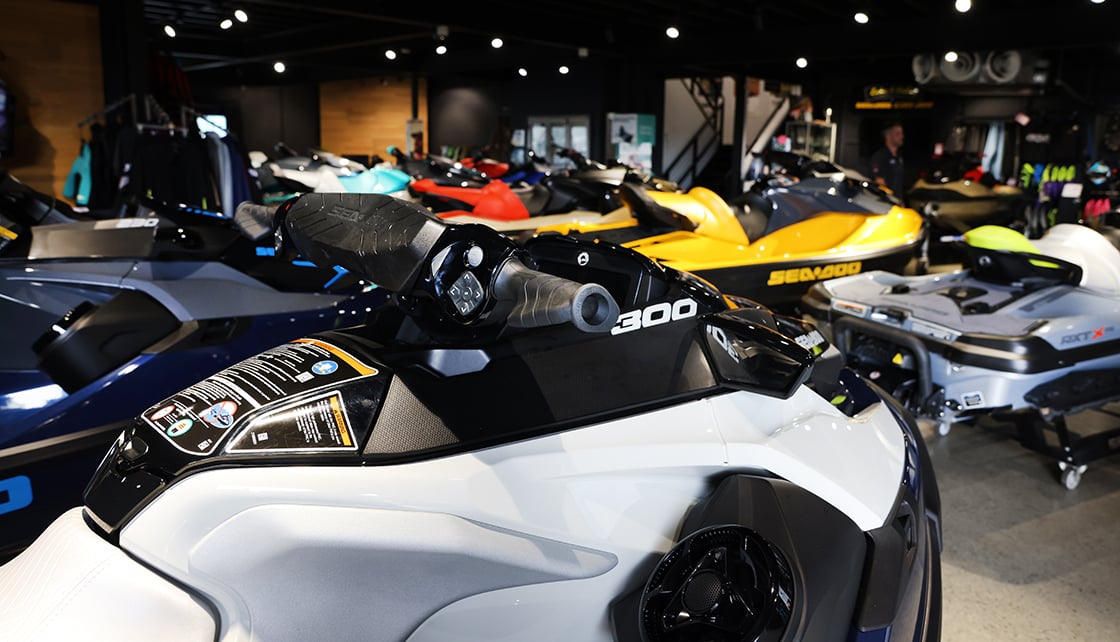
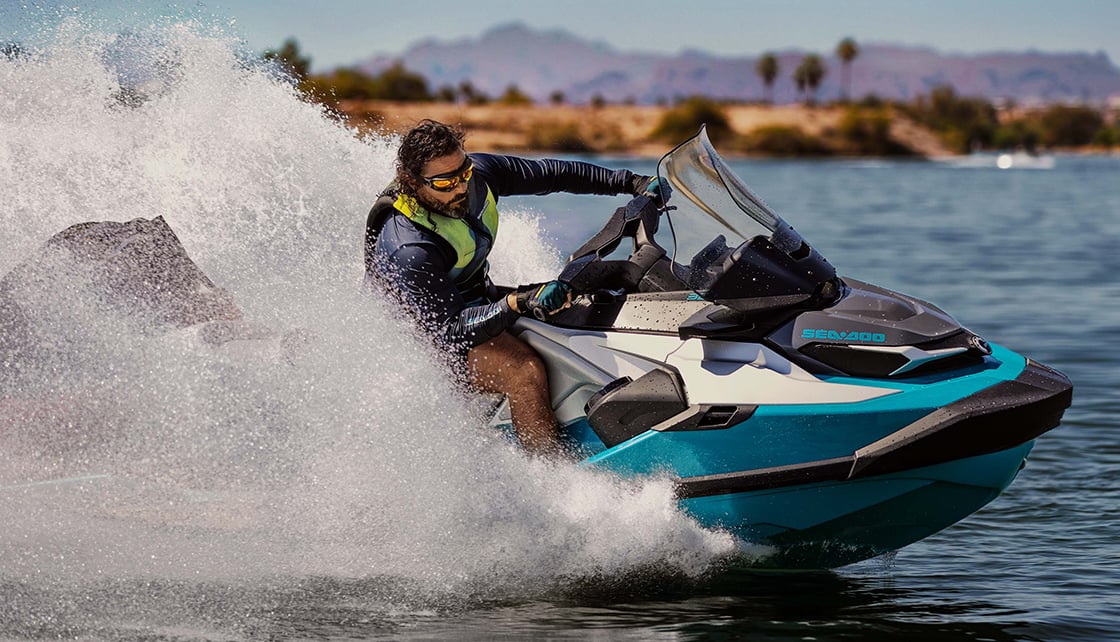
In the beginning, back in the ’70s, there was just the Kawasaki JS400, and if you didn’t like the stand-up Kwaka you could lump it. Today, some 50 years later, there are 40-plus variants of the personal watercraft (PWC) theme and lots to like about virtually all of them.

That said, when you drill down into performance, purpose, practicality, features and running costs there are some key waypoints that buyers can use when navigating the dealership floors.

Setting a budget is the obvious first step, as new skis cost anywhere from around $12,000 to over $39,000 (on trailer) at a time when purse strings are as frayed as old anchor rope. 

One tip is to wait until the annual model clearance from about November onwards, as you can snap up a discount or warranty increase. Otherwise, head over to the dealer’s second-hand division – PWCs often have low engine hours, average use being 30 hours a year.

With dealers, you know the unit has been mechanically certified and there’s usually a 12-month used-boat warranty. Private sales have a higher level of risk but also the reward of more haggling room.

The second major choice is whether you want a naturally aspirated or supercharged engine. With the latter, the increased acceleration (and exhilaration) is accompanied by higher fuel usage and maintenance needs.

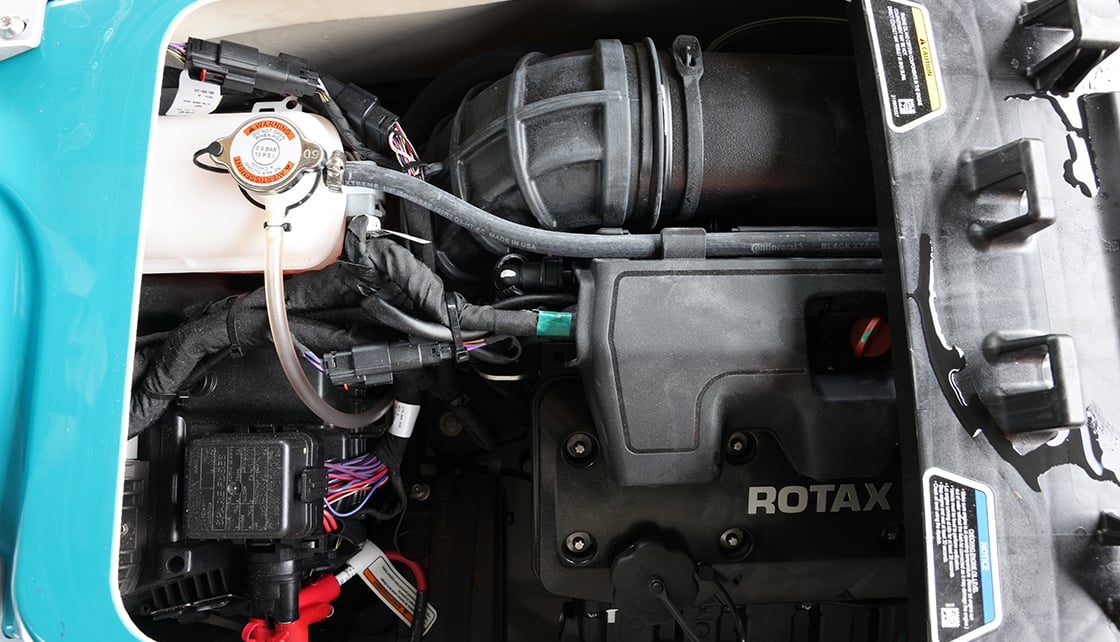
The power difference is immense. Sea-Doo’s Rotax 3-cylinder 1630cc platform, for example, produces 130hp, 170hp, 230hp and 325hp in its various guises. Purchase cost rises incrementally as the internal components get beefed up accordingly.

Kawasaki employs a 1.5lt 4-cylinder engine across its range. It issues 160hp and 152Nm of torque at 7500rpm as standard, almost doubling to 310hp and 286Nm in the blower version while revving to 8000rpm. 

At Camp Yamaha, its Super Vortex High Output (SVHO) motor delivers similar performance from a 1.8lt powerhead as the supercharged Sea-Doo and Kawasaki equivalents. The new High Output (HO) 1.9lt engine boasts the largest cubic capacity in the PWC industry and delivers the most horsepower for a naturally aspirated powerplant. 

Superchargers on older models have had issues. Rider error (aka, abuse) is a common factor as motors can over-rev when the ski leaves the water then load up upon landing. Durability is improving, yet remains something to consider.

The average PWC gets dragged over rocks, bumped into docks, knocked around while fishing and scratched by trailer beams. All that adds to maintenance costs and detracts from residual value. The decision comes down to whether you want durability and some ‘give’ in chop, or crisper handling and performance.

Some WaveRunner hulls feature a hull material called SMC (Sheet Moulding Compound), comprising sheets of pre-mixed fiberglass material saturated in polyester resin and formed using compression and heat. Alternatively, a technology called “NanoXcel 2” adds clay and glass microbubbles to create a stronger, lighter resin.

Yamaha’s stand-up SuperJet is different again, featuring a Vacuum Assisted Resin Transfer Moulding (VARTM) hull and top deck that’s based on e-glass and vacuum-pressurised resin inside a closed mould. The JetBlaster, meanwhile, has a reinforced polypropylene deck.

With Sea-Doo, if the hull is black it’s Polytec Gen II -- a scratch-resistant polypropylene compound containing glass fibres. Its top-line models (more commonly bought by experienced users) are gelcoated fibreglass. 

Kawasaki has stuck with hand-laid fibreglass over the many decades. 

If standing up and going solo is your thing, Kawasaki remains the king. Its SX-R 160 packs the 1.5lt, 160hp power unit, while Yammie’s SuperJet harbours a 1lt, 100hp plant. 

Next step up is Sea-Doo’s Spark Trixx for one rider, albeit with an optional accessory seat for two-up. The standard Spark is a two-seater, while at the performance end of the scale there’s the RXP-X RS 325 – a solo machine with an optional saddle extension. For 2025 Yamaha has unveiled its new JetBlaster range, which includes the JetBlaster Pro 2Up. 

Kawasaki exclusively plays among the three-seat crowd (apart from the SX-R) as this segment dominates like SUVs in the Australian car market.

Sea-Doo’s Explorer Pro leads the way in the storage wars, offering almost 200lt of capacity between the front bin, glove box and optional LinQ explorer bag. If you’re planning to fill it, and carry two passengers, I’d recommend the 230hp model over the base 170. 

Kawasaki claims an impressive 168.5lt of standard storage capacity (plus a class-leading 80lt of fuel) for its Ultra series, and 134lt for the smaller STX. Yamaha’s FX series is 168lt, showing how keenly the designers watch each other’s specs.

Among the brands you’ll find hydraulic steering dampening, adjustable handlebar heights, debris-removal technology, rearview cameras, electronic trim, audio systems with waterproof speakers, touchscreen dashes, fishfinder/GPS screens, footwell drains, app connectivity, throttle control, different engine modes, cruise control, neutral and more.

All of these are nice but non-essential. Indispensable are the intelligent reversing systems that double as brakes. To that I’d add rearview mirrors, supportive seats, cleats, decent aft platforms with swim ladders, and security systems that disable the ski when you duck away.

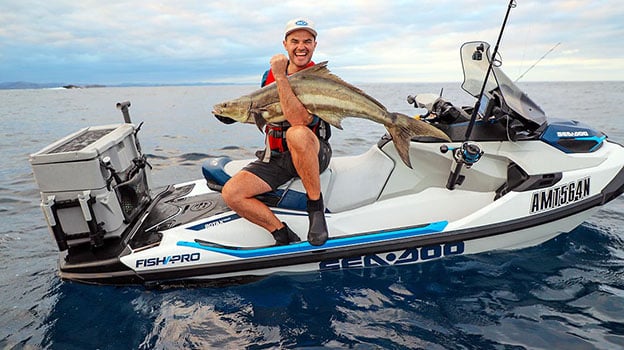
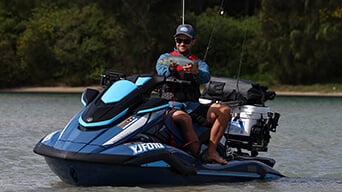
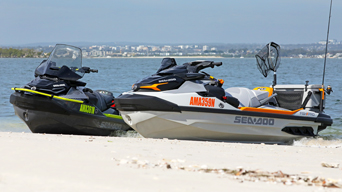
The turn-key fishing models, which collectively command a 20-25 per cent market share, come with rod holders, iceboxes, extended rear decks and anchoring systems. Sea-Doo’s FishPro Trophy offers a unique swivel seat, while Kawasaki’s Ultra 160LX-s Angler adds side floats for increased at-rest stability. 

Yamaha’s Jetfish is more basic but can be further customised with after-market accessories. It’s naturally aspirated to improve range. 

Industry pioneer Kawasaki offers the fewest models, based on three hull types, and has a relatively small dealership network. Its craft and components are well tried, tested and respected.

Yamaha has built a solid reputation for reliability (backed by a 3-year warranty) and championship-winning race performance. It offers 15 models ranging from the freestyling JetBlaster to the upmarket FX Limited SVHO, in Freestyle, Race, Luxury Performance and Recreational formats. 

Sea-Doo’s point of difference is technology and product development, with some 18 models across seven segments and sales figures to match (it commands around 70 per cent of the local market). Things to consider, chiefly, are the ST3 hull versus the GTI hull along with a wide-ranging horsepower choice.

You might be tempted to go all-in from the outset if money is no object. Pause, however, and consider the performance figures relative to your skill/experience and physical capabilities, along with those who’ll accompany you.

Using Sea-Doo as an example, its 170hp models will max out at around 47 knots (88km/h) while the 230hp can eclipse 54 knots (100km/h). The 325hp skis hit a governed top speed of 65 knots (120km/h) in a matter of seconds. The Kawasaki Ultra 310 and Yamaha’s SVHO models (GP, VX and FX) are similarly rapid.

That’s certainly more than a novice can handle. Even intermediates may find them tiring to ride, and falling off ain’t fun.

Consider your main usage. Is it touring, towing, fishing or wave-jumping? If all of the above, perhaps begin with a mid-range, non-supercharged three-seater that offers a dry ride and good ocean-handling characteristics – a Sea-Doo GTI SE, a Kawasaki STX 160 or a Yamaha FX Cruiser HO. They’ll do everything you want with good fuel efficiency and fewer issues.

A strong second-hand market ensures an easy upgrade if you ever feel the need for more speed. And you might find someone coming the other way, from a supercharger to naturally aspirated, and buy their ski.

VISIT SEA-DOO | VISIT YAMAHA | VISIT KAWASAKI

A FULL GUIDE TO BUYING PERSONAL WATERCRAFT RAN IN THE APRIL-MAY (40.2) ISSUE OF CLUB MARINE MAGAZINE 

Give us a call on 1300 00 CLUB (2582)
Any discounts offered are applied to our standard rates. Promotional or other discounts may apply from time to time. Minimum premiums may apply. Any discounts/entitlements only apply to the extent any minimum premium is not reached. Where discounts are applied, your premium is subject to rounding. If you are eligible for more than one, we also apply each of them in a predetermined order to the premium (excluding taxes and government charges) as reduced by any prior applied discounts/entitlements.

Any advice here does not take into account your individual objectives, financial situation or needs. Terms, conditions, limits and exclusions apply. Before making a decision about Club Marine boat insurance, consider the Product Disclosure Statement (PDS)/Policy Document and Supplementary PDS (if applicable). Where applicable, the PDS/Policy Document, Supplementary PDS and Target Market Determination (TMD) for Club Marine boat insurance are available on this website. We do not provide any form of advice if you call us to enquire about or purchase a product.

Club Marine Limited (ABN 12 007 588 347), AFSL 236916 issues Club Marine boat insurance and handles and settles claims as agent for the insurer Allianz Australia Insurance Limited (ABN 15 000 122 850) AFSL 234708 (Allianz). Club Marine Limited is a related body corporate of Allianz. Copyright © 2026 Allianz Australia Limited.