
- Fun family boating: Kids can start enjoying boating at any age, whether it's on a small boat or a big one. Bring along the right gear for their age like lifejackets and sun hats, and as they grow make room for their favorite toys and gadgets like fishing rods and cameras.
- Safety first: Keeping kids safe on the boat is important. Make sure they wear lifejackets and know the rules for staying safe. Create cozy spots for them to relax and pack a good first-aid kit with all the basics. Parents can take a first-aid course to feel more confident when far from help.
- Empowering the next generation: Get kids involved in boating by letting them help with simple tasks like tying ropes and learning about the weather. Teach them safety steps like how to use emergency gear and radios. When kids feel like part of the crew, they learn a lot and have more fun on the water!
Kids afloat
Essential gear and safety tips for family boating adventures
By Catherine Lawson
Our guide to kids lifejackets, safety gear and essential tips for stress-free family boating adventures.
Quick overview
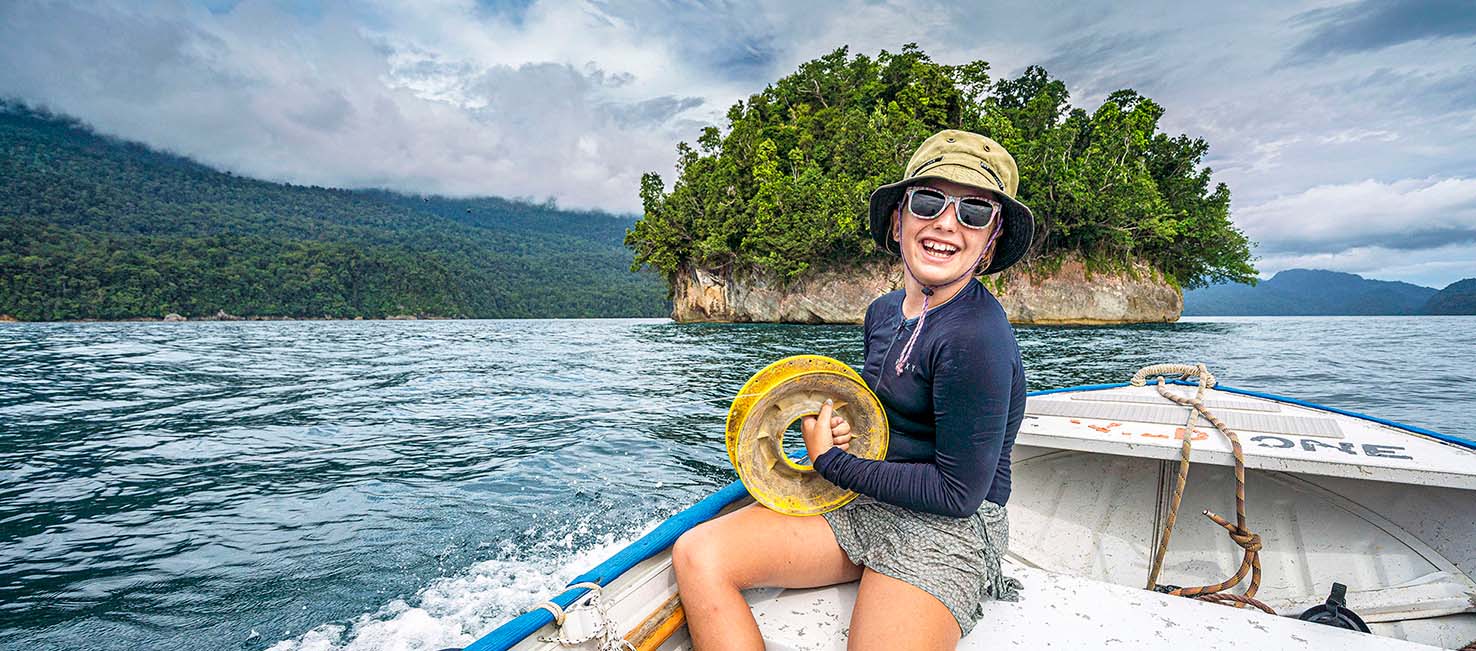
Getting kids into boating can happen at any age, whether you’re stepping aboard a tinnie, cabin cruiser or sailing catamaran, for the weekend or an offshore adventure.
Our family boat rocked our baby from day one, so I’ve probably fretted more scenarios than most, but more than a decade on, our family boating adventures are still going strong.
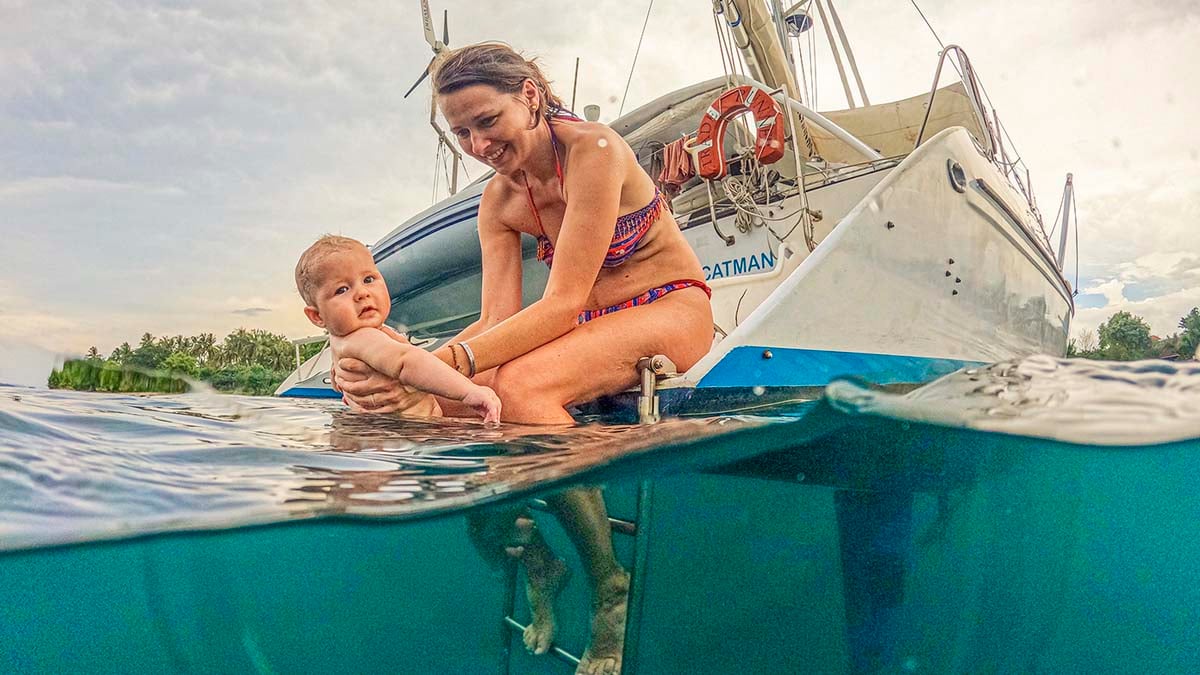
Introducing kids to boating can happen at any age.
Family boating time
Boats take us to beautiful places to spend more time doing the things we love, whether that’s snorkelling, kayaking, fishing or diving, searching for a surf break to surf or a calm bay to SUP across. Your own passions will likely fire up the kids’ interests too, so to get them exploring, arm them with the water toys they need to join you on the water.
What you take onboard will depend on your kids’ ages and abilities, and where on the coast you might be boating. For babies that means a floatation device and sun-smart clothing, while toddlers can step up to boogie boards, googles, fins and pool toys, beach buckets and spades.
As kids grow, shadowing you on and under the waves, they’ll likely develop their own passions and pursuits. Expect to make room for their boards, fishing rods, GoPros and other gadgets, and enough sun-smart shirts, wetsuits, rashies, sunglasses, hats and reef-friendly sunscreen for everyone.

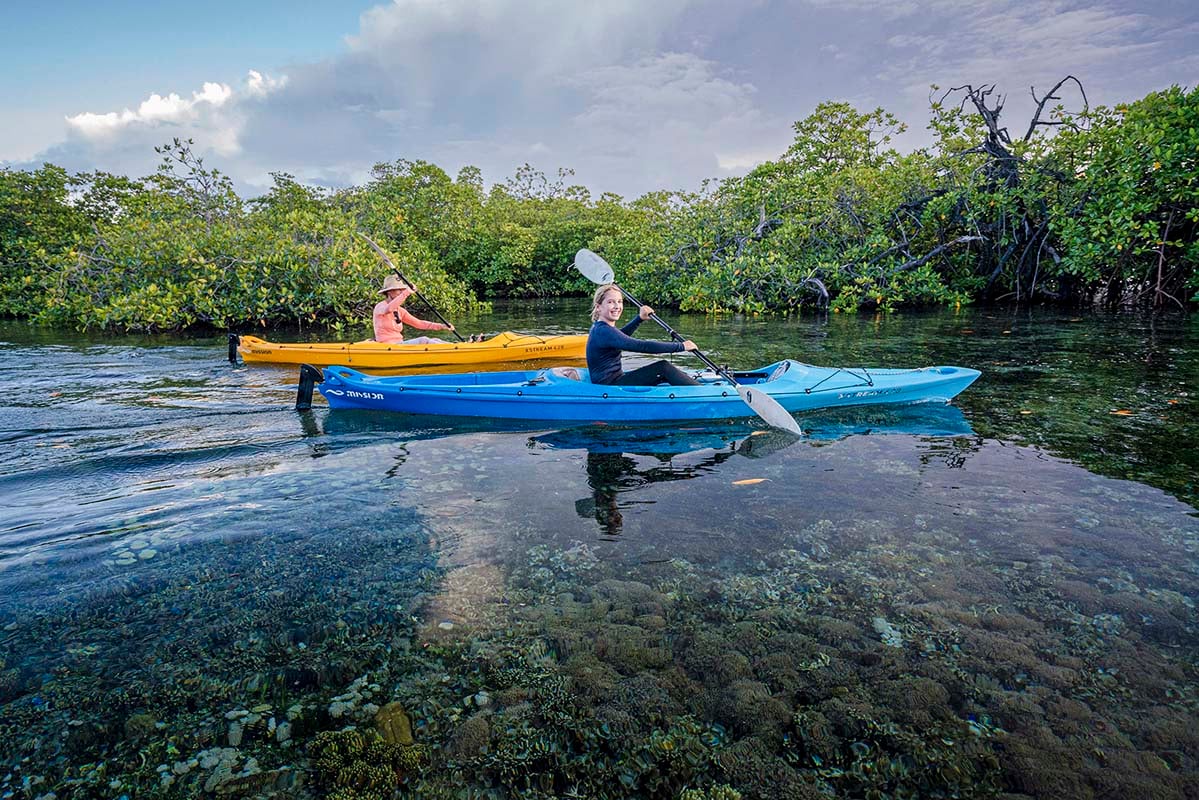
Arm kids with the gear they need to join you on adventures.
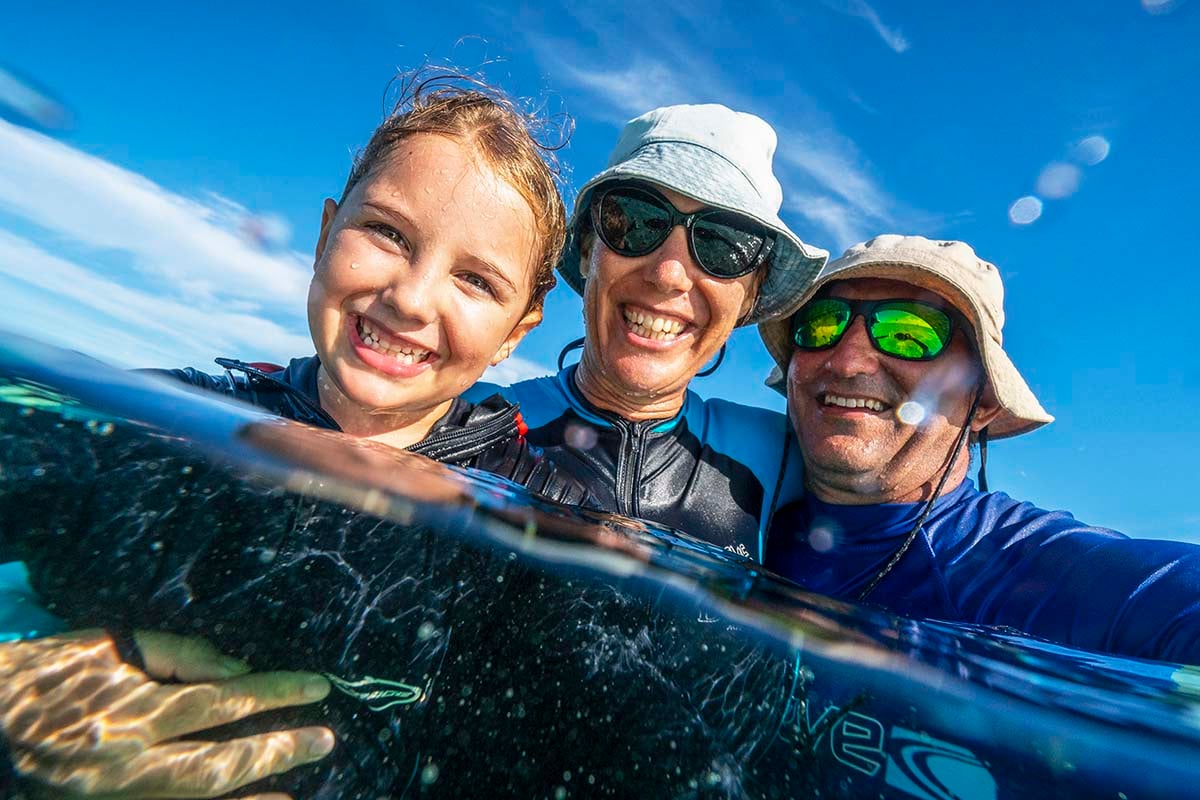
You'll need plenty of wetsuits, rashies, hats, sunnies and reef-friendly sunscreen for everyone.
PFDs and water safety
Wearing a PFD or lifejacket is required by law in all Australian states and territories for kids under 12 years, but since they’re not always the most comfortable thing to wear, it’s worth paying more for one that your child is happy to wear (or at least limits the grumbling).
Look for PFDs rated to level 100 or 150 - depending on how far offshore you usually go - and choose one that adjusts to accommodate your growing child. Kids lifejackets are sized in weight ranges and should include a buoyant collar, crotch strap and, for older kids, a whistle and light.
For babies, a grab handle helps when lifting your bub in and out of the boat, and allows you to literally keep a handle on your child during shallow water play. For babies, consider the Axis Bambino ($93.95) or the Lil Marlin Infant PFD 100 ($59.99). For kids 10 to 25kg look at Marlin’s Toddler Level 100 ($89.95) and for kids 12 years and over, Marlin’s Junior Auto Inflatable Yoke PFD 150 ($164.90).
If yours is a sailboat and kids are old enough to be in the cockpit when underway, team their lifejacket with a harness and safety tether. Consider attaching a personal locator beacon (PLB) or personal AIS beacon (or a combination model) to your child’s lifejacket in case they go overboard.
These devices operate differently: a PLB sends a distress message via satellite with the GPS location of the person in the water to rescue authorities ashore, while a personal AIS device transmits a radio signal that can be picked up by your DSC radio and any AIS-enabled chartplotter on boats within a 4 to 5nm radius. Some combination models do the job of both but can be bulky for a child to wear.
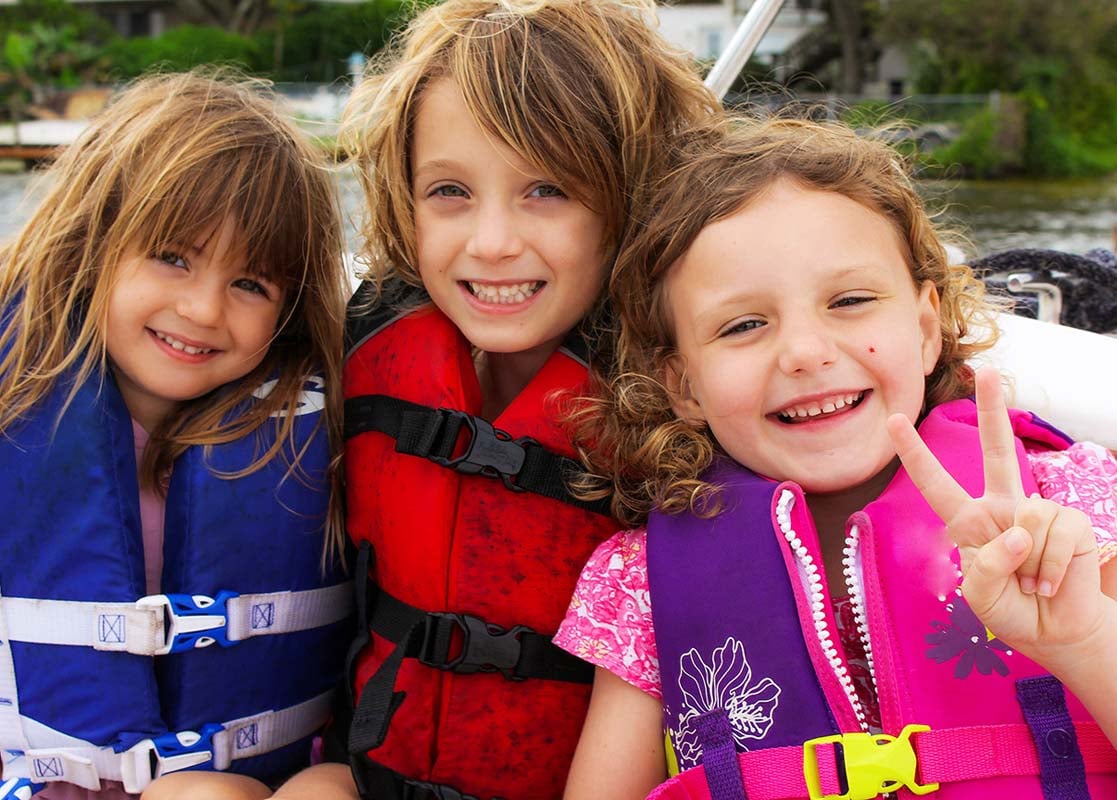
Wearing a PFD or lifejacket is required by law in all Australian states and territories for kids under 12 years.
Safe boating adventures
Not every child (or adult, for that matter) is happy or willing to take orders on a boat. But while boat life offers immense freedoms to a child, it comes with some non-negotiables. These might include when, and under what conditions, your child must wear their lifejacket, and how they’re expected to behave when bad weather arrives.
From the time my daughter was tiny, slapping on sunscreen and wriggling into a sunsuit always came before that joyful leap overboard, and boating in estuarine crocodile country means being mindful when getting in and out of the dinghy.
Safe spaces are important for young kids, especially when underway, and are easily created on even the smallest of boats. Secure babies into a portable car seat, place them inside a portacot if there’s room aboard, or use a lee cloth to nestle them safely in a bunk or on a saloon couch.
As children grow and get used to being aboard, they’ll still crave cosy spots to wedge themselves into. Stock these safe spaces with books, devices for movies, music or podcasts, and water bottles and snacks so that you’ll be free to attend to what’s happening out on the water.
Lifejackets might keep kids safe but what they need to feel safe and secure is something else entirely. That might be a fluffy toy or security blanket that you’ve (hopefully) remembered to bring from home, or it might be you - the parent - to sleep next to on overnight trips or when seas get rough. Older kids might feel reassured with their own head torch for reading and nighttime security, or to sit up with you on the helm.
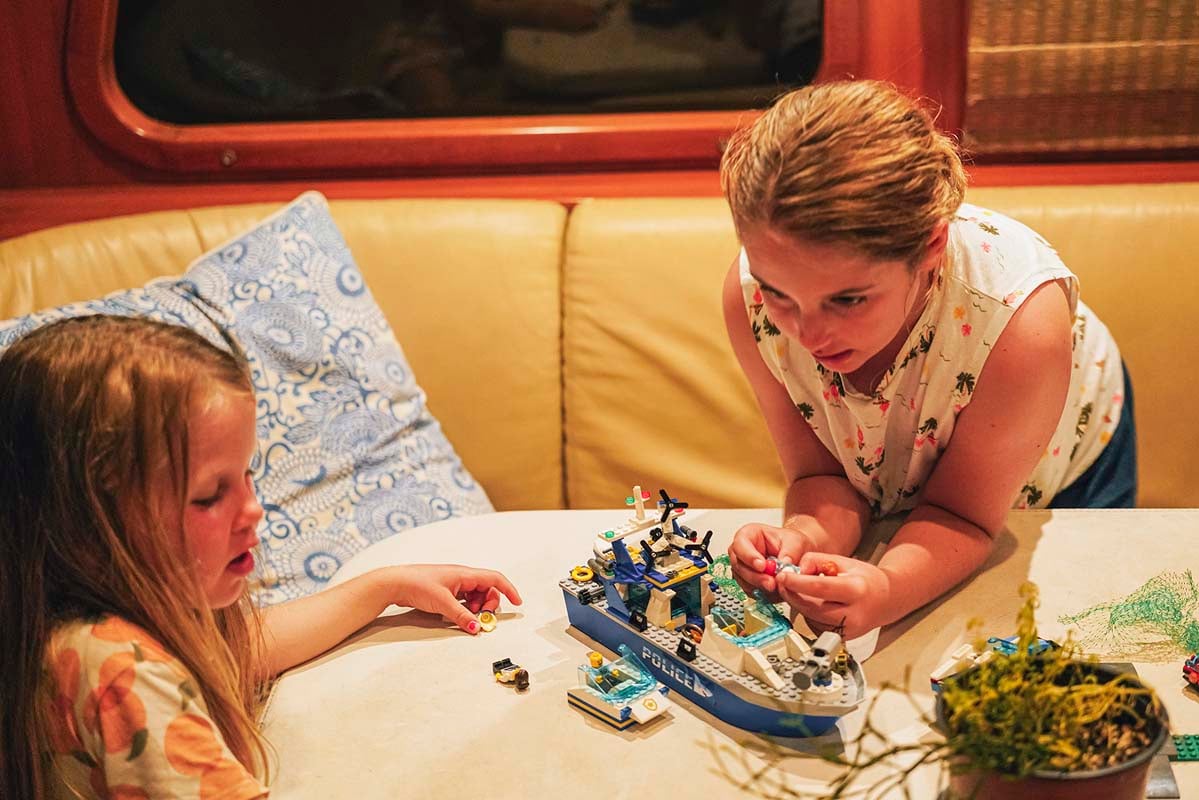
Create safe spaces for children to retreat to in rough weather.
Seasickness and first aid
Parental anxiety often escalates the farther you are from the nearest hospital. On my boat, bandaids and seasickness rehydration icy poles are far more commonly called for than anything more dramatic, so don’t overlook the simplest of remedies.
Stock your first-aid kit with child formulations of the usual pain-relievers and seasickness remedies, plus antibacterial cream and a medically safe wound glue for sealing minor cuts. Draft a list of instructions for administering each medicine and store it inside your first-aid kit, along with the phone numbers of your local GP, hospital and coastguard.
Boost your confidence and skills by taking first-aid training to help you manage medical care in places where you can’t easily access first responders. Finally, work to prevent accidents in the first place by coming up with safe ways for kids to move about your boat and carry out the tasks required of them.
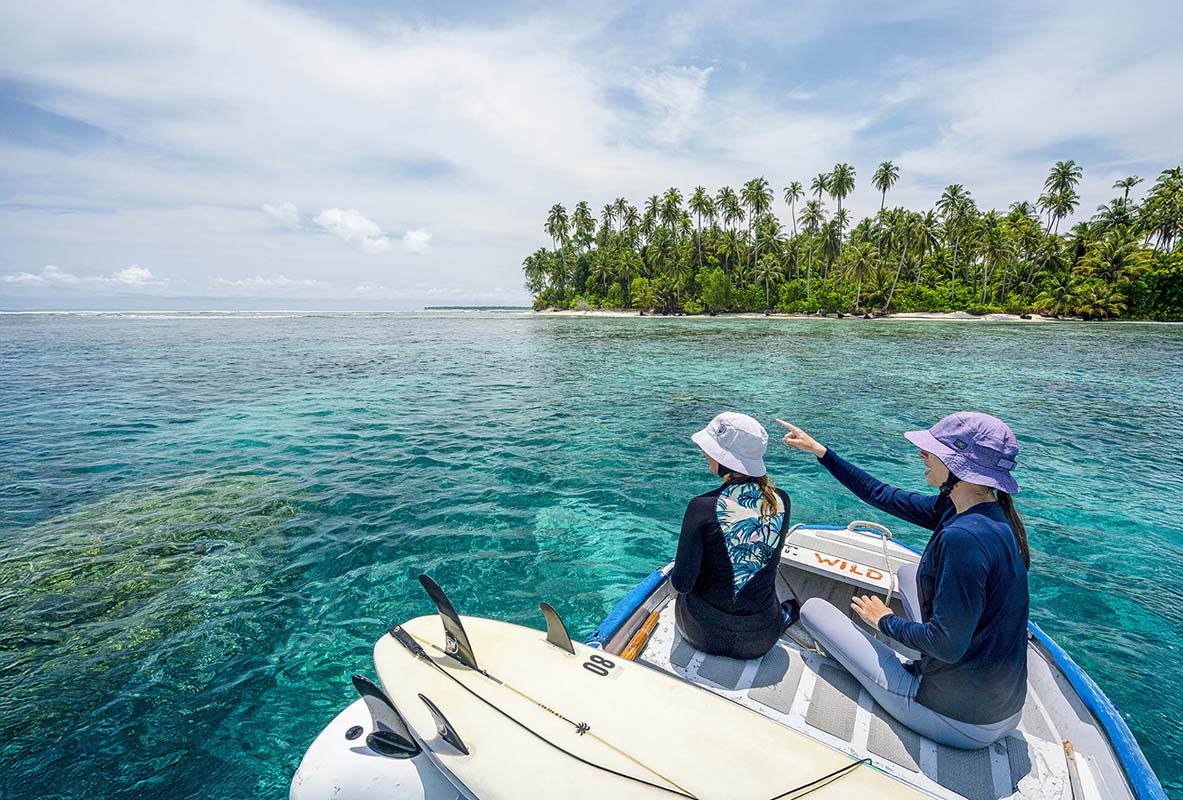
As kids grow they'll quickly develop their own passions and pursuits.
The boating family
While kids often take a back seat in many aspects of family life, they will quickly covet the copilot seat to get a handle on the helm. Most Australian states and territories allow kids to apply for a recreational boat licence from age 12 (14 years in WA), albeit with some operating conditions.
Yet long before reaching that milestone, kids can help you sling mooring lines, launch the boat and learn about navigation and weather. There might be sails to raise and trim, wind instruments to gauge, or parents to keep company on long passages - which all provide opportunities to learn about how radar, chartplotters and AIS work.
When my daughter was small, we would play down our worries about approaching bad weather. Yet as she grew up, she developed a strong resilience to such tumultuous times and felt reassured, rather than scared, by learning essential safety procedures.
This might seem a daunting lesson for kids, but it’s also likely they will feel empowered to know that there are systems in place for when things don’t go to plan. Be prepared to show any capable and interested child how to use a VHF radio in an emergency, what that DSC (digital select calling) button does, and how to phonetically spell your boat’s name.
Teach kids how to put on their lifejacket, locate emergency gear - the EPIRB, fire extinguishers, grab bag and first-aid kit - and what to do should you need to launch and enter the life raft. Conducting safety practice runs builds confidence and boating kids do well when they feel part of your crew.
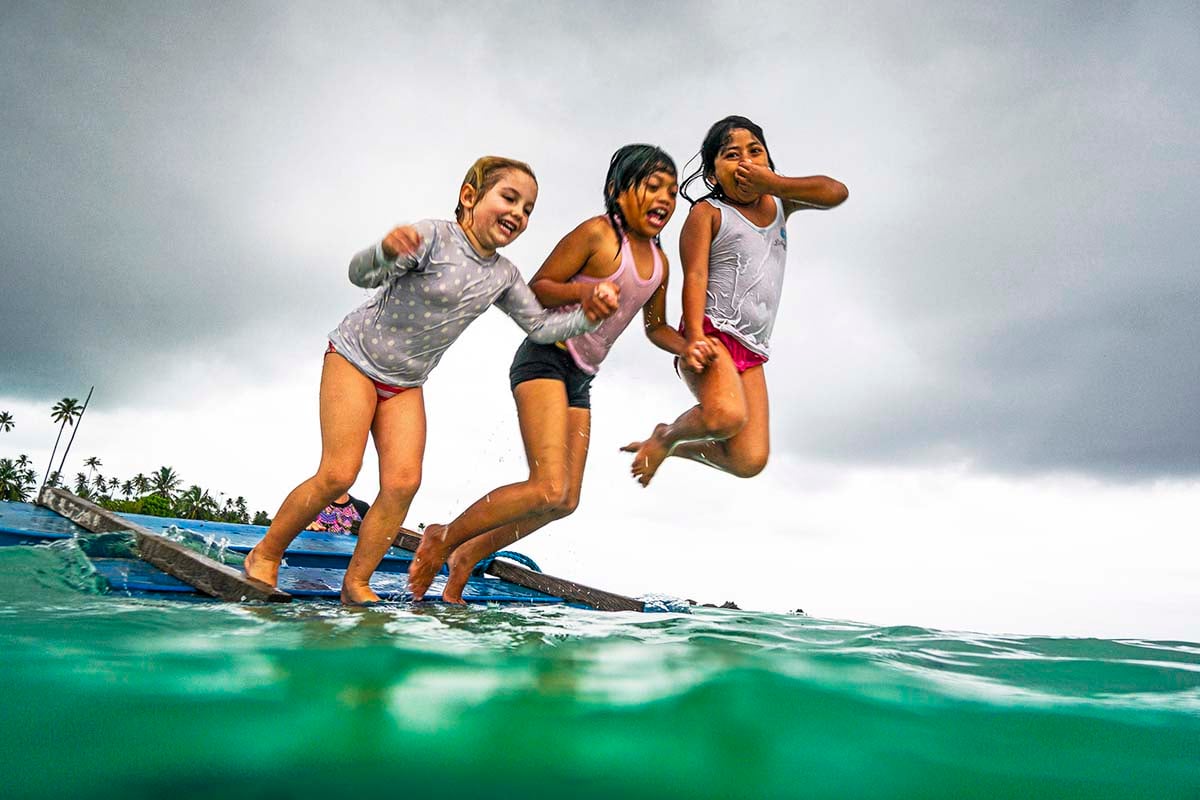
Even when kids can swim well, have an adult in the water at all times.

RELATED ARTICLES



Any advice here does not take into account your individual objectives, financial situation or needs. Terms, conditions, limits and exclusions apply. Before making a decision about Club Marine boat insurance, consider the Product Disclosure Statement (PDS)/Policy Document and Supplementary PDS (if applicable). Where applicable, the PDS/Policy Document, Supplementary PDS and Target Market Determination (TMD) for Club Marine boat insurance are available on this website. We do not provide any form of advice if you call us to enquire about or purchase a product.
Club Marine Limited (ABN 12 007 588 347), AFSL 236916 issues Club Marine boat insurance and handles and settles claims as agent for the insurer Allianz Australia Insurance Limited (ABN 15 000 122 850) AFSL 234708 (Allianz). Club Marine Limited is a related body corporate of Allianz. Copyright © 2026 Allianz Australia Limited.