How to launch and retrieve your boat

Al McGlashan

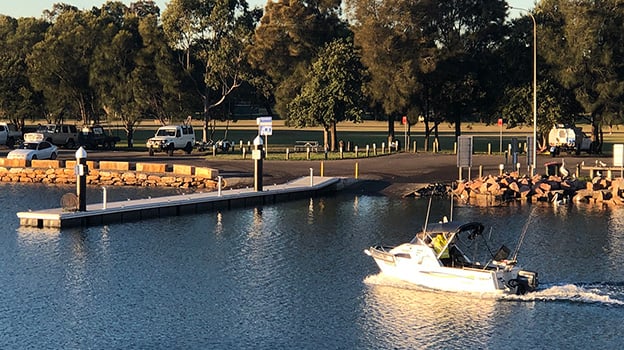
One of the biggest stresses in owning a trailerboat is launching and retrieving, especially for newcomers because there is no training. You can literally arrive at the boat ramp with a $500,000 rig and have no idea how to dip it in the water. 

The process looks easy in the hands of experts but I’ve seen some amazing ramp antics, from people revving the engines trying to pull a boat off the trailer with the safety straps still attached to cars disappearing into the drink. 

The trick is to set up a procedure and follow it every time. Some switched-on crews even compile a checklist because we all miss things or get distracted and forget a critical step like inserting the bungs. Every boat is different too, but the basic tips I’m covering here work for everything from a 10ft tinny through to a 25ft gameboat.
One of the biggest issues for trailers is neglect and lack of use. So before you leave home you need to do an inspection. Check all the lights are working, the tie-down straps are in place and tight. Engine is trimmed up. In fact, put the earmuffs on and run the engine to make sure its running sweet and the batteries are charged.

Chances are you’ll have to buy fuel on the way to the ramp, which gives you another opportunity to check the trailer. I always touch each of the wheel bearings to see how hot they are. Also, check your external fuel filter to make sure there’s no water in it. 

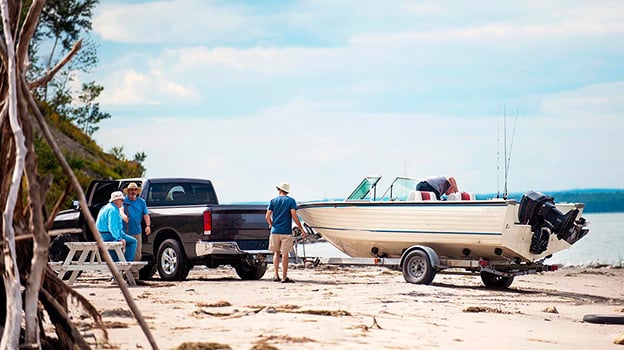
Upon arriving at the ramp, pull up out of the way so you’re not holding everyone else up while you prepare. Put the bungs in, remove the tie-down straps, and if you have mechanical brakes push the clip over to stop them engaging.

Do not remove the safety chain or winch strap.

With everything set, join the queue for your chance to pull into the launching bay. When the lane is clear, reverse back. There is no easy way to learn to reverse a trailer other than practice and all I can offer is that you need to turn the wheel the opposite way to what you’d think. 

The depth you drop the trailer in varies between boats and the angle of the ramp. As a rough guide I would recommend reversing it till the wheel arches are partially submersed. Some people like to keep their bearings dry but this can impede a smooth launch.

With the boat in the water, start the engine. Make sure it’s clear behind, then put it just in gear. At the same time motion to the driver to unclip the strap and safety chain. Then with the thumbs-up to signal its clear, and with one last check of the surroundings, the skipper can slip the boat in reverse.

If the boat sticks to the trailer the driver can help by reversing slightly further and then hitting the brakes. Alternately, if you aren’t confident driving the boat off, use a long rope to walk it around to the jetty.

A smooth retrieve will finish the day on a high. Reverse the trailer straight down the ramp; if it’s on an angle, it is much harder to steer the boat on.

Submerge it to the same level as you did when you launched so the rear rollers or skids are partially underwater. Apply the car’s handbrake and engage park. 

Many trailers are designed for the boat to drive straight on, which is easier than winching it by hand but still brings a lot of skippers unstuck. The biggest mistake is to drive straight at the trailer with no consideration for wind and current. Line the trailer up from a distance and, as you approach, take the effect of the wind and tide into consideration. 

Counteract the boat’s sideways motion by pointing slightly up current. If you reach the trailer and are still up current, simply pull off on the throttle and allow the boat to drift into position then push it up slowly. If you are down current, you will need to reverse and reapproach.

Steady and in control wins the game here. With the boat sliding up the trailer, remember to raise the engine leg as you go. Clip on the strap and safety chain or, as I do, use a Boatcatch device.

Once you get the signal, shut the engine down and fully raise it.

Before pulling out, the driver should check to make sure everyone is right then slowly drive into one of the trailer parking bays. Bungs are unscrewed and put somewhere safe like the bait tank, winch strap is tightened and the winch handle removed, tie downs are clipped on and then there is one final check out the boat to make sure it is sitting right. 

Before you set off, remember to lower any aerials and take all the rods out of rocket launches or gunwales. One last recheck of everything and it’s time to head home and celebrate a good day on the water.

1.    Use bearing buddies and regularly pump them full of grease to keep saltwater out

2.    If you have a removable winch handle, remember to take it off

3.    With the boat off, take the opportunity to inspect the trailer for damaged or broken rollers

4.    Always check the tow hitch is locked down – I have found it unclipped at the ramp

5.    Practise your backing weekdays when the ramp is deserted

Give us a call on 1300 00 CLUB (2582)

Any discounts offered are applied to our standard rates. Promotional or other discounts may apply from time to time. Minimum premiums may apply. Any discounts/entitlements only apply to the extent any minimum premium is not reached. Where discounts are applied, your premium is subject to rounding. If you are eligible for more than one, we also apply each of them in a predetermined order to the premium (excluding taxes and government charges) as reduced by any prior applied discounts/entitlements.

Any advice here does not take into account your individual objectives, financial situation or needs. Terms, conditions, limits and exclusions apply. Before making a decision about Club Marine boat insurance, consider the Product Disclosure Statement (PDS)/Policy Document and Supplementary PDS (if applicable). Where applicable, the PDS/Policy Document, Supplementary PDS and Target Market Determination (TMD) for Club Marine boat insurance are available on this website. We do not provide any form of advice if you call us to enquire about or purchase a product.

Club Marine Limited (ABN 12 007 588 347), AFSL 236916 issues Club Marine boat insurance and handles and settles claims as agent for the insurer Allianz Australia Insurance Limited (ABN 15 000 122 850) AFSL 234708 (Allianz). Club Marine Limited is a related body corporate of Allianz. Copyright © 2026 Allianz Australia Limited.