
- Tips to make the perfect wake for activities like wakeboarding, waterskiing wakesurfing, kneeboarding, and wake foiling.
- The importance of balancing ballast (stern, bow, midship), using trim tabs, and adjusting speed to fine-tune wake performance across skill levels and sports.
- How to use boat tech (e.g. wake plates, wedges, surf systems) and add-ons (e.g. ballast bags, wake shapers) for the best wake quality and rider experience.
How to set a boat wake
Rachel Paues
Quick overview
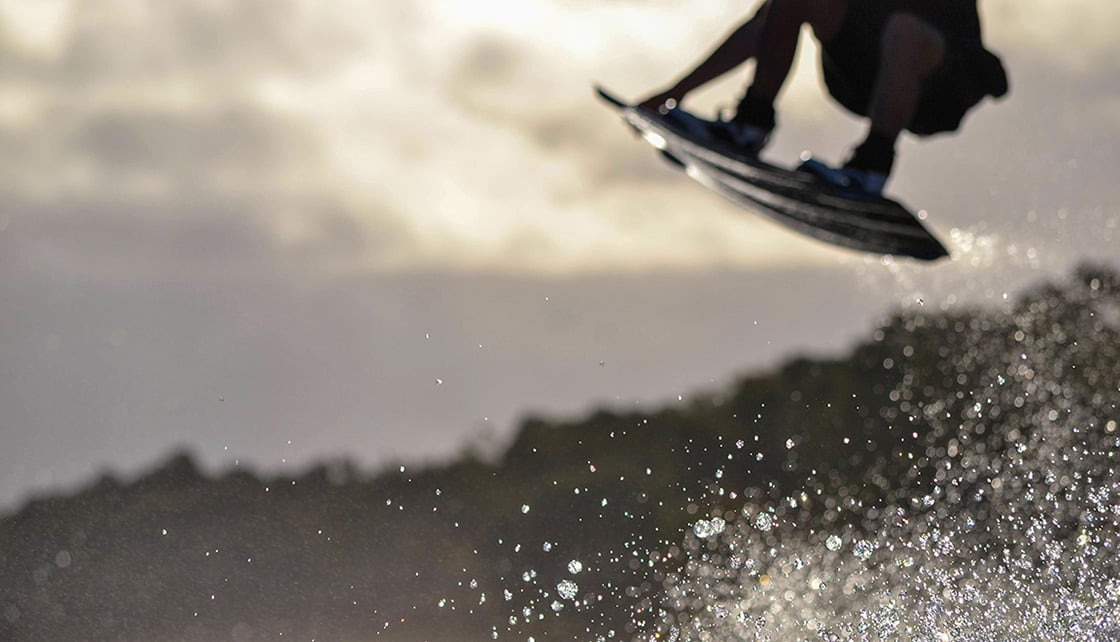
Boat wakes are fundamental to watersports and each activity has its own preferences, as do riders and skiers. Waterskiing requires small, soft wakes for smooth and fast movement, especially for slalom skiing, while wakeboarding needs large, steep wakes for jumps and tricks, and wakesurfing relies on a long, surfable wake close to the boat.
Here are the hottest tips to help you dial in that perfect wake this summer.
Shaping the wake for waterskiing
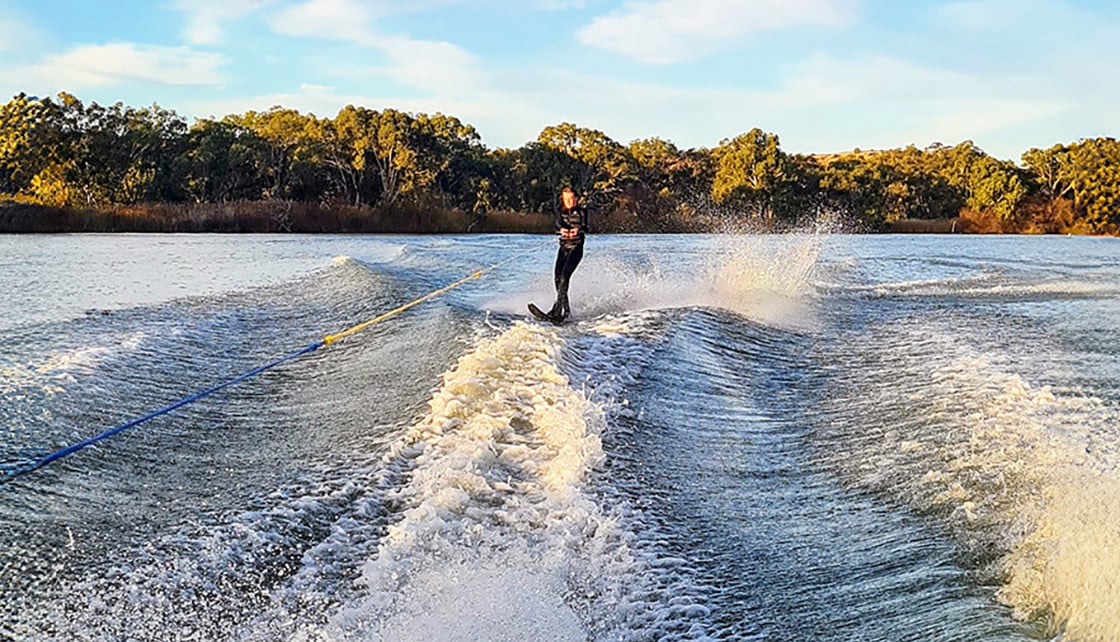
As mentioned, your goal is to create a flat, smooth surface on the water. Ski boats are good at this, being typically narrow and light to reduce water resistance. Both inboard and outboard craft will have some type of trim system to help create a flatter wake when you’re towing skiers.
You’ll need to keep in mind that added weight from passengers, fuel and equipment can affect the wake, so it’s important to balance the boat evenly to ensure the stern isn’t loaded too heavily.
Beginners typically start at speeds around 30 to 40km/h (16-21 knots). A small wake won’t be a major issue, however as your rider gains confidence and their speed increases, they’ll cross the wake quicker and more frequently, which will require the driver to adjust to their needs.
More experienced skiers are usually comfortable at 40 to 50km/h (21-26 knots) and will give feedback to the driver to modify speed, balance some weight or adjust the trim, especially when there are changes to the water conditions.
GOAL: Smooth flat wake.
TOP TIP: Make sure you keep your boat as light as possible.
Setting a kneeboarding wake
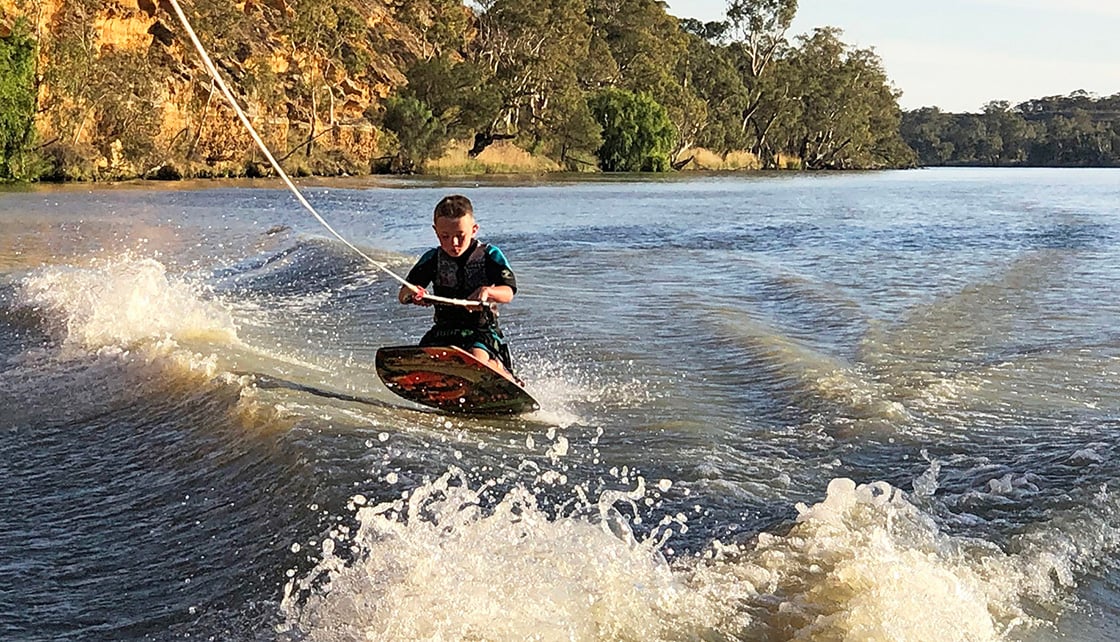
Kneeboarding doesn’t require a big wake, but it does need to be smooth and consistent. If you find the wake doesn’t have enough ramp or seems washy, you should look at your ballast setup, the trimming capability and speed.
To get a nice crisp wake, try adding some weight in the bow in addition to an even amount in the stern. This creates a wider, softer wake that provides an easier and more forgiving ride. It also gives plenty of space in the trough of the wake, which is great for learners or when towing multiple riders.
For more advanced riders who require a little more intensity and height in their wake, concentrate on filling more ballast at the stern. You can then trim the wake by altering your boat’s plate or wedge.
Having beginners on a long rope and at a low speed will push them out to the widest part of the wake, allowing them to ride in cleaner water. Beginners and children usually ride between 18 to 25km/h (10-14 knots). Making small adjustments in the rope’s length and increasing the speed incrementally will help them build confidence.
More experienced riders will tend to bring their rope in closer to the boat so they can aim for the steepest part of the wake, giving the perfect ramp for wake-to-wake transitions. The ideal speed will be between 26 to 36km/h (11-20 knots).
GOAL: Moderate wake height with a smooth rounded ramp.
TOP TIP: Distribute the ballast between the bow and stern to see which one creates the best wake conditions for your riders.
How to create the perfect wakeboard wake
Creating the ultimate experience for wakeboarders also requires a combination of ballast, weight distribution, consistent speed – and ideally a wedge or plate system to shape the wake.
Most riders will sit between 28 to 37km/h (15-20 knots) and have a rope length of around 55-75ft. While small speed adjustments will help clean up the wake, faster doesn’t always mean better.
Weight/ballast distribution combined with speed adjustment is key to an even and clean wake. If you find the wake’s integrity is compromised by wash, or it seems to crumble or lip-over on itself, you may need to alter the boat speed, reposition your passengers, or adjust ballast not only in the back but in the centre or bow … or all of the above.
Unlike skiing, you’ll want to focus on stern weight and get that back end into the water - the steeper the wake, the more vertical lift the rider gets, which is ideal for jumps and aerial tricks.
On a technical note, a plate or wedge will enhance the shape of the wake and let you fine-tune it by altering the angle of the boat in the water. Generally, a wedge in lift position causes the wake to become larger and steeper. While stowed or with minimal lift, it will generate a smaller, more mellow wake. A plate functions in a similar way.
GOAL: A clean wake with minimal whitewash to give a smooth launch and landing surface.
TOP TIP: Focus on adjusting the ballast, fine-tuning the boat speed, and shifting the wedge or plate individually and in small increments to best understand how your boat responds to give your riders the best experience.

Create an ideal surf wake
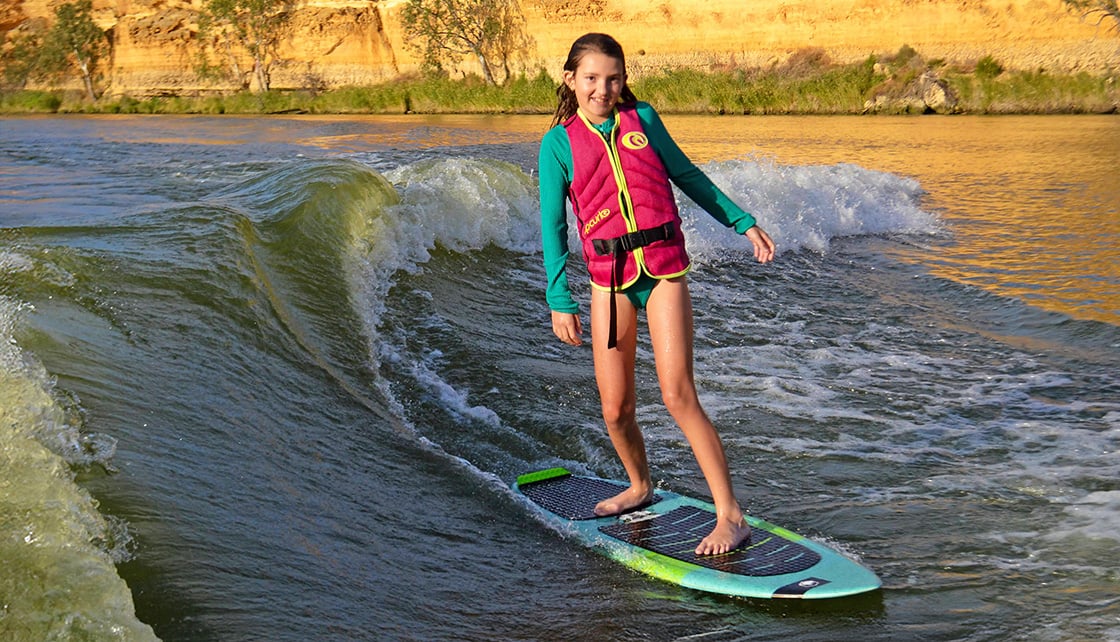
To create an ideal surf wake, you’ll either want a boat with an integrated surf system or invest in an aftermarket one such as a wake shaper. Focus on adjusting the shaper to sit at an angle that directs the water flow smoothly until you see a clean, less-turbulent wake.
If you find the wake ramp is too steep, drop the wedge back towards the boat to reduce drag, and also dump some ballast. If you want a bigger wake, add more ballast to the same side as your rider.
For enthusiasts who own a dedicated wakeboat, you’ll be able to use its technology to calibrate the wake from left to right, adjust your trims or gate to reduce the amount of turbulence, and control the wave’s length from long to short – often at the touch of a button or even with pre-set rider preferences.
Along with the surf technology, ballast plays a key role in tuning an ideal wake for surfing. To start, you’ll want to add most of the weight to the stern, which helps sink the back end, displacing more water and building a taller, cleaner wave with a sweet spot your riders will love.
If the wake is too steep or a bit messy, try adding some ballast amidships or forward. This can help smooth things out and reduce the wave’s intensity, giving you better control over its shape and feel.
Speed will also affect the wake’s size and shape. Most people will feel comfortable sitting around 16 to 18km/h.
GOAL: Ballast is the foundation for creating a bigger wake.
TOP TIP: Speed is essential for the rider to find that sweet spot.
Wakes for wake foiling
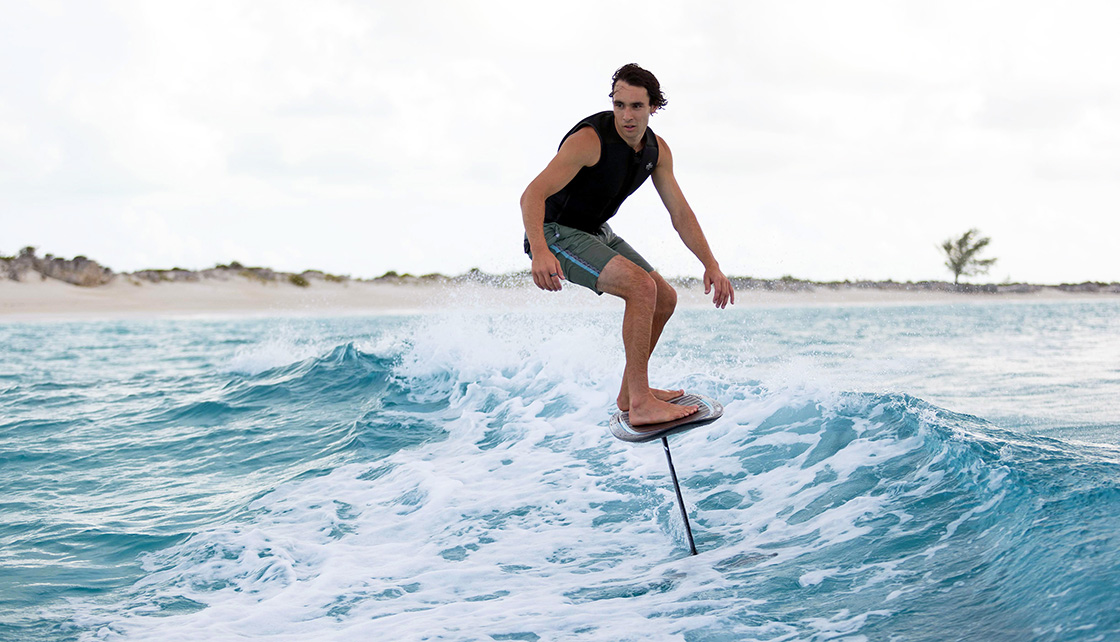
Wake foiling can be enjoyed in a variety of water conditions, making it a fun year-round sport. It doesn’t need big wakes or require a surf system as you require less energy from the wake.
For beginners, it’s best to start with little-to-no ballast, a long rope and a slow speed of around 6 to 8km/h (3.2-4.3 knots). Once the rider is up, increase the boat speed to 16 to 17km/h (9 knots) to help the foil generate lift.
Sitting out the back to the side of the wake or on the second roller will allow the rider to feel the board and ride in more mellow conditions. They can then drop the rope and start using their upper body and hips to manoeuvre their board into the crest of the wake, allowing them to propel through the water unassisted.
Expert riders will prefer more ballast in the boat to create a steeper wave, but you’ll want to avoid creating a surf wave with one big steep section close to the boat. A nice clean wake makes for great riding, so having a setup similar to kneeboarding or wakeboarding is ideal.
GOAL: A clean moderate wake, adjusting ballast according to rider ability.
TOP TIP: You don’t need a big wake to foil.
Pro tips for wake shaping
- Ballast is important and its distribution in the boat plays a huge part in wake performance. Don’t forget that a full tank of fuel and extra people or equipment will all contribute to changing the wake’s performance.
- Faster isn’t always better. Slow it down, adjust the ballast and see how your boat responds.
- Add-ons: depending on the type of watersport you want to participate in, you can look at adding extra equipment to your existing boat, such as ballast bags, wake shapers and wake systems.
- Use your boat’s technology to your advantage. Most wake and skiboats have an incredible amount of technology to help you disperse and trim the water to create a crisp wake.
RELATED ARTICLES





Any advice here does not take into account your individual objectives, financial situation or needs. Terms, conditions, limits and exclusions apply. Before making a decision about Club Marine boat insurance, consider the Product Disclosure Statement (PDS)/Policy Document and Supplementary PDS (if applicable). Where applicable, the PDS/Policy Document, Supplementary PDS and Target Market Determination (TMD) for Club Marine boat insurance are available on this website. We do not provide any form of advice if you call us to enquire about or purchase a product.
Club Marine Limited (ABN 12 007 588 347), AFSL 236916 issues Club Marine boat insurance and handles and settles claims as agent for the insurer Allianz Australia Insurance Limited (ABN 15 000 122 850) AFSL 234708 (Allianz). Club Marine Limited is a related body corporate of Allianz. Copyright © 2026 Allianz Australia Limited.