Outboard brands and their best features

Cameron Marshall

Twenty years ago, buyers of outboard motors had a choice of technology – two-stroke, lean-emission direct-injection two-stroke, and four-stroke – and there were eight distinct brands. 

Honda was solely four-stroke; Evinrude had direct-injection two-stroke while Johnson (Evinrude’s inhouse sibling) persisted with conventional two-strokes; Mercury and its sibling Mariner both offered all three technology types. 

Rounding out the players were Yamaha (two-stroke, DI two-Stroke and four-stroke), Suzuki (mostly four-stroke but some small two-strokes) and Tohatsu, the oldest Japanese outboard manufacturer with all three technologies.

Three of those brands – Mariner, Evinrude and Johnson – have disappeared, and the default choice of technology for the buyer is that every outboard purchased new in this market will, for the most part, be four-stroke.

However, to accentuate their environmental awareness, two manufacturers also offer complementary electric products, mostly portable or low output. Mercury has three Avator models and Yamaha has just released their Harmo electric propulsion system. A further move by Yamaha has been the purchase of the Torqeedo outboard brand.
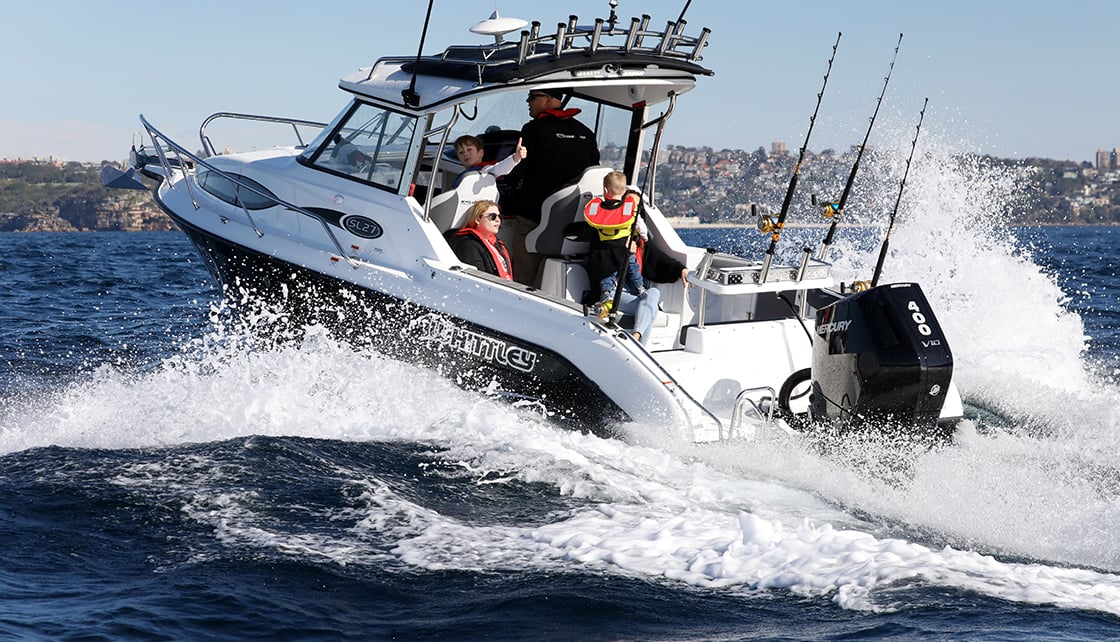
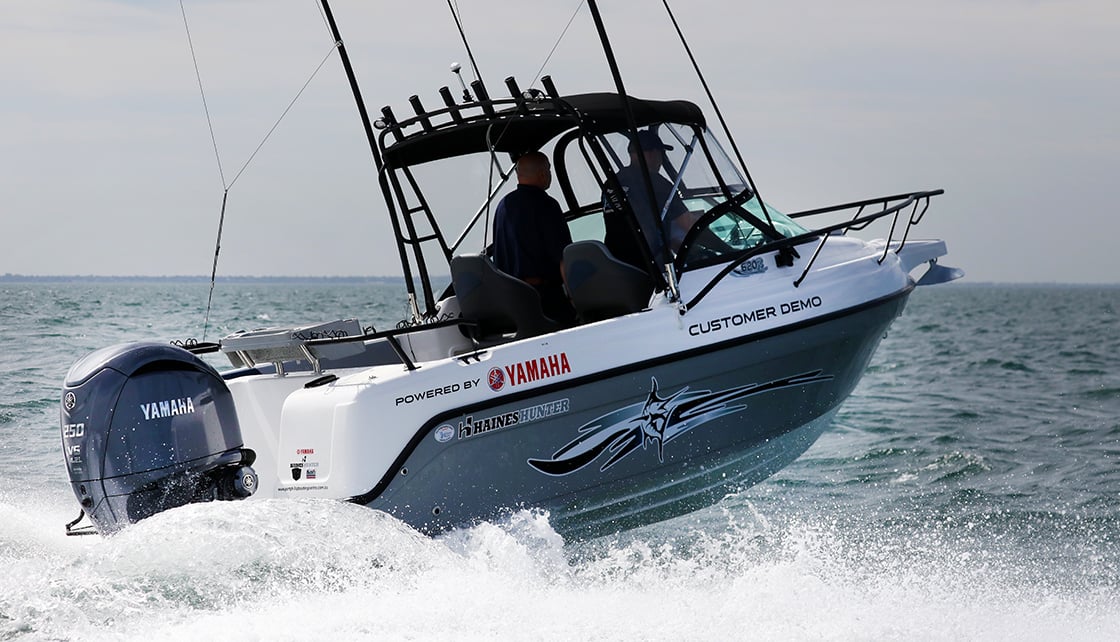
Regarding the raft of technology on today’s outboards, there are immensely powerful and reliable ignition and fuel-injection systems, as well as higher-output charging systems to service a plethora of onboard electronics.

On several models, one can now also have proprietary, integrated steering that’s installed by the manufacturer and not an aftermarket item, as well as joystick control allowing extremely precise and hitherto-unknown turning and berthing manoeuvrability.

New features include an electronic ‘spot-lock’ that allows the boat to ‘hook’ itself to a particular spot for fishing or holding against wind and tide etc.

By far, though, a feature which truly impresses is the option on several companies’ higher-horsepower models of drive-by-wire control  – digital throttle and gear shifting with no old-style control cables between the remote-control box and the motor. The smoothness, precision and swiftness of this feature must be experienced to be believed.

All five main brands come with some or all of these features, and what follows is a brief overview of each marque and key features or models.

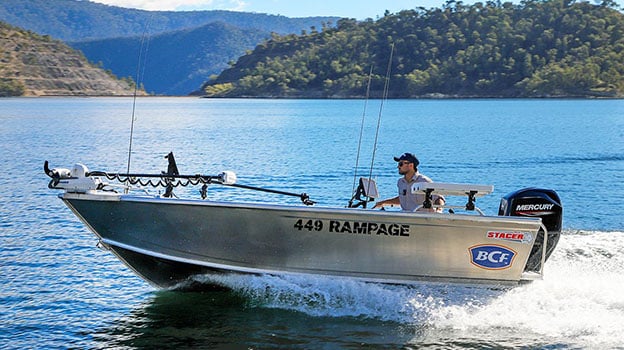
With the demise of Evinrude and Johnson, Mercury is now the oldest manufacturer of outboard motors. It was founded in 1939 by the dynamic Carl Kiekhaefer, and almost purely by accident at that.

Kiekhaefer had intended to manufacture milking equipment for the dairy industry and bought a barn that had been converted into a factory. Inside, he found dozens of outboards that had been manufactured for the Montgomery Ward store chain, but which had all been returned because of defects.

Before Kiekhaefer could begin manufacturing the dairy equipment, the defective outboards had to be repaired and delivered. The dairy equipment never eventuated and Kiekhaefer Corporation (manufacturer of Mercury outboards) was born.

The examples of Mercury’s innovation and ingenuity are many, but the first 100hp – the inline-six Tower of Power – in 1962 raised the bar. The company became part of the Brunswick empire in 1961.

Mercury is the only specialised producer of marine engines as its core business and Mercury has the largest range of models and horsepower variants, too, although closely shadowed by Yamaha.

HP range: 2.5 to 600

Sweet spots: 25/30, 115 PRO XS, 150 PRO XS, V10 Verado 400

Leisure warranty: 3 + 3 (conditions apply)

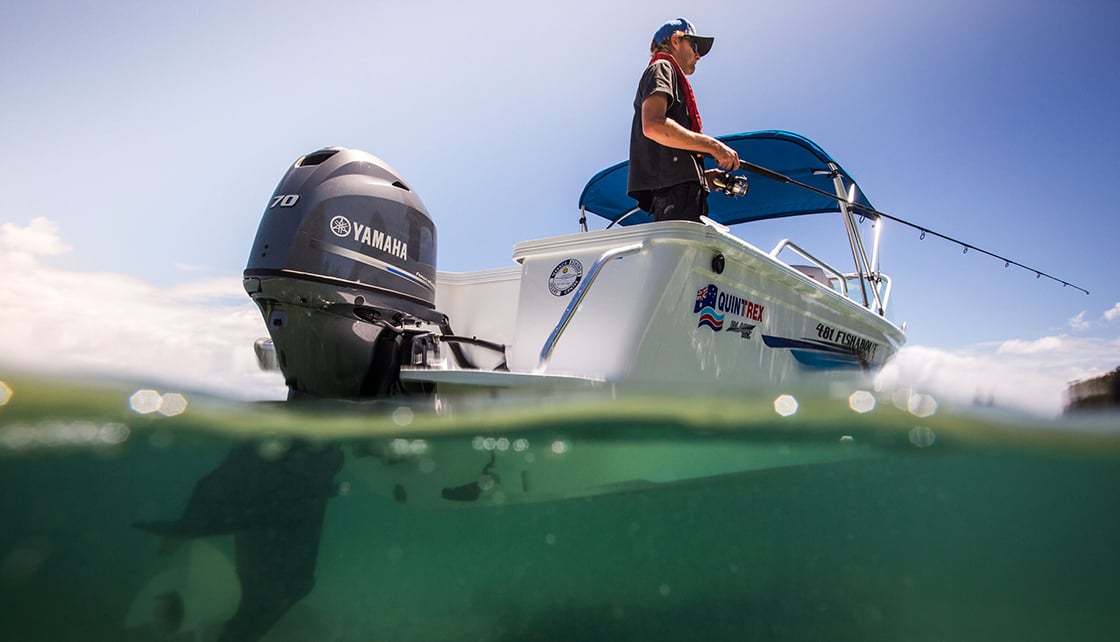
In 1960, Yamaha entered the outboard industry with a single model– the air-cooled, single-cylinder P7A. Now, Yamaha is the world’s largest manufacturer of outboards.

The company really started to burgeon with the introduction of the 55A in 1974, the first ‘large’ Japanese outboard. In 1978, it was followed by the 85A, which is incredibly still in production in commercial Enduro spec today, and the later V4s (1981) and V6s (1983).

While it could never be claimed that Yamaha had any outright ‘firsts’ in its early days, its reimagining, revision and refinement of US competitors’ concepts assured worldwide strength in no time. 

Such is the strength of the Yamaha brand and the consumer confidence in it that, today, in developing nations like those in the South Pacific, the Yamaha commercial-spec Enduro outboard is still often referred to as ‘the HiLux of the sea’. 

HP range: 2.5 to 450

Sweet spots: F70, VF115 SHO, F150, F300

Leisure warranty: 2 + 2 (conditions apply).

As a corporation, Suzuki is many times larger than Mercury and Yamaha (plus Tohatsu) combined and could, should it so wish, manufacture many more outboards than its current not inconsiderable output. In fact, the only company larger than Suzuki that also manufactures outboards is Honda, yet Honda’s outboard production numbers are the smallest of the brands.

Suzuki began in the outboard business in 1965 (2025 is its 60th anniversary) with the single-cylinder, water-cooled D55 and has produced many firsts.

It was first to introduce proper gravity-fed oil injection on 2-stroke outboards, as distinct from merely an autolube or ‘blend’ system, eventually even down as low as 8hp. Then there were the twin spark-plug cylinder heads on the DT200 Exante and the fuel-injected DT225, not to mention the first truly epoch-making four-stroke outboard – the fuel-injected DF60/70 in 1998.

A superb Suzuki feature is the fitment of a switchable/rotation-reversible lower unit on all electronic drive-by-wire models from 150 through 300hp. This negates the necessity of purchasing counter-rotating lower unit as the rotation can be changed by swapping an electrical connection in a plug on the motor. 

HP range: 2.5 to 350

Sweet spots: DF25/30A, DF75A, DF115/140BG (drive-by-wire), DF300AP

Leisure warranty: 3+3 (conditions apply).

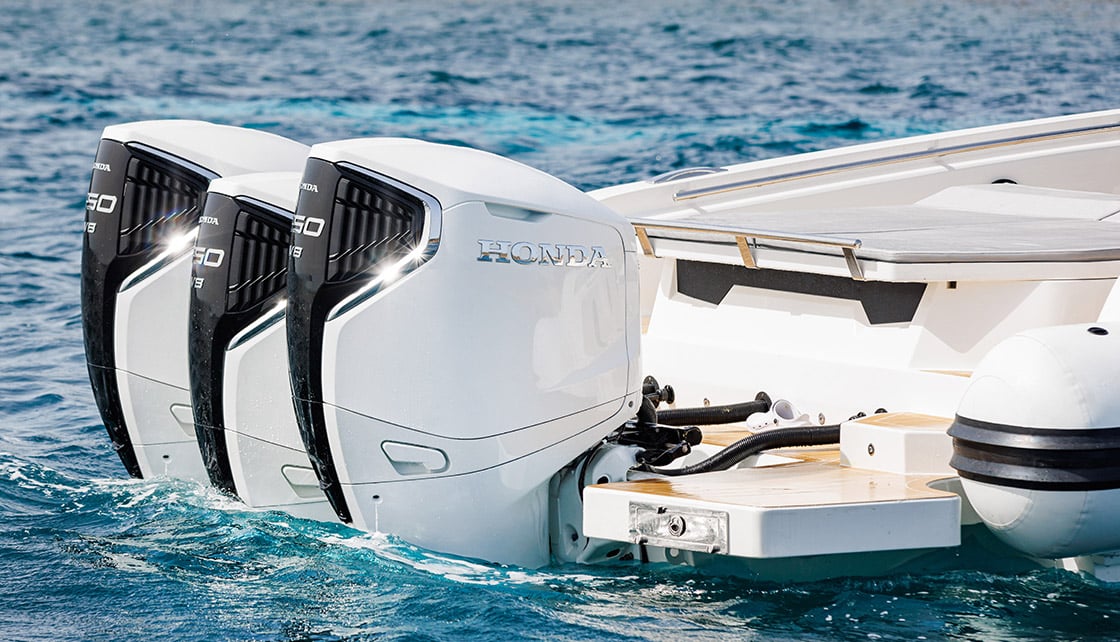
Honda beat Suzuki to the punch in the outboard industry by just one year – 1964 v 1965. Although, its first offering, the GB30, wasn’t an outboard in the true sense, it was a multi-use, single-cylinder four-stroke industrial engine that clipped to (and from) a centre section and lower unit.

Honda is unique for producing only four-stroke units for marine use, having never utilised two-stroke power.

I recall a day in 1992 when a RIB drew into a boat ramp car park on Loch Lomond in Scotland. It was fitted with two brand-new Honda BF45s that literally stopped traffic. Everyone present thought they had glimpsed the outboard of the future, which indeed they had.

But Honda remained somewhat complacent and the others caught up. Today, apart from the use of carburettors on its 15 to 30hp range (everyone else having gone to fuel injection), the product is extremely good. 

HP range: 2.3 to 350

Sweet spots: BF15/20, BF40/50, BF60

Leisure warranty: 5 + 2 (conditions apply).

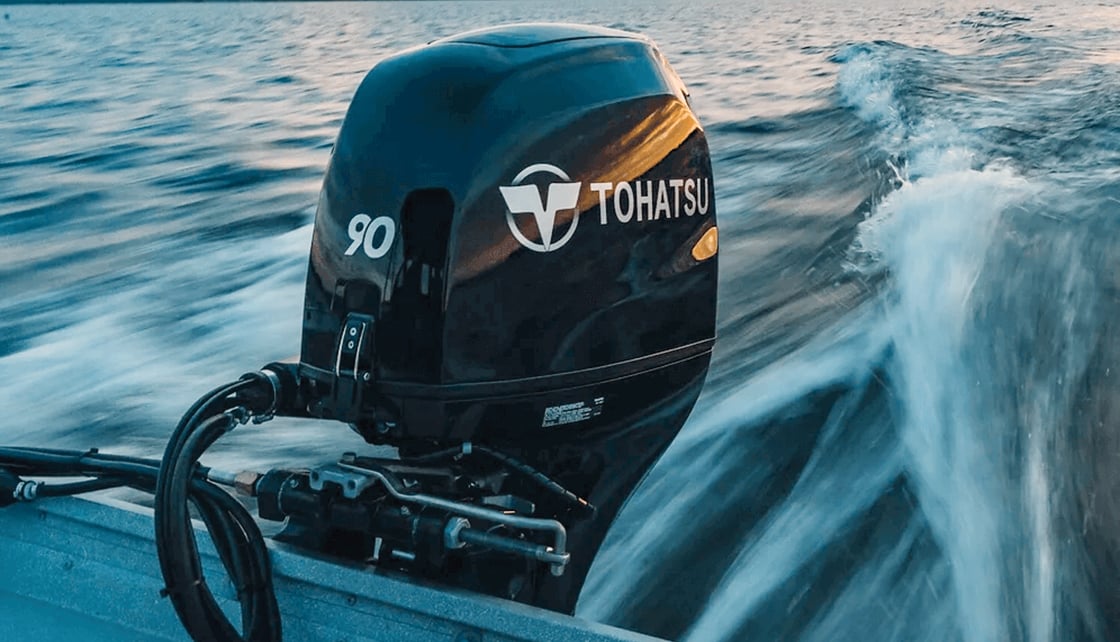
Established in 1955, Tohatsu is the oldest of all Japanese outboard brands and a surprisingly large manufacturer. It previously supplied portable Evinrude four-strokes and for many years has been a supplier to Mercury – currently the four-stroke power units for all Mercury motors up to 30hp. 

Tohatsu’s in-house line stops at 140hp, but an arrangement with Honda in 2013 saw it buying in the latter’s 150 to 250hp motors to complement its range – although these higher-hp ‘Hondatsus’ are extremely rare. Tohatsu has a small but extremely loyal dealer network and has some real gems in its model range.

HP range: 2.5 to 250 (150 to 250 by Honda)

Sweet spots: MFS9.9CY, MFS25/30D, MFS60A, MFS140A

Leisure warranty: 3 + 2 (conditions apply).

With a smorgasbord of power from 2.3 to 600hp, the five main internal combustion engine brands now available in the market are all excellent.

While some may shine in certain weight, feature or horsepower categories, one would be hard pushed to purchase a mediocre or disappointing outboard. The purchase decision should be influenced by dealer proximity, as close and convenient servicing should always be a factor.

But regardless of choice, it is refreshing to know that current outboard offerings pretty much represent the apex of technology and engineering excellence, and it is comforting that such innovation will help preserve our precious marine environment for decades to come. 

Give us a call on 1300 00 CLUB (2582)

Any discounts offered are applied to our standard rates. Promotional or other discounts may apply from time to time. Minimum premiums may apply. Any discounts/entitlements only apply to the extent any minimum premium is not reached. Where discounts are applied, your premium is subject to rounding. If you are eligible for more than one, we also apply each of them in a predetermined order to the premium (excluding taxes and government charges) as reduced by any prior applied discounts/entitlements.

Any advice here does not take into account your individual objectives, financial situation or needs. Terms, conditions, limits and exclusions apply. Before making a decision about Club Marine boat insurance, consider the Product Disclosure Statement (PDS)/Policy Document and Supplementary PDS (if applicable). Where applicable, the PDS/Policy Document, Supplementary PDS and Target Market Determination (TMD) for Club Marine boat insurance are available on this website. We do not provide any form of advice if you call us to enquire about or purchase a product.

Club Marine Limited (ABN 12 007 588 347), AFSL 236916 issues Club Marine boat insurance and handles and settles claims as agent for the insurer Allianz Australia Insurance Limited (ABN 15 000 122 850) AFSL 234708 (Allianz). Club Marine Limited is a related body corporate of Allianz. Copyright © 2026 Allianz Australia Limited.