
Boat preparation and driving habits can make a big difference in combating rising fuel costs.
 By
By 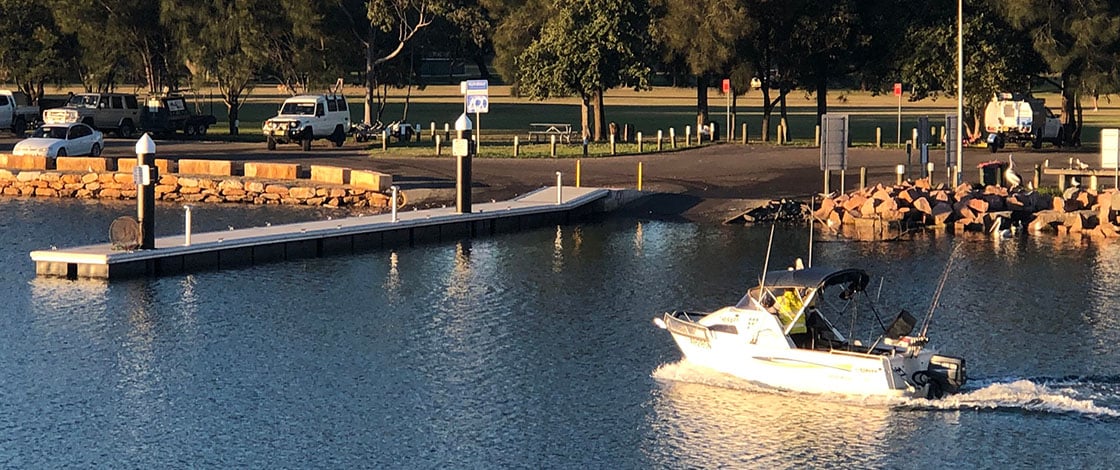
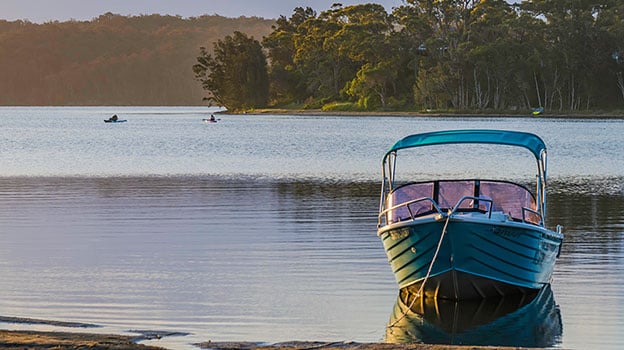
Explore waterways close to home.
Quick overview
- Smooth operator: Go easy on the accelerator, whether you’re driving your boat or tow vehicle.
- Lighten your load: Do you really need full water tanks and all that gear on board?
- Close to home: Exploring local waterways and finding nearby bays limits travel times.
- Boat preparation: Ensure your vessel is clean, well serviced, correctly propped and driven efficiently.
Not since the late ’70s has the world faced a fuel threat as dire as the blockage of the oil artery known as the Strait of Hormuz, with the international boating industry being part of the widespread collateral damage.
In Australia, household budgets are grappling not just with higher priced petrol, but groceries and consumables too. And further pain may be enroute as inflationary pressures have flow-on consequences for interest rates.
At such times, discretionary spending on recreational boating comes under renewed scrutiny, which is thoroughly sensible and advisable. If we’re smart, though, it doesn’t necessarily mean leaving the boat ashore.
If history tells us anything, 47-odd years ago the boating industry responded by introducing fuel-efficient, diesel-powered displacement hulls in lieu of gas-guzzling planing rigs, effectively keeping the industry afloat.
Today, we have far more advanced technologies that will come into play if the current crisis lingers and demand increases. But we also have simple techniques that you can employ with immediate effect, whether driving a tiny tinnie or a luxury bluewater passagemaker.
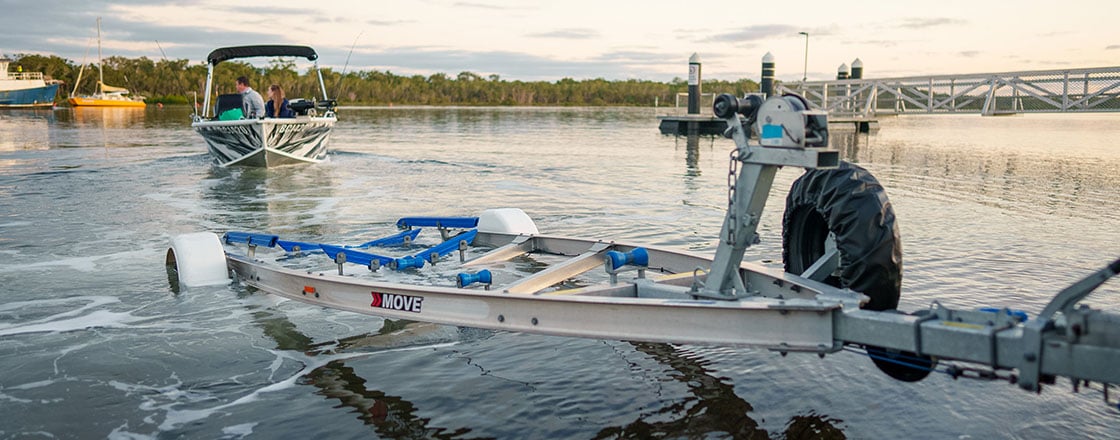
Streamline your setup to save weight.
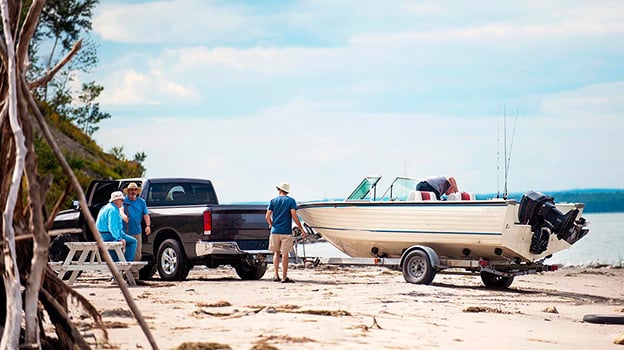
5 Fuel-saving tips for towing
1. Go easy on the accelerator
Fuel saving starts before you hit the water, in the case of trailable vessels, as a heavy foot on your car’s accelerator pedal will see fuel usage spike.
Where possible, hold a steady pace and use cruise control only on flat roads – otherwise the engine can hunt gears and over-rev. Dropping from 100 km/h to 90 km/h can significantly cut consumption. Also, it pays to leave a generous gap ahead to avoid constant braking and re-accelerating.
Other tactics include:
- Build speed before hills instead of accelerating halfway up.
- Choose flatter routes over shorter, hillier ones.
- Use tow/haul or manual mode if your vehicle has it to optimise shifting.
- Turn off your air-con (if not needed) and remove roof racks.
2. Trip timing
Travelling early morning or late evening means less traffic; hence less idling. The air is also cooler and denser, which engines love. Avoid strong headwinds if possible, and plan fuel stops to avoid detours or queues in busy servos.
3. Plan shorter trips
Now’s a good time to be exploring waterways close to home. Once afloat, travel to a nearby bay or anchor close to shore and just chill out.
4. Is high octane fuel more efficient?
Some drivers reckon that improved fuel efficiency justifies the extra cost of 98 RON when towing. With turbo engines you may get less engine stress and slightly better (1-3 percent) economy. In older, naturally aspirated engines you could just be paying more for nothing.
5. Lighten your trailer load
Anything you can do to save weight and streamline your setup is worth doing, especially on longer hauls.
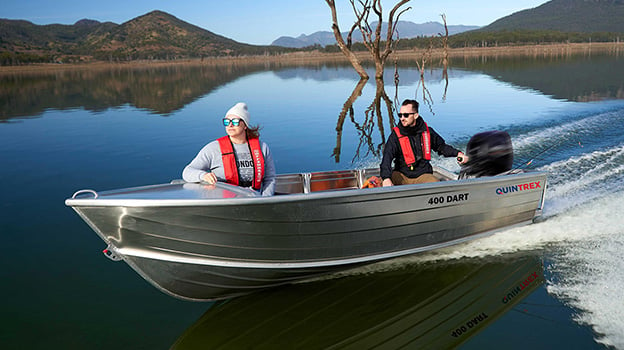
- If buying a new boat, consider a lighter weight alloy model.
- Alloy trailers can be far lighter than galvanised steel equivalents.
- Open hulls create an air vacuum, so use a travel cover – a tight one, not a parachute.
- Lower or remove biminis if possible.
- Secure loose gear that might add resistance.
- Empty water tanks before towing.
- Fill up with fuel on arrival.
- Remove unnecessary gear to reduce weight.
- Ensure tyre pressure are at recommended levels (car + trailer).
- Keep wheel bearings well greased.
- Check trailer level and alignment to reduce drag.
Tips to save fuel on the water while boating
Many of the rules of towing can apply to boat driving as well. Indeed, it’s even more important to find an optimum cruising speed as marine engines work hard and are thirstier, compared to cars that roll on flat bitumen.
Basic rules:
- Like driving a car, aim for smooth acceleration.
- Limit unnecessary idling; you’ll save fuel and lessen carbon buildup.
- Regular engine servicing maximises power and running efficiency.
- Keep the hull clean – marine growth increases fuel use by up to 30 percent.
- Keep the propeller clean and undamaged to avoid cavitation.
- Plan your trips to avoid fighting strong currents or headwinds.
- Lower your speed – it’s more efficient, and your sounder becomes clearer too.
- Most marine petrol engines are designed for 91 RON unleaded, gaining little benefit from 95 or 98.
- Petrol and diesel both degrade over time. Check fuel filters and water separators if fitted.
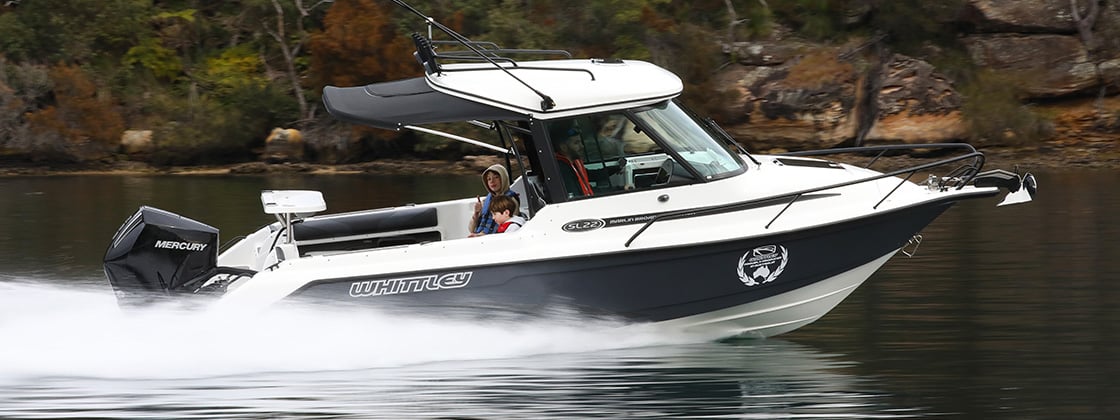
Whittley SL22 well trimmed.
Setting up your motor
If you haven’t already done so, check engine height. The outboard’s cav plate should be level with the lowest point of the hull – if the leg is too low, for example, it increases drag.
Also look at the propeller, relative to your engine’s WOT rpm, boat weight and your common usage. A lower pitch increases RPM and hole shot but reduces top speed. In terms of diameter, slower, heavier boats may benefit from a large diameter and lower pitch.
Three-blade props are all-rounders; four-bladers are better for hole shot and heavy loads (skiing).
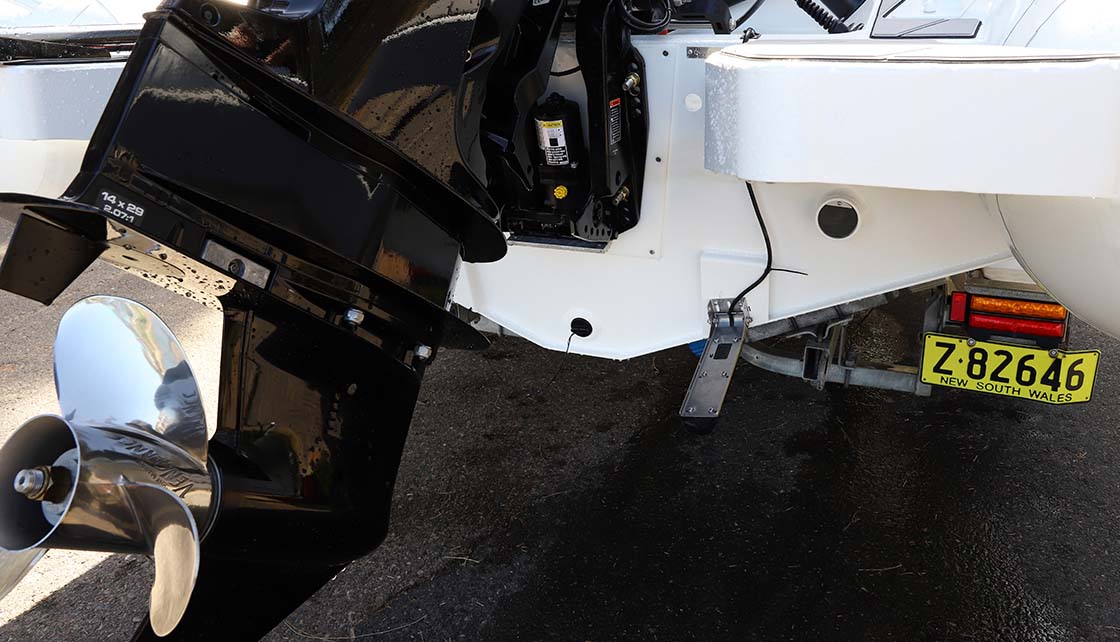
Engine height and propellor choice are important.
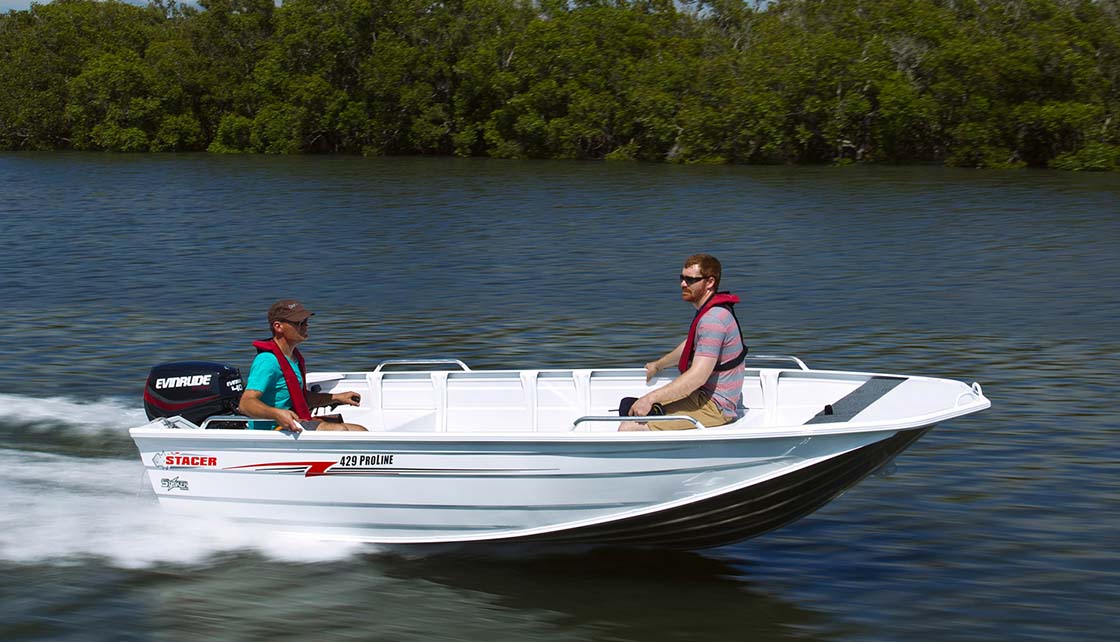
Position weight forward for hull balance.
Finding the right speed
The “twilight” zone between semi-displacement and planing speeds – roughly 8–14 knots – is where your boat is least efficient. If the bow is pointing skywards and pushing water as it transitions the bow wave, you’re burning extra juice.
With outboard- and sterndrive-powered planing hulls you should trim down to get over that hump most efficiently, then ease the throttle to find the engine’s sweet spot – usually around 3000–4000 rpm or 70 percent of maximum revs.
Adjustable trim tabs can also help. Otherwise, in small boats without power trim, you may need to move weight forward to lower the bow.
Using your trim function
When planing, your hull’s hydrodynamic efficiency is improved by trimming up the engine (or tabs) to minimise wetted surface contact. Don’t overdo it, however, because the hull becomes flightier (less stable) and the propeller can cavitate – you want that happy medium of riding flat and smooth in the ideal rev band.
Power matching
Underpowering your hull can be false economy as the engine labours during the planing transition and generally runs at higher revs to maintain cruising speeds. Consider installing a fuel-flow meter to monitor real-time consumption. Club Marine members can also receive 10% off purchases over $100 on fuel management solutions from Topargee. Learn more: clubmarine.com.au/memberrewards
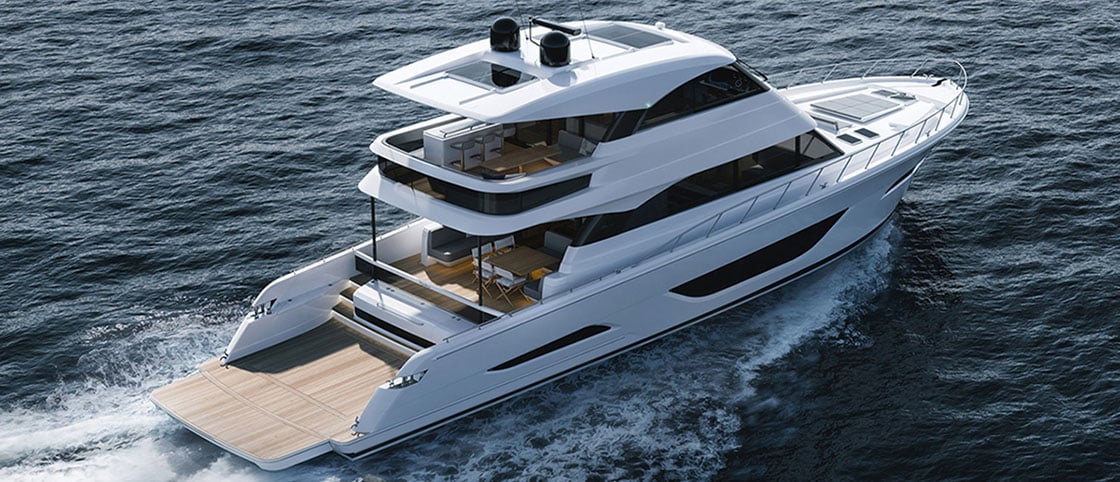
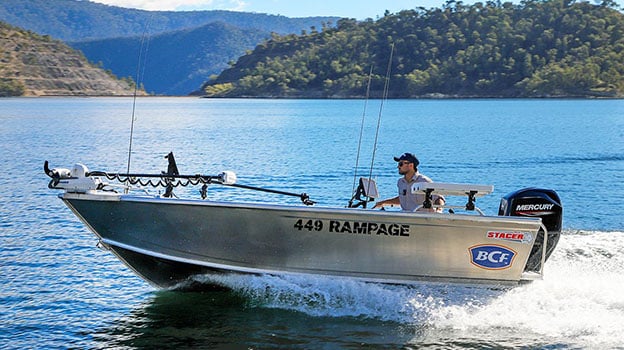
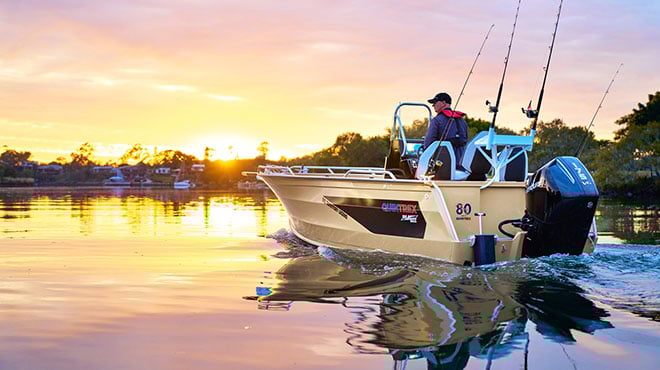
Driving at lower speeds saves fuel.
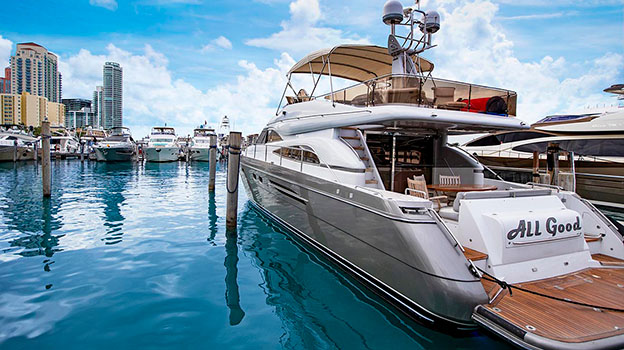
Driving large cruisers efficiently to reduce fuel consumption
Many of the aforementioned tips, like load lightening, streamlining and maintenance, apply to non-trailable craft.
Efficient as modern hulls are, lifting a heavy weight onto the plane requires considerable grunt. So if you’re not in a rush, cruising in displacement mode will dramatically reduce fuel burn, remembering that diesel has been considerably more expensive at the bowser than petrol in recent times.
Once again, fuel economy suffers during the semi-displacement slog, which means finding a planing speed of around 70 percent engine load. Ride attitude is equally important as a poorly trimmed cruiser can burn 20-30 percent more fuel.
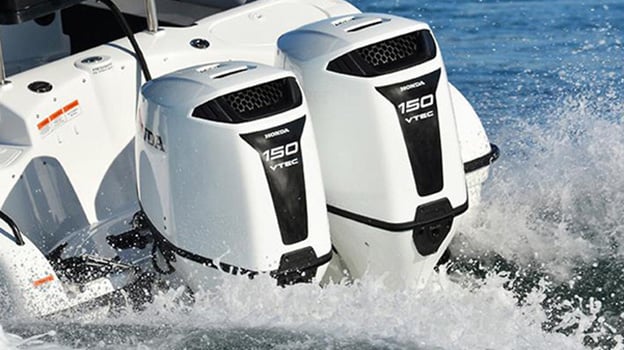
With twin motors, sync the revs to achieve a smoother and more efficient ride.
If you’re weighing up IPS versus shafts, pod drives tend to win out here due to optimum shaft angle.
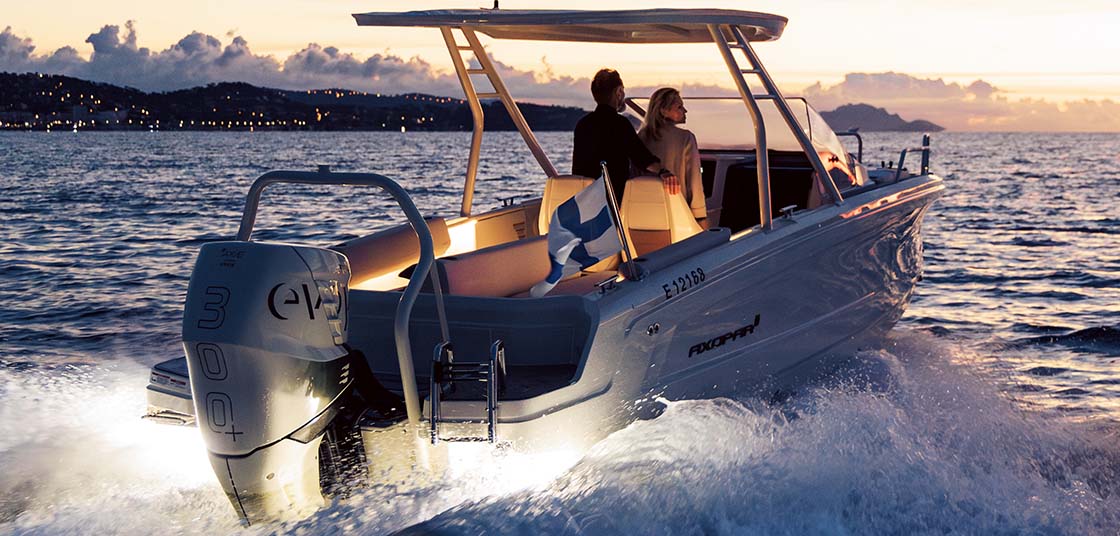
Electric motors are gaining momentum.
Technologies for fuel savings
Just as rising fuel costs spurred designers to rethink the popular deep-vee planing hull in the 1980s, efficiency factors will bring lighter, low-drag boats into the buying equation.
Displacement and semi-displacement catamarans and trimarans generally have less drag per weight by virtue of their slender hulls. Wave-piercing and reverse bows are also effective in extending waterline length and water flow.
Already on the market, albeit in limited numbers, are full foiling boats that ride completely out of the water, and foil-assisted craft that partially lift to reduce wetted surface. It’s the biggest efficiency leap in boating at the current time.
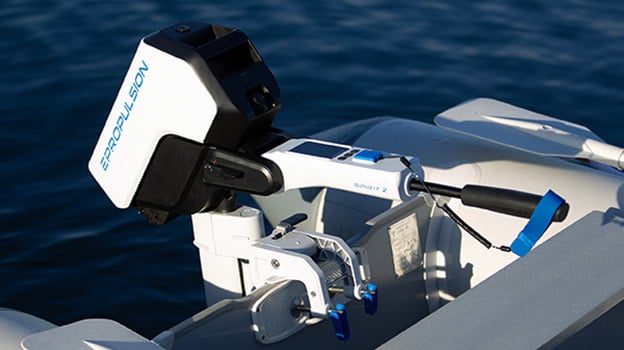
Electric outboards and inboards are rapidly increasing in power output and improving in efficiency.
Builders such as Greenline are offering hybrid power systems employing a mix of diesel and electric. Solar electric is showing increasing promise in certain applications.
AI-based smart systems are advancing with engine trim, power usage, fuel-flow optimisation, weather routing and more – these will improve and become more affordable as demand increases.
Alternative fuels such as hydrogen are being tested but appear some way off commercial release. Until then, petrol and diesel are the go-to fuels and we need to conserve these resources as much as possible.
RELATED ARTICLES



Any advice here does not take into account your individual objectives, financial situation or needs. Terms, conditions, limits and exclusions apply. Before making a decision about Club Marine boat insurance, consider the Product Disclosure Statement (PDS)/Policy Document and Supplementary PDS (if applicable). Where applicable, the PDS/Policy Document, Supplementary PDS and Target Market Determination (TMD) for Club Marine boat insurance are available on this website. We do not provide any form of advice if you call us to enquire about or purchase a product.
Club Marine Limited (ABN 12 007 588 347), AFSL 236916 issues Club Marine boat insurance and handles and settles claims as agent for the insurer Allianz Australia Insurance Limited (ABN 15 000 122 850) AFSL 234708 (Allianz). Club Marine Limited is a related body corporate of Allianz. Copyright © 2026 Allianz Australia Limited.