
- Tailor medical supplies to your needs considering factors such as remoteness of destination and group size.
- Take a marine first-aid course to learn how to respond to common ailments, perform CPR and manage injuries.
- Label items and storage location clearly, ensure emergency contacts are readily accessible and regularly check expiry dates.
First Aid Kits for boats
By Catherine Lawson
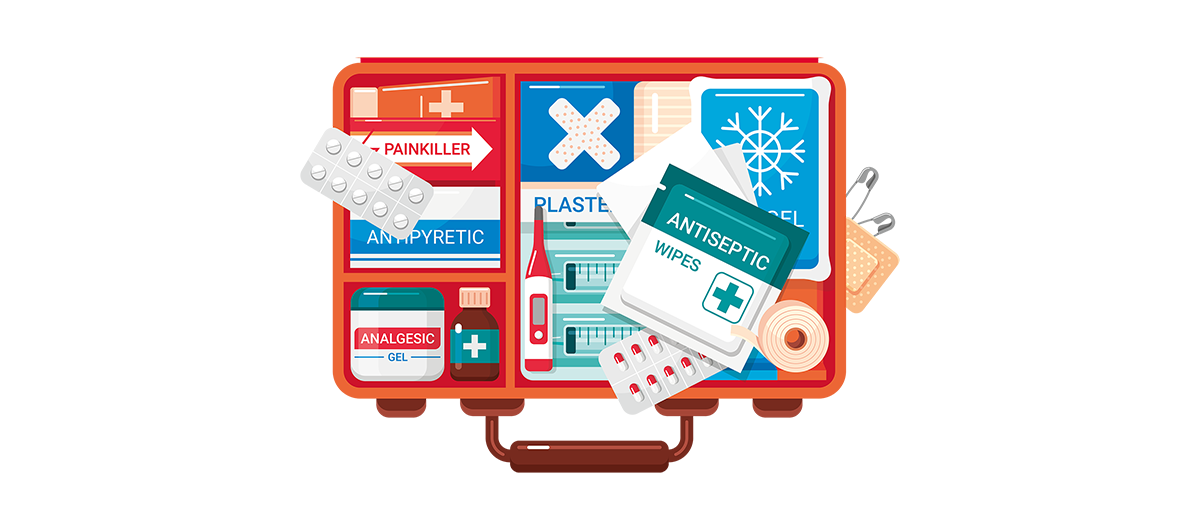
Quick overview
When an accident or injury happens while you’re on the water, what you do before help arrives can make all the difference. Arm yourself with a well-stocked first aid kit and the skills, knowledge and confidence to be your patient’s first responder.
Your first aid kit should contain the necessary medical supplies to stabilise a patient until you can get medical help, and to remedy minor afflictions such as cuts, stings and bites, seasickness, and exposure to sun, heat or cold.
When stocking a first-aid kit for your vessel, consider the remoteness and style of your boating adventures, the number of people aboard, and crew members who have health conditions and might need specific medications.
To gain skills and confidence, it’s advisable to take a marine first-aid course that will teach you to treat the most common on-water ailments, perform CPR, dress wounds, and deal with stings, shock, bone breaks, sprains, seasickness and more.
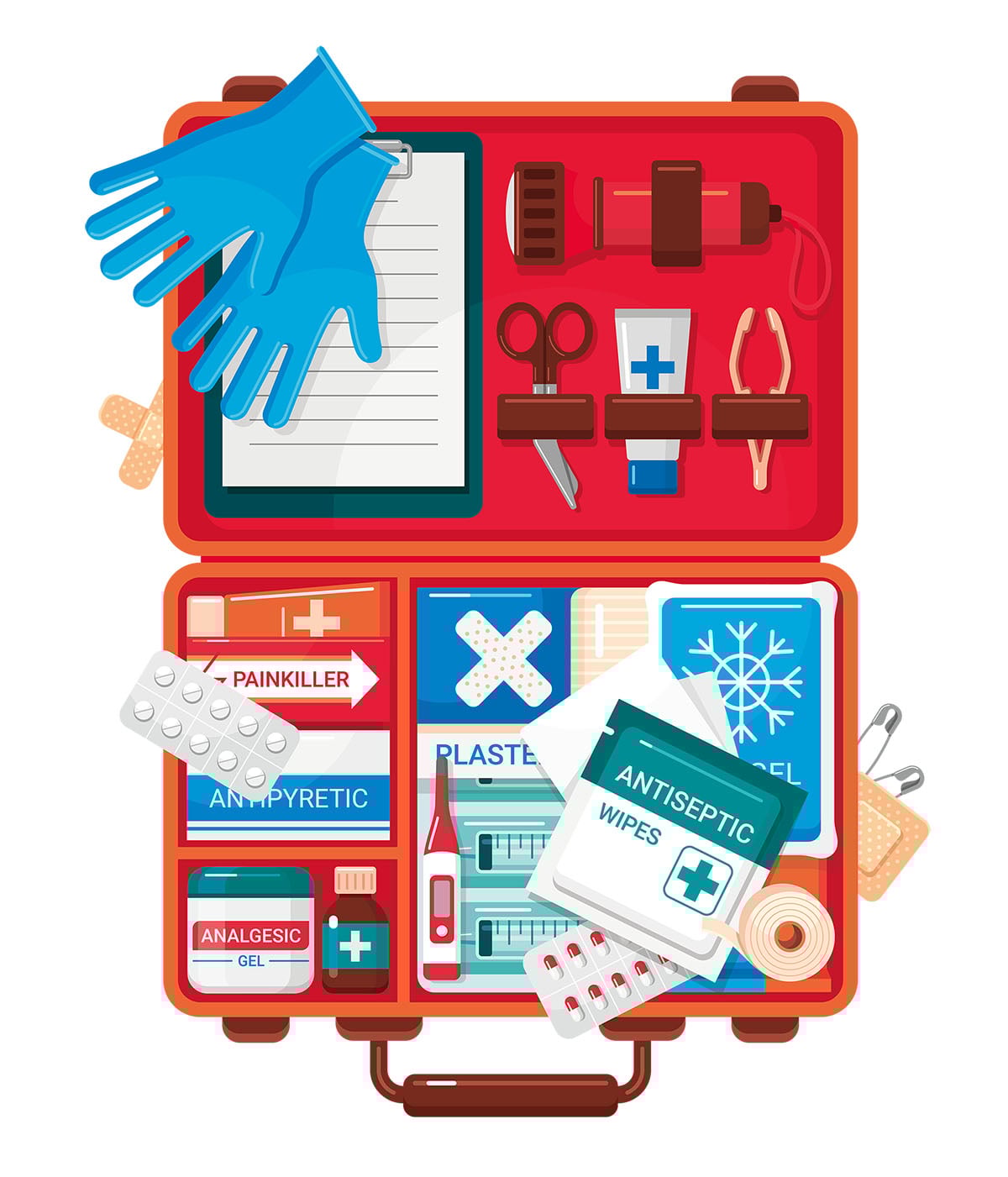
Build your boat’s first-aid kit around the following items
Wounds and dressings
- Antiseptic, cleansing wipes, saline tubes and antibacterial cream
- Wound and burn dressings
- Compression and conforming bandages
- Triangular bandage
- Cotton swabs/gauzes
- Wound closures/glue
- Surgical tape
- Eye pads and cleaning solution
Medications and treatments
- Paracetamol/ibuprofen tablets
- Anaesthetic and hydrocortisone creams
- Antacid tablets
- Seasickness tablets/remedies
- Diarrhoea tablets/capsules
- Vinegar (for some jellyfish stings)
- Hydration salts/icy poles
- Aloe vera and burns gel
- Instant ice packs
- Broad-spectrum antibiotics
Tools
- First aid manual
- Tweezers, splinter probe, scissors, side-cutting pliers (for removing fish hooks)
- Emergency blanket (for hypothermia)
- Fever scan strip (or thermometer)
- Nitrile gloves, resuscitation shield
Top tips
- Store first-aid items in a sturdy waterproof container
- Clearly label your first-aid kit and its storage locker
- Tape emergency contact phone numbers to the outside of your kit: local hospital, family doctor, local volunteer marine rescue or Coast Guard
- Regularly check expiry dates and replace items as needed
- Freeze hydration icy poles (to combat vomiting) and icepacks (to relieve headaches, stings and bruises, and to reduce swelling).

RELATED ARTICLES





Any advice here does not take into account your individual objectives, financial situation or needs. Terms, conditions, limits and exclusions apply. Before making a decision about Club Marine boat insurance, consider the Product Disclosure Statement (PDS)/Policy Document and Supplementary PDS (if applicable). Where applicable, the PDS/Policy Document, Supplementary PDS and Target Market Determination (TMD) for Club Marine boat insurance are available on this website. We do not provide any form of advice if you call us to enquire about or purchase a product.
Club Marine Limited (ABN 12 007 588 347), AFSL 236916 issues Club Marine boat insurance and handles and settles claims as agent for the insurer Allianz Australia Insurance Limited (ABN 15 000 122 850) AFSL 234708 (Allianz). Club Marine Limited is a related body corporate of Allianz. Copyright © 2026 Allianz Australia Limited.