Lifejackets and personal flotation devices (PFDs)

By Catherine Lawson

Wearing a lifejacket, or personal flotation device (PFD), is a simple yet vital safety measure that can significantly increase your chances of surviving an incident at sea. 

Make wearing a lifejacket a habit no matter what type of boating you do, even in fair weather. The Australian Maritime Safety Authority (AMSA) recommends wearing the type of lifejacket required for your vessel’s highest service category.

Provide lifejackets to all your passengers and show those new to boating how to adjust theirs so it fits snuggly and properly. Help children get used to wearing their lifejacket and explain why it’s important to keep it on while they’re near or on the water.

Lifejackets come in foam buoyancy (inherently buoyant), self-inflating (automatic inflation), or manual inflating versions. There are also hybrid versions that let the wearer turn off the automatic inflation system to make the lifejacket manual.

It’s important to regularly inspect your lifejackets to ensure they’re in good working order and, for inflatable versions, are within service.

The new Australian PFD ratings that came into effect into 2021 now grade lifejackets according to how much buoyancy they provide. They’re grouped into safety levels according to what they’re intended to be used for. 
  • Used in enclosed waters
  • Intended for people who can swim and are close to the bank or shore, or have help close by
  • Designed to support you in the water but do not turn you to a face-up position
  • Level 50 come in high visibility colours, 50S come in a variety of colours

  • Used in coastal or open waters when the shore is in sight
  • Not intended for rough conditions
  • They include foam buoyancy for neck support that can help turn the wearer into a face-up position
  • Highly visible colour
  • Used offshore and in rough conditions 
  • Turns the wearer to a face-up position even if unconscious 
  • Level 150+ inflatable lifejackets (manual or automatic inflation) must be serviced annually and are designed to keep the wearer face-up even if unconscious
  • Used offshore and in rough conditions
  • Intended for use when wearing clothing that could trap air and stop the lifejacket from turning the wearer face-up, when wearing clothing and footwear that becomes waterlogged and heavy in the water, and when carrying heavy items 
  • Turns the wearer to a face-up position even if unconscious

So let’s say you’re a recreational offshore boater – you’ll need a Level 150 PFD (formerly Type 1) providing 150 newtons (N) or 15kg of upward lift. A 100N vest is a step down, catering for near-shore and enclosed water activities, but both vests offer head support to keep a person face-up in the water.

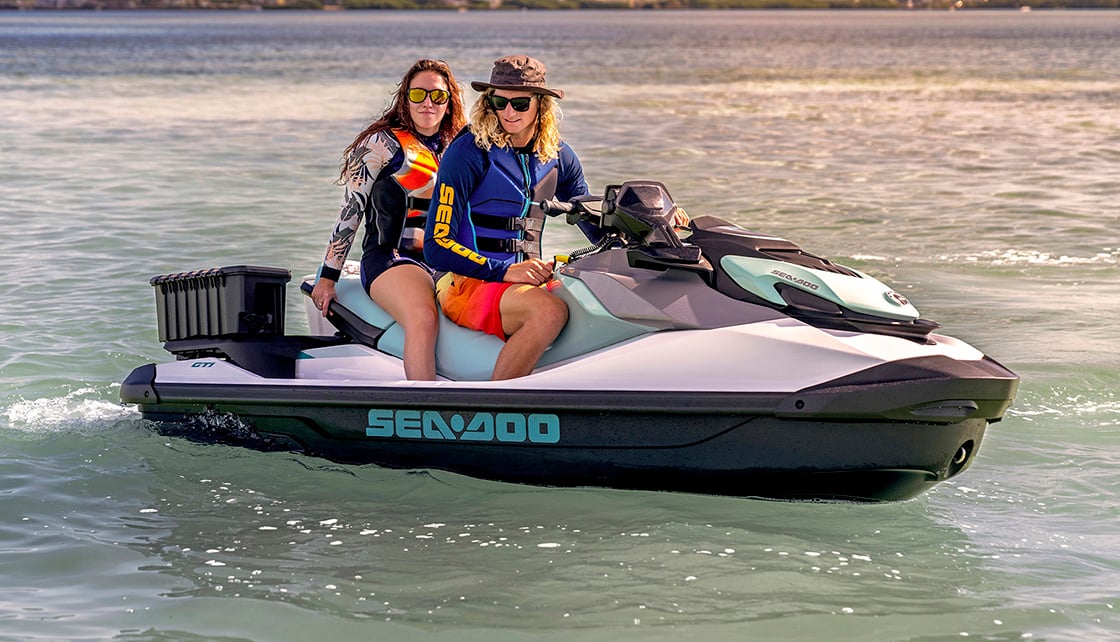
The high collar and relative restrictiveness of both these PFD types makes them less appealing to paddlers, kayakers or jet skiers. Trading off greater flexibility of movement for a less buoyant vest, Level 50 (the old Type 2) and Level 50s (the old Type 3) are intended for use in smooth waters only.

Colour is the only real difference between these two vests, since 50s ‘special purpose’ PFDs don’t have to include bright rescue-friendly colours of red and yellow.

Generally speaking, closed cell foam PFDs are a good choice for active watersports  – inshore dinghy sailing, jet skiing and paddling kayaks, canoes or SUPs  – mainly because the recommended Level 50 vests have slim profiles for enhanced flexibility.

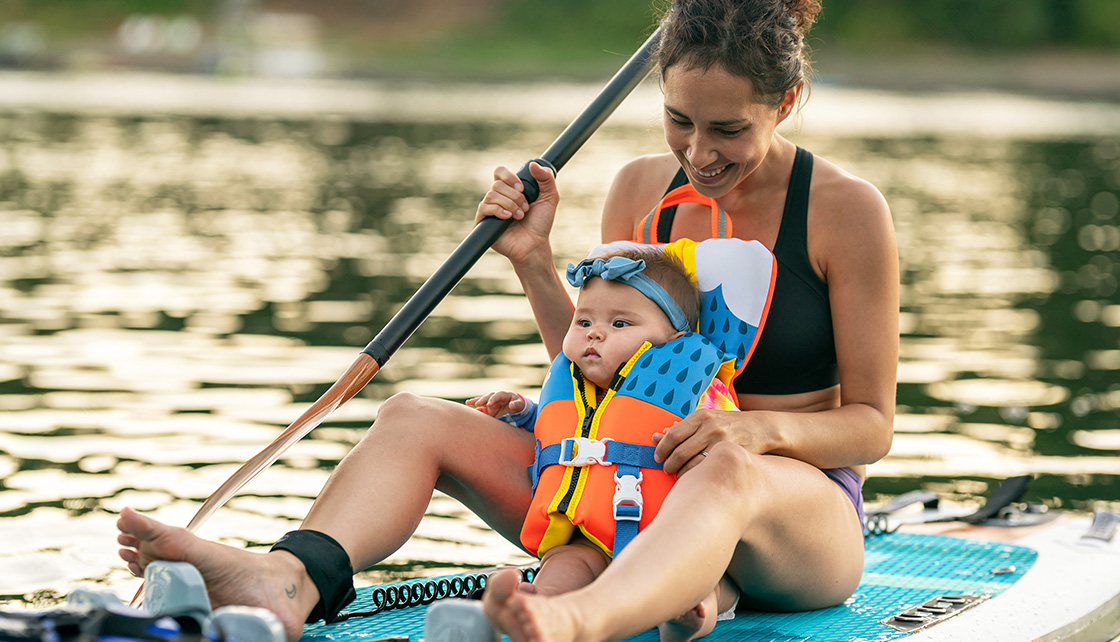
Being inherently buoyant, they don’t require you to do anything for them to work (other than putting them on correctly), which is why they’re the PFD of choice for babies and children under 12 years, and anyone who can’t swim proficiently.

Closed cell foam PFDs are also easy to maintain, don’t require servicing (as inflatable PFDs do) and can cost as little as $15. But these bright yellow Level 100 vests are bulky and uncomfortable.

  • There are few things cuter than a toddler in a PFD, and every kiddo should have one. My baby moved aboard our sailing catamaran four days after being born, so I’ve gone through quite a few PFDs as she grew and became more mobile.
  •  
  • One thing I’ve learnt is that there will be a window of a couple of months when your PFD actually fits your child well. The rest of the time they’ll be either growing into or out of it, so look for an adjustable and affordable model to get started. 
  •  
  • A good grab-handle is helpful when getting babies in and out of the dinghy, and to keep them in reach when playing with you in the water.
  •  
  • Really tiny babies (under six months) aren’t all that keen on being in a PFD for too long, but for dinghy trips and watery fun, the Lil Marlin Infant PFD 100 fits babies from 5 to 10kg. Australian-made Marlin PFDs are affordably priced, and can often be found on Facebook Marketplace in great, rarely used condition.

Ideally, you’ll want to try on a PFD before you buy it, wearing in on top of the clothes you would normally wear on the water. Move around in it, bend and stretch, lie down in it and pay attention to fit and comfort, because you may need to tackle plenty of tasks while you have it strapped on.
PFDs don’t technically have an expiry date, especially closed cell foam versions, but the average lifespan with regular use is around 10 years. Regardless, you should check your PFD regularly and keep it clean and dry. If yours is an inflatable model, inspect and test it once a year and after every inflation to ensure it’s ready when you need it most.

You don’t want to find out the hard way that your PFD doesn’t inflate or stay inflated once in the water, so take the time to tackle this annual 15-minute test  – follow the manufacturer’s instructions, which were supplied with the new PFD or are printed on the jacket.

To dispose of, or recycle, a CO2 cartridge it needs to be empty – that is, with a puncture hole in the end so it’s no longer pressurised. The safest way to empty an out-of-date cartridge is to insert it into your PFD and practise inflating your jacket, then remove it. Check with your local council or recycling centre if it can go into the recycling bin.

A FULL VERSION OF THIS ARTICLE APPEARED IN THE DECEMBER-JANUARY 2025 (39.6) EDITION OF CLUB MARINE MAGAZINE.

Give us a call on 1300 00 CLUB (2582)

Any discounts offered are applied to our standard rates. Promotional or other discounts may apply from time to time. Minimum premiums may apply. Any discounts/entitlements only apply to the extent any minimum premium is not reached. Where discounts are applied, your premium is subject to rounding. If you are eligible for more than one, we also apply each of them in a predetermined order to the premium (excluding taxes and government charges) as reduced by any prior applied discounts/entitlements.

Any advice here does not take into account your individual objectives, financial situation or needs. Terms, conditions, limits and exclusions apply. Before making a decision about Club Marine boat insurance, consider the Product Disclosure Statement (PDS)/Policy Document and Supplementary PDS (if applicable). Where applicable, the PDS/Policy Document, Supplementary PDS and Target Market Determination (TMD) for Club Marine boat insurance are available on this website. We do not provide any form of advice if you call us to enquire about or purchase a product.

Club Marine Limited (ABN 12 007 588 347), AFSL 236916 issues Club Marine boat insurance and handles and settles claims as agent for the insurer Allianz Australia Insurance Limited (ABN 15 000 122 850) AFSL 234708 (Allianz). Club Marine Limited is a related body corporate of Allianz. Copyright © 2026 Allianz Australia Limited.