Buyers guide to Personal Locator Beacons (PLBs) and AIS beacons

Catherine Lawson

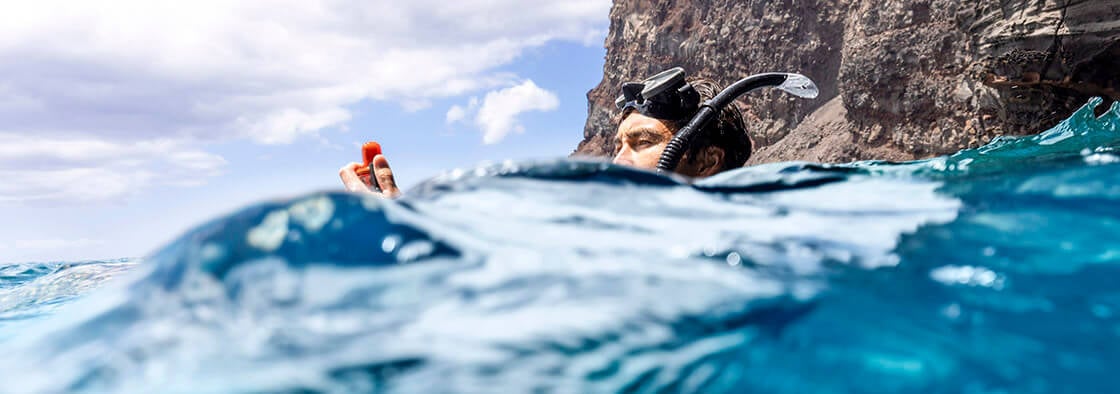
Personal Locator Beacons (PLBs) and AIS beacons are the devices that bring help, whether you’ve fallen overboard in the dead of night, been forced into the life raft, or need expert medical advice in an emergency. 

Compared to all other marine-related incidents, falling overboard has the highest fatality rate. The UK’s Marine Accident Investigation Branch has reported that from 2015 to ’23, almost half (47 per cent) of persons who fell overboard off recreational sailing, motor and power boats, died.

Looking at NSW as a local example, in the 10 years to 2022, 24 people died after falling overboard, 22 of whom were not wearing a lifejacket. According to Royal Life Saving Australia’s National Drowning Report 2024, a third of all drowning deaths last year that occurred in open ocean or harbour settings were boat-related and, of these, most occurred offshore.

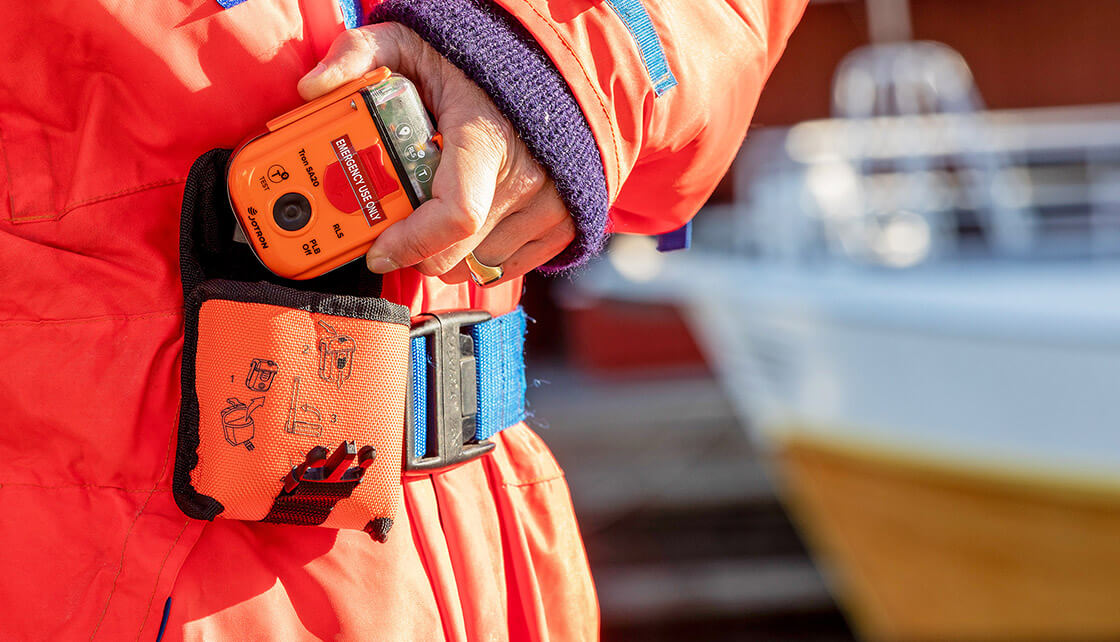
A Personal Locator Beacon (PLB) does for a boatie what an EPIRB does for your boat – initiate a search-and-rescue mission by sending a 406MHz signal skywards. When picked up by an orbiting Cospas-Sarsat search and rescue satellite, the distress signal is relayed to, and received by, the closest rescue centre in the world-wide network, who initiate a rescue mission.

Instead of replacing an EPIRB, a PLB works as an added safety device. The key difference is that a PLB is registered to the wearer, not the boat, which is handy if you often change vessels as crew. It’s also much smaller, more lightweight, and will transmit a signal for around 24 hours – half the transmission time of an EPIRB.

Most PLBs are GPS-enabled, fine-tuning your location when activated to within 100m and allowing rescuers to home in on the PLB’s 121.5 MHz signal.

What a standard PLB won’t do is alert your own or nearby vessels should you fall overboard – that’s the job of an AIS beacon, though some combination units reviewed here perform both tasks.

While an all-in-one unit might seem the obvious choice, for many wearers their increased size and weight makes them cumbersome to wear, especially when inserted into a lifejacket and armed to activate with inflation. One solution is to wear two separate devices, inserting one into your lifejacket and pocketing the other or wearing it attached to a lanyard or your harness.

PLBs clipped to a wet-weather jacket or harness must be manually operated versions, which means you need to be conscious to activate the device.

Units designed to auto-activate when the lifejacket is inflated are deemed to be semi-automatic. Should your lifejacket fail to inflate, your device won’t activate either.

Some PLB models will activate automatically upon immersion in water – a fail-safe should you enter the water unconscious – however none of these units is approved for use in Australian waters by AMSA (Australian Maritime Safety Authority).

While all PLBs are waterproof (to various degrees), not all float, so bear in mind how you intend to use and secure your device. 

The only Australian-built PLB listed here, the MT610G is lightweight (160g) and compact, measuring just 8.8 x 6.6cm and 3.6cm thick. It’s inherently buoyant and waterproof, requires no warm-up time, and provides a six-year warranty and seven-year battery life.

Manual activation is simple and it comes with a ‘non-hazmat’ battery pack that should improve your travel options.

This no-frills PLB is measures just 7.7 x 5.1 x 3.25cm, weighs 116g and is designed to be activated single-handedly: lift the spring-loaded front flap, press the activation button and gently pull the aerial to release.

While not inherently buoyant, it is waterproof to 15m and features a strobe light and seven-year battery life. 

With Return Link System and a digital screen that provides live status updates, this is ACR’s best PLB-only device.

It won’t send localised AIS distress signals to boats in your vicinity, but it will do everything that a personal locator beacon should. It’s also relatively small at 11.5 x 5.16cm, weighs 148g, has inbuilt buoyancy, and comes with a range of attachment clips. 

With RLS that activates an LED light once the distress message has been received, this compact PLB from Jotron also includes Near Field Communication connectivity with smartphones for unit self-testing and battery life readings.

It’s palm-sized, weighs 150g and its battery life is better than most (11 years).

The Automatic Identification System (AIS) may have been designed to keep vessels out of each other’s way but, today, wearable AIS devices can also bring swift localised help to a person overboard. 

When a personal AIS device is activated, it transmits a MOB (Man Overboard) signal and your exact GPS location to all AIS-enabled vessels (including your own, if enabled) within a range of around 4 to 5nm (7.4 to 9.2km).

The ACR AISLink MOB is designed to be armed for activation upon inflation of your lifejacket, sending a signal within 15 seconds.

It comes with a variety of additional attachments and includes a high-intensity strobe light, is waterproof to 10m, and weighs just 92g.

ACR and Ocean Signal have released AIS-only transponders with similar features, but they are differentiated by their shapes and price. And while a new and improved version of the MOB1 has been released (the MOB2, to comply with European M Class regulations), it’s not yet available on Aussie shelves.

The MOB1 weighs the same as the ACR model mentioned above, but is cylindrical, measuring 13.4 x 3.8 x 2.7cm. 

This unit not only sends your digital distress signal to your and adjacent AIS-equipped boats, and orbiting satellites in both GPS and Galileo GNSS systems, but lets you know when that signal has been received and your location detected.

This peace of mind comes thanks to the unit’s Return Link Service (RLS) and a blue flashing light that tells you help is on its way. The unit is also waterproof, will transmit for a minimum of 24 hours, and has an LED and infrared strobe light. 

At 20cm, the ResQLink AIS/PLB is almost twice as long as other singular units, so weigh up how comfortable it might be when installed into your lifejacket. Alternatively, the device can be clipped to the outside of a harness or jacket.

This unit is essentially the same as the ACR ResQLink, being built by the same parent company (ACR Electronics) but styled just a little differently.

It also uses both AIS and satellite transponders to transmit on multiple frequencies and boasts Return Link Service and Near Field Communication connectivity so you can monitor battery life and perform unit self-tests via your smartphone. The only thing separating them may be price.

Give us a call on 1300 00 CLUB (2582)

Any discounts offered are applied to our standard rates. Promotional or other discounts may apply from time to time. Minimum premiums may apply. Any discounts/entitlements only apply to the extent any minimum premium is not reached. Where discounts are applied, your premium is subject to rounding. If you are eligible for more than one, we also apply each of them in a predetermined order to the premium (excluding taxes and government charges) as reduced by any prior applied discounts/entitlements.

Any advice here does not take into account your individual objectives, financial situation or needs. Terms, conditions, limits and exclusions apply. Before making a decision about Club Marine boat insurance, consider the Product Disclosure Statement (PDS)/Policy Document and Supplementary PDS (if applicable). Where applicable, the PDS/Policy Document, Supplementary PDS and Target Market Determination (TMD) for Club Marine boat insurance are available on this website. We do not provide any form of advice if you call us to enquire about or purchase a product.

Club Marine Limited (ABN 12 007 588 347), AFSL 236916 issues Club Marine boat insurance and handles and settles claims as agent for the insurer Allianz Australia Insurance Limited (ABN 15 000 122 850) AFSL 234708 (Allianz). Club Marine Limited is a related body corporate of Allianz. Copyright © 2026 Allianz Australia Limited.