Technical – safe use and charging of lithium-ion batteries

Mark Rothfield
What every boat owner should know about lithium-ion battery safety

Rarely, in the history of recreational boating, have so many people been so anxious about something with so few incidents, statistically speaking. So the time has come to sift through the facts and mistruths about marine battery fires.

Fact number one is that lithium-based technologies are generally longer-lasting and more efficient than lead-acid battery systems, and also potentially safer and more reliable if properly installed and prudently used. 

That’s why many top international boat manufacturers, having hesitated initially, are now happily installing the latest-generation energy systems in new builds. Likewise, there have been countless successful refits performed by reputable and professional marine electricians.

Owners of these vessels are enjoying greater power capacity with less weight and space burden, often allowing them to run luxuries such as air-conditioning and stabilisers at anchor without needing to fire up a noisy diesel generator.

Nevertheless, we’ve all seen and heard war stories about superyachts being turned to cinders and marinas towing blazing boats into deep water and letting them sink. Naturally, this may breed distrust among those who don’t know the full story. 
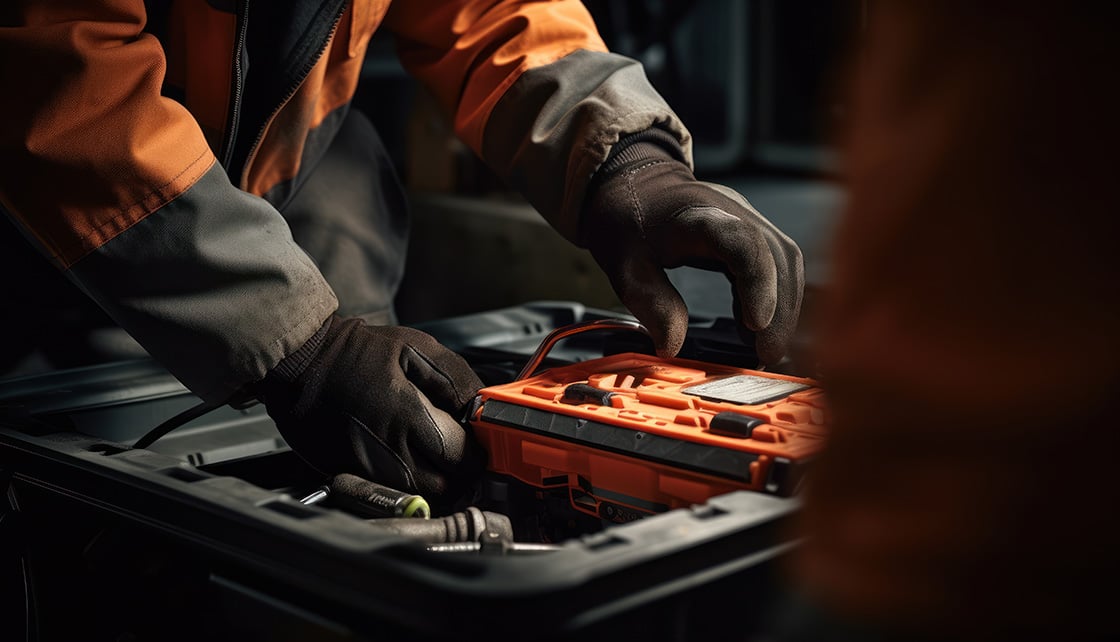
A degree of caution is justified, certainly, because a lithium-ion battery undergoing thermal runaway can induce jet-like flames reaching 1000°C while emitting toxic vapours. Fighting such infernos is challenging, with Fire and Rescue NSW Firefighting Research Officer Daniel O’Dea classifying them as “low-likelihood but high-consequence events”.

“Once the thermal runaway process starts inside a cell, it can’t be stopped. It will boil off the electrolyte inside, release vapour, and that vapour will also burn,” Station Officer O’Dea said. “All we can do, as firefighters, is stop the spread. We also try to cool the cell with water, which is currently the best way to stop the thermal propagation to other battery cells.”

Fire and Rescue NSW discourages using fire extinguishers in most circumstances: “You have to be quite close to the fire to use an extinguisher, which means you’ll be within the toxic cloud and potentially within the range of those jet-like flames,” O’Dea added.

It is important to note that lithium-ion batteries aren’t all the same. Rather, it’s an umbrella term for a range of battery chemistries with differing raw materials and chemical compositions. Common types include lithium cobalt, lithium manganese, lithium nickel manganese, lithium nickel cobalt aluminium, lithium titanate and lithium iron phosphate.

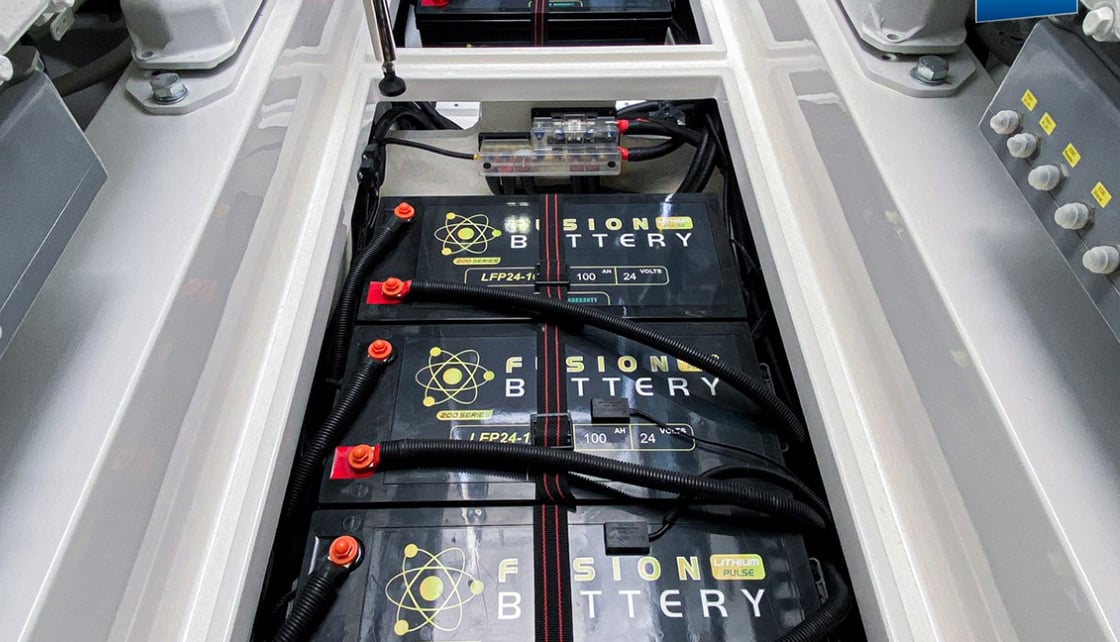
The latter, also known as LiFePO4, is the go-to for marine house battery installations. They suit deep-cycle usage but, more importantly, studies have shown that the chemical composition is less prone to overheating and won’t self-ignite or self-combust if there’s a failure. 


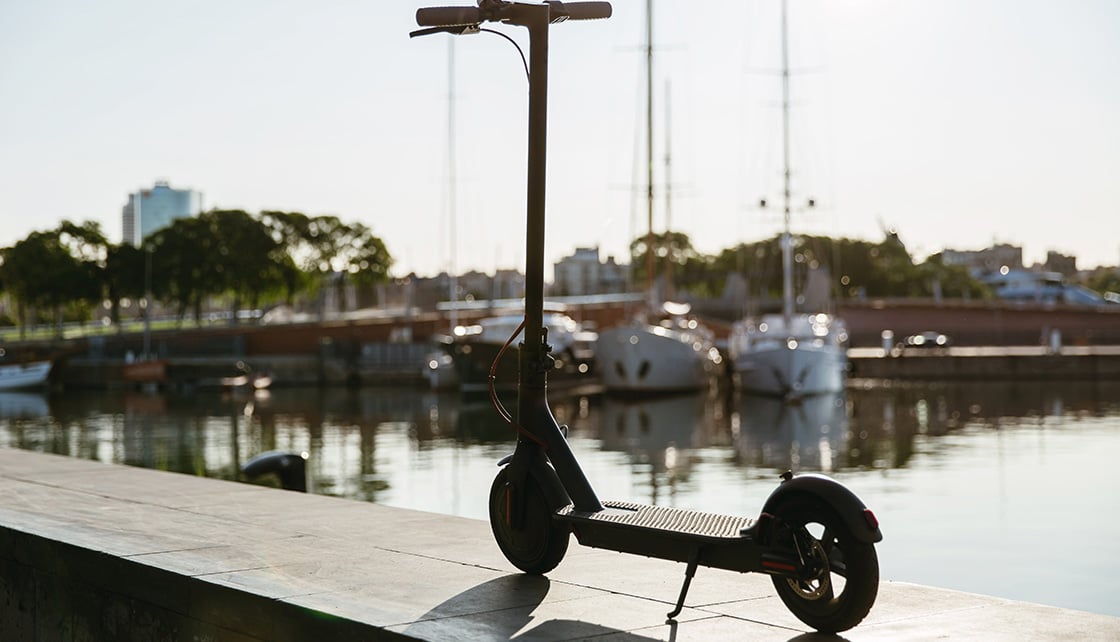
The downside is a comparatively low energy density, which makes LiFePO4 unsuitable for use in phones, computers, portable speakers, water toys, e-scooters, e-bikes, power tools, cordless vacuum cleaners, drones and myriad other devices. 

And herein lies the biggest problem for boats, with a significant percentage of fire ignitions being linked to the lithium cobalt/lithium manganese derivatives powering the aforementioned products used and stored aboard. Even vapes, electric toothbrushes and rechargeable batteries can spark blazes if mistreated.

“We’re surrounded by lithium batteries on our boats and in our homes and people should be very, very careful in how they handle them,” warns Matt Ruwald, owner and founder of lithium battery manufacturer All Marine Power Solutions.

“As an example, if you’re using a device and it goes flat, don’t put it on charge straight away -- let it cool down first. If you happen to drop the vacuum cleaner when you’re using it, check the battery casing hasn’t cracked.

“Once something’s fully charged, take the battery off charge and switch off the charging unit at the wall. And only use approved chargers -- the fact that a plug fits doesn’t mean it’s compatible.”

Fire and Rescue NSW suggests charging batteries on hard, non-combustible surfaces, not on than beds, lounges or carpet, and never use or recharge batteries that are swelling or leaking.

When it comes to e-bikes, e-scooters and water toys, Matt recommends charging them on shore during daylight hours, and avoid leaving the boat unattended while charging appliances or at the very least use a timer switch (this doesn’t apply to the lithium iron phosphate house battery bank).

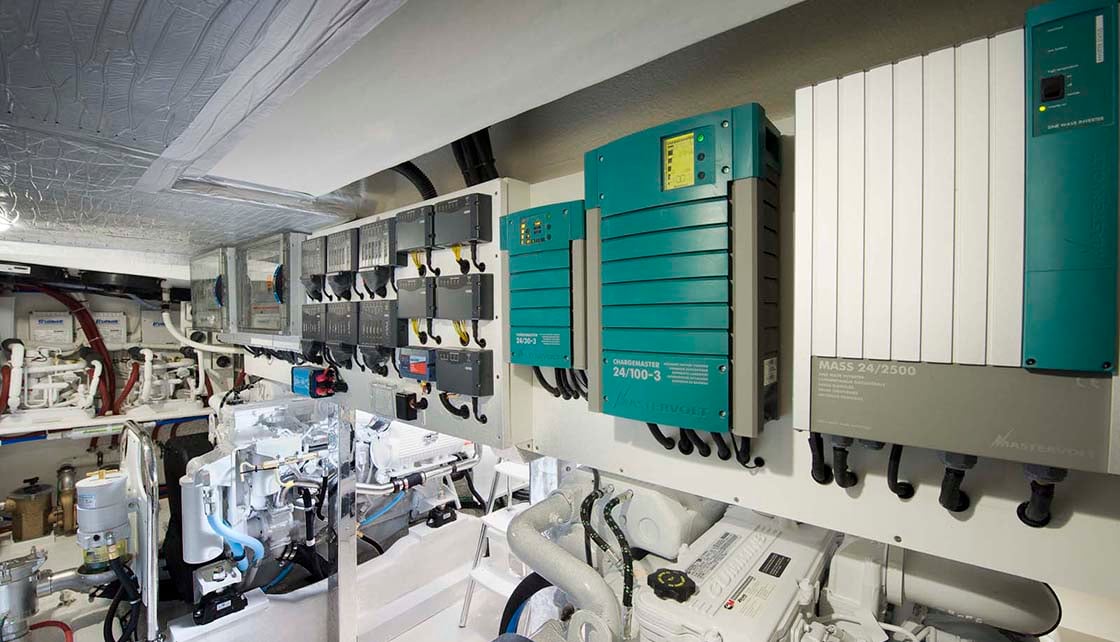
Very rarely are the boat’s house batteries responsible for a blaze, however installation remains a critical factor.

“Firstly, choose a recognised battery brand because there’s some cheap rubbish coming in and we have no government regulations in Australia regarding the chemical composition of these batteries,” Matt Ruwald adds.

“Secondly, choose a battery that’s fit for purpose. If it was built for EVs or the off-grid solar market then I’d suggest the battery isn’t suitable for the harsh marine environment.

“Thirdly, use an accredited marine electrician for the install. Don’t try to do it yourself, because you need to ensure the charging systems and the cabling are compatible with the size of the batteries you’re putting in.”

Installers will look at the current draw on your vessel and size the battery bank accordingly. Significantly, you don’t have to wire 12v batteries in series because lithium-ion batteries come in dedicated 12-, 24-, 36- and 48-volt sizes that can be installed in parallel.

As mentioned, leading boat builders are increasingly opting for LiFePO4 batteries as standard equipment. All Marine Power Solutions, for example, works with Riviera, Grand Banks and Palm Beach Motor Yachts, among others, and Matt says there have been zero failures to date.

For refits, he strongly recommends selecting a marine battery that is ‘IP” rated, referring to “ingress progression”. Ideally, for boats, you want the battery case to be impermeable to water, dust, sand or salt air that can cause internal corrosion and damage.

The minimum rating would be IP65 – the first number, signifying solids, is scored from 1-6; the second pertains to liquids and is rated 1-8 (8 being optimum). Below IP65 means the battery wasn’t intended for boating use.

Prior to choosing and fitting the new batteries, it’s wise to notify your insurer, and marina if applicable, to ensure they comply with specific requirements.

Operating a LiFePO4 battery without a battery management system (BMS) is possible but certainly not prudent. The battery will be susceptible to overcharging, over-discharging, short circuits and more.

The BMS can be external or built into the battery case. Most high-quality brands include a sophisticated BMS that can adapt to charging off your existing battery chargers, engine alternators and solar. They’ll keep the battery in optimal condition, and shut it off if a problem occurs.

Often this is reflected in the price. You might pick up an online ‘bargain’ that’s a third of the cost of reputable brands, yet you definitely get what you pay for in safety and longevity.

Marinas are particularly sensitive toward boat fires, as flames can jump ship and consume neighbouring vessels. Some operators are therefore asking owners to list the lithium-powered batteries and equipment that’s aboard and are producing lithium warning stickers like those for LPG and gasoline.

They’re also looking at introducing dedicated charging stations and infrastructure for the safe disposal of rechargeable devices. Fire and Rescue NSW, meanwhile, believes that smoke detectors are warranted for vessels to complement those for gas and carbon monoxide.

As mentioned at the start, though, electrical fires rate modestly compared with water damage, third-party damage, hull damage, motor damage and theft when it comes to insurance claims. Stay switched on while using, charging and disposing of your lithium-ion batteries, and you shouldn’t have a problem.

 
  • Ensure wiring, connections and batteries are regularly inspected by a suitably competent person as part of your maintenance plan. Get any issues identified fixed. 
  • Check that lithium-ion battery installations meet the Australian Standard and are installed by a competent person.
  • Develop a procedure to manage the risks associated with charging portable lithium-ion batteries.
  • Source: Australian Maritime Safety Authority

Give us a call on 1300 00 CLUB (2582)

Any discounts offered are applied to our standard rates. Promotional or other discounts may apply from time to time. Minimum premiums may apply. Any discounts/entitlements only apply to the extent any minimum premium is not reached. Where discounts are applied, your premium is subject to rounding. If you are eligible for more than one, we also apply each of them in a predetermined order to the premium (excluding taxes and government charges) as reduced by any prior applied discounts/entitlements.

Any advice here does not take into account your individual objectives, financial situation or needs. Terms, conditions, limits and exclusions apply. Before making a decision about Club Marine boat insurance, consider the Product Disclosure Statement (PDS)/Policy Document and Supplementary PDS (if applicable). Where applicable, the PDS/Policy Document, Supplementary PDS and Target Market Determination (TMD) for Club Marine boat insurance are available on this website. We do not provide any form of advice if you call us to enquire about or purchase a product.

Club Marine Limited (ABN 12 007 588 347), AFSL 236916 issues Club Marine boat insurance and handles and settles claims as agent for the insurer Allianz Australia Insurance Limited (ABN 15 000 122 850) AFSL 234708 (Allianz). Club Marine Limited is a related body corporate of Allianz. Copyright © 2026 Allianz Australia Limited.